



Qualité du son : les partiels supérieurs
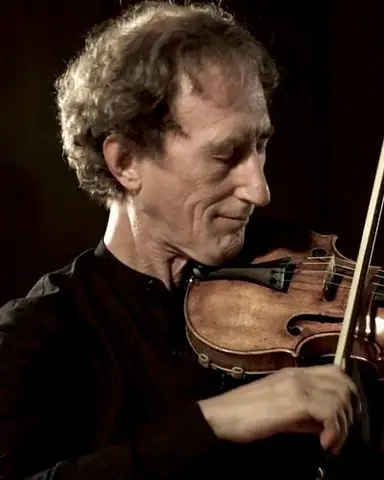
Lesson time: (2min 14sec)
Simon Fischer explique les partiels supérieurs et la série harmonique, et comment ils façonnent la qualité du son que tu tires d'un instrument à cordes.
Course preview
This lesson is part of the course Les secrets de la production du son, Partie 1 : connaître ton instrument
Watch a preview of the full course below.
Lesson transcript:
What Are Upper Partials?
A note played on a natural acoustic instrument, as opposed to an electronic one, isn't one single note. It's made up of a series of tones called the harmonic series, plus other higher tones. The quality of the sound is determined by the number and relative intensities of these upper partials.
Volume Control vs. Playing Dynamics
-
When you turn the volume control on your television up or down, the quality of the sound itself doesn't change.
- It gets louder or softer, but the quality stays the same.
-
It's different when you play more loudly or softly on a string instrument.
- When you move the bow closer to the bridge, the sound not only gets louder but the quality also changes.
The Role of the Bridge
-
The closer to the bridge you play:
- More audible upper partials are present in the tone.
-
The further from the bridge you play:
- The sound becomes more veiled and sweeter, as the upper partials are less audible.
Player vs. Audience Perception
The crucial point is that what you hear as a player, with the instrument close to your ear, is quite different from the sound that the audience hears from a distance. This occurs because:
- The upper partials in the sound are the first to drop off, while lower partials travel further.
An Example
-
A low note played on a large booming horn in a range of hills or mountains:
- May travel and be heard for several miles.
-
A high note played on a piccolo:
- Would fade out after a far shorter distance.
The Sweet Spot
This means that if you play near to the bridge, where more upper partials are produced, the sound next to your ear may seem edgy. However:
- Because those upper partials don't travel as far as the audience, but drop off before they reach them, the sound the audience hears is mellow and sweet.
The Danger of Too Much Sweetness
The danger is that if you try to produce too mellow and sweet a tone directly under your ear, the result may be misleading.
- In other words, if the sound you hear is actually the exact sound you want somebody many meters away from you to hear, the sound that actually reaches them may end up sounding nothing but too weak.
About the instructor
Simon Fischer mène une carrière remarquable et variée de concertiste, de pédagogue et d'artiste de studio. Il s'est produit dans le monde entier en récital et a enregistré trois Sonates de Brahms, un enregistrement salué par la revue Gramophone. Simon est reconnu comme l'un des professeurs d'élite au monde. Il est professeur à la Guildhall School of Music et a occupé des postes à la Yehudi Menuhin School, la Wells Cathedral School et la Purcell School, et a été pendant 15 ans professeur invité à la Royal Scottish Academy of Music. Après avoir étudié à Londres avec Yfrah Neaman et à New York avec Dorothy DeLay, l'approche de Fischer réunit les meilleurs éléments des traditions violonistiques française, russe et américaine. Les publications de Fischer exercent une grande influence sur l'enseignement du violon. Rédacteur pour la revue The Strad depuis 1991, ses articles mensuels ont conquis un lectorat dans le monde entier. Publiés par Edition Peters, ses ouvrages techniques Basics and Practice (traduit en coréen, italien et allemand), Scales et The Violin Lesson, ainsi que le DVD The Secrets of Tone Production (désormais disponible en streaming via MusicGurus), sont devenus des références sur de nombreux continents. Son livre et DVD Warming Up a été décrit par la revue The Strad comme « 23 pages d'or technique à l'état pur ». En 2014, Simon Fischer a reçu le prix de la European String Teachers Association « pour saluer une contribution à l'enseignement des cordes à l'échelle d'une vie ». Dans son cours en quatre parties Secrets of Tone Production, Simon te guide pour apprendre à connaître ton instrument, puis pour travailler pas à pas ses exercices fondamentaux de sonorité, afin de produire un son plus riche, plus maîtrisé et plus beau au violon. read more