



Quatre façons d'aborder les exercices
Lesson time: (2min 14sec)
Simon Fischer explique quatre façons d'aborder simultanément les exercices de production du son, de l'écoute attentive de chaque son à la sensation du crin de l'archet sur la corde.
Course preview
This lesson is part of the course Les secrets de la production du son, Partie 1 : connaître ton instrument
Watch a preview of the full course below.
Lesson transcript:
Tone Production Exercise
When doing any tone production exercise, you can approach it from four different angles at the same time.
1. Listening Closely
- The first thing is to listen so closely that you hear every sound that comes out of the instrument.
- Dorothy Delay used to say, "You have to hang your ears on the sound."
- You must concentrate on the sound and expression so much that everything else recedes into the background.
- This is something that many players have to develop.
- It doesn't necessarily follow that if you're a good musician, you're good at listening to your own sound.
- These tone exercises are excellent in the way they increase your ability to focus on many distinct elements in the overall sound.
2. Sensitivity to Feelings
-
The second thing is to be sensitive to:
- The feeling of the hair in the string.
- The fingers on the bow.
-
Connect every sound with a physical sensation.
-
Connect every physical sensation with a sound.
-
The sensations of playing are what the sound feels like, and the sound is what the sensations sound like.
3. Observing the Vibrating String
- The third thing is to look at the vibrating string.
- See how wide you can get it at the point midway between the bridge and the finger.
- You want to see it as wide as possible right there.
- Of course, you don't look at the strings vibrating when you're in the middle of performing music, but you can look at them when you're doing tone production work on one note.
4. Understanding the Contact Point
-
The final thing is to understand what is actually happening at the contact point of the hair with the string.
-
This is simpler than it may appear, since there are only three things to think about:
- Speed of bow
- Pressure
- Sound point
-
You can describe everything that is happening in the bow and in the sound exactly and instantly, using very few words.
-
All you need to think is:
- Less pressure
- More pressure
- Nearer the bridge
- Further from the bridge
- Faster bow
- Slower bow
-
By trying more and less of each and noting the result, you can find the balances and proportions that make the string vibrate the widest.
About the instructor
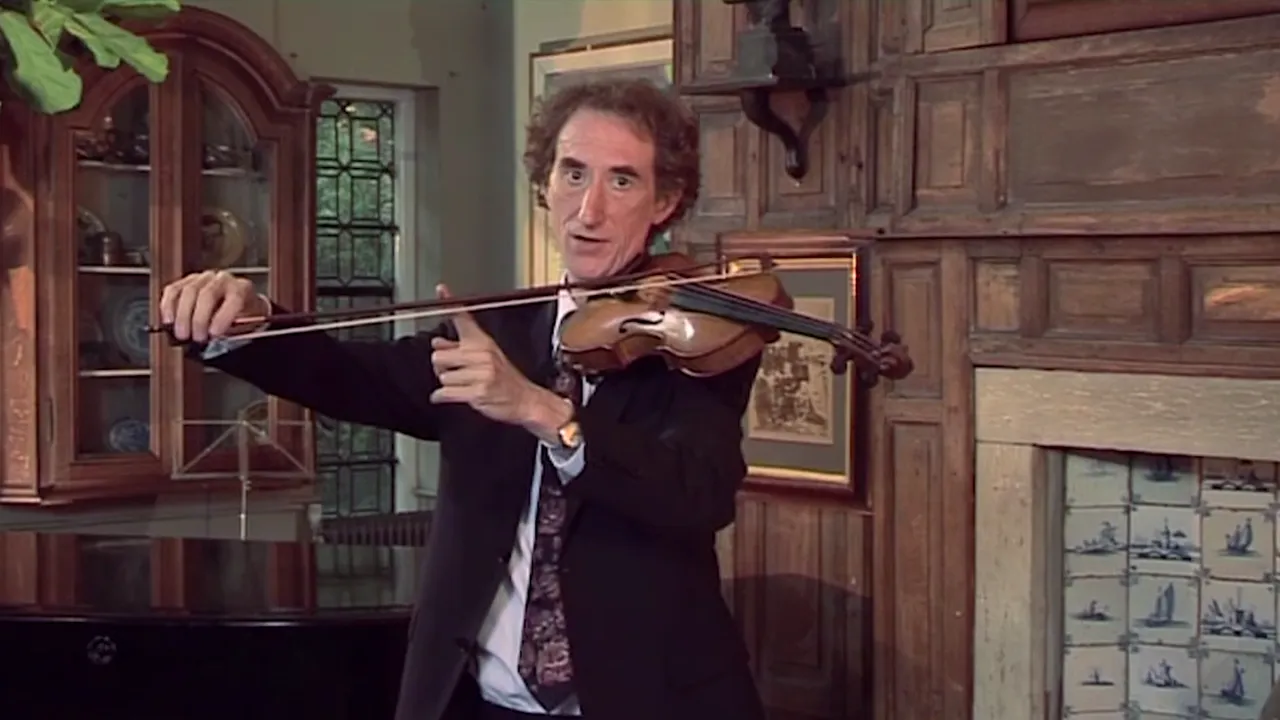
Simon Fischer mène une carrière remarquable et variée de concertiste, de pédagogue et d'artiste de studio. Il s'est produit dans le monde entier en récital et a enregistré trois Sonates de Brahms, un enregistrement salué par la revue Gramophone. Simon est reconnu comme l'un des professeurs d'élite au monde. Il est professeur à la Guildhall School of Music et a occupé des postes à la Yehudi Menuhin School, la Wells Cathedral School et la Purcell School, et a été pendant 15 ans professeur invité à la Royal Scottish Academy of Music. Après avoir étudié à Londres avec Yfrah Neaman et à New York avec Dorothy DeLay, l'approche de Fischer réunit les meilleurs éléments des traditions violonistiques française, russe et américaine. Les publications de Fischer exercent une grande influence sur l'enseignement du violon. Rédacteur pour la revue The Strad depuis 1991, ses articles mensuels ont conquis un lectorat dans le monde entier. Publiés par Edition Peters, ses ouvrages techniques Basics and Practice (traduit en coréen, italien et allemand), Scales et The Violin Lesson, ainsi que le DVD The Secrets of Tone Production (désormais disponible en streaming via MusicGurus), sont devenus des références sur de nombreux continents. Son livre et DVD Warming Up a été décrit par la revue The Strad comme « 23 pages d'or technique à l'état pur ». En 2014, Simon Fischer a reçu le prix de la European String Teachers Association « pour saluer une contribution à l'enseignement des cordes à l'échelle d'une vie ». Dans son cours en quatre parties Secrets of Tone Production, Simon te guide pour apprendre à connaître ton instrument, puis pour travailler pas à pas ses exercices fondamentaux de sonorité, afin de produire un son plus riche, plus maîtrisé et plus beau au violon. read more