



Cinq points de son
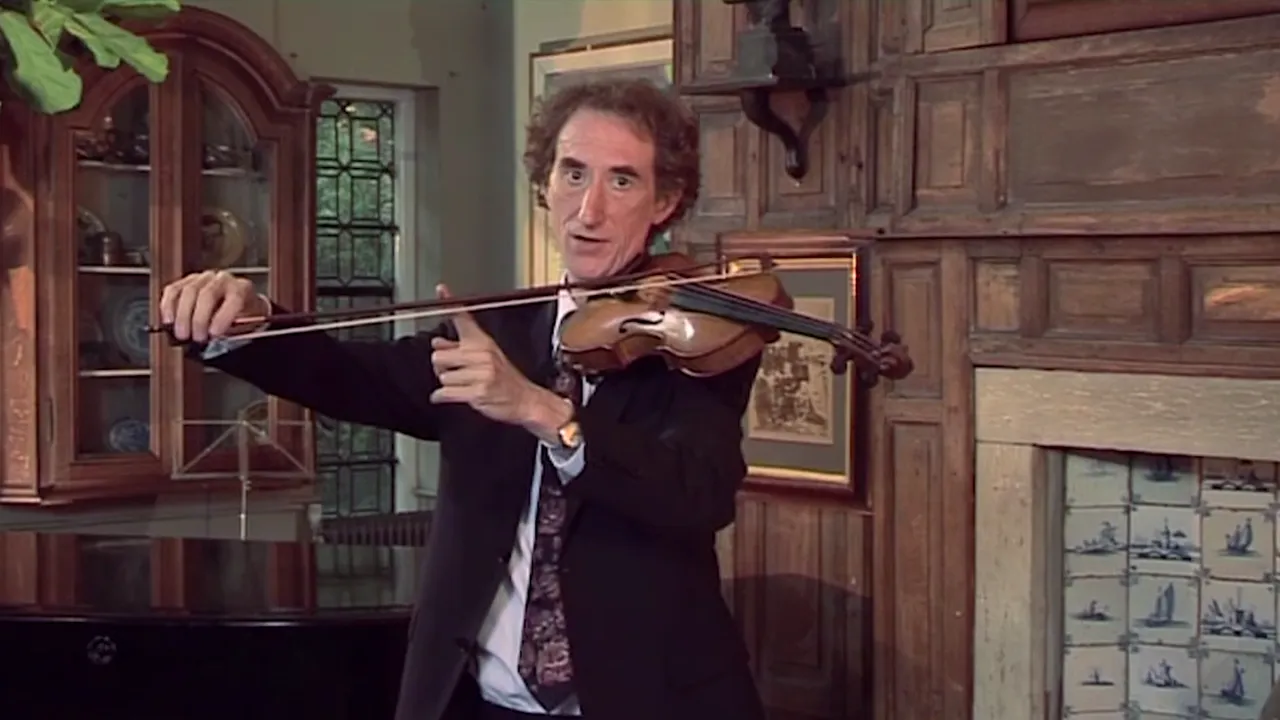
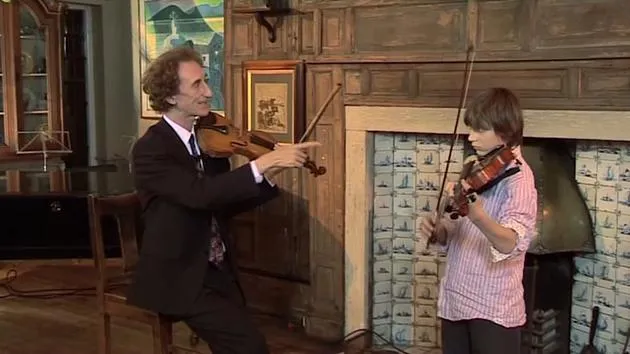
Simon explique comment Carl Flesch et Dorothy Delay ont divisé la zone de jeu en cinq points de son, ce qui offre un contexte pour travailler l'amélioration du timbre.
Le contenu du cours
11 leçons (0h 42min) · 1 gratuites
01. Introduction
0:49
02. Quatre façons d'aborder les exercices
2:14
03. Cinq points de son
Tu es ici4:39
04. Le crin de l'archet et la corde
5:18
05. Pression de l'archet et justesse
0:48
06. Pression de l'archet et longueur de corde
2:13
07. L'inclinaison de l'archet
4:14
08. À propos de la résonance
3:15
09. Ne pas suivre la ligne de moindre résistance
2:24
10. Qualité du son : les partiels supérieurs
2:14
11. Les proportions
14:04
Transcription de la leçon
Understanding the Playing Area
Carl Flesch and Dorothy Delay divided the playing area into five distinct sound points. Rather than being just a vague idea of where to place the bow on the string, they measured exactly where the bow can be. Flesch defined these points as:
- At the bridge
- In the neighborhood of the bridge
- At the center point
- In the neighborhood of the fingerboard
- At the fingerboard
Exploring Resistances
-
Press the String: Using your finger, press the string at different distances from the bridge to feel the resistances of the string.
- Soft near the fingerboard
- Hard near the bridge
-
Playing Simple Strokes: Play a few simple strokes at the same sound points, feeling the string with the hair of the bow instead of your finger.
Bow Technique
-
Bow Weight and Speed:
- The closer you play to the bridge, the less flexible the string becomes, necessitating more bow weight to engage the string.
- The bow must also move more slowly near the bridge. Otherwise, it may simply whistle over the surface of the string without catching it.
-
Summary:
- Near the bridge: The bow is slow and heavy.
- Near the fingerboard: The bow is light and fast.
The Five Sound Points
-
Sound Point designation:
- Sound Point 1
- Sound Point 2
- Sound Point 3
- Sound Point 4
- Sound Point 5
-
Feel the String: With your finger, press the string:
- Closer to the bridge: Very hard and tight.
- Near the fingerboard: Light and fast.
Practical Application
-
Play the Exercise: "Play this, Solomon. Just that. Light and fast you could play. Yes, very light and fast. That's right."
-
Steer Your Bow: When near the bridge, steer your bow as you would a car down the road in a straight line.
- "You went off track; that's it. You need a little more weight there to catch the string. Go deep into the string. That's it, and a little slower bow."
Sound Preferences for Open Strings
-
Open G String:
- Feels too stiff and hard to bow near the bridge.
- To make the open G vibrate the widest, use fast, long strokes around Sound Point 4.
-
Open E String:
- The opposite applies.
- For the widest vibration, play around Sound Point 2. It feels soft, fragile, and weak if bowed on Sound Points 4 or 5.
String Playing Positions
- When playing across the strings, you often start further from the bridge on the G string and end up closer to the bridge on the E string.
A Crucial Reminder
- Ensure you're not constantly playing the E and A strings too near to the fingerboard.
- You may observe many players doing the opposite, rather than engaging deeper into the string, closer to the bridge.
Chord Playing Technique
- In chord playing, you can adjust the sound point during the chord.
- Avoid:
- Playing too far from the bridge or too close to it.
- Best Approach:
- Start further away from the bridge and come in during the chord for optimal sound.
- Avoid:
11 leçons
0h 42m de leçons vidéo structurées
Fonctions vidéo avancées
Ralentissez, bouclez un passage, suivez la partition
Mobile, tablette et ordinateur
Pratiquez où vous voulez
Satisfaction garantie à 100 %
Garantie remboursement 30 jours
Rencontrez votre guru
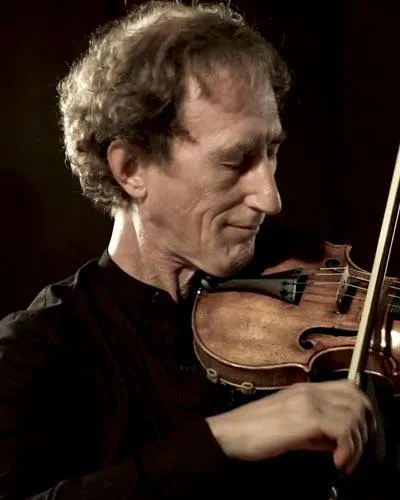
Rencontrez votre guru
Simon Fischer mène une carrière remarquable et variée de concertiste, de pédagogue et d'artiste de studio.
Il s'est produit dans le monde entier en récital et a enregistré trois Sonates de Brahms, un enregistrement salué par la revue Gramophone.
Simon est reconnu comme l'un des professeurs d'élite au monde. Il est professeur à la Guildhall School of Music et a occupé des postes à la Yehudi Menuhin School, la Wells Cathedral School et la Purcell School, et a été pendant 15 ans professeur invité à la Royal Scottish Academy of Music. Après avoir étudié à Londres avec Yfrah Neaman et à New York avec Dorothy DeLay, l'approche de Fischer réunit les meilleurs éléments des traditions violonistiques française, russe et américaine.
Les publications de Fischer exercent une grande influence sur l'enseignement du violon. Rédacteur pour la revue The Strad depuis 1991, ses articles mensuels ont conquis un lectorat dans le monde entier. Publiés par Edition Peters, ses ouvrages techniques Basics and Practice (traduit en coréen, italien et allemand), Scales et The Violin Lesson, ainsi que le DVD The Secrets of Tone Production (désormais disponible en streaming via MusicGurus), sont devenus des références sur de nombreux continents. Son livre et DVD Warming Up a été décrit par la revue The Strad comme « 23 pages d'or technique à l'état pur ».
En 2014, Simon Fischer a reçu le prix de la European String Teachers Association « pour saluer une contribution à l'enseignement des cordes à l'échelle d'une vie ».
Dans son cours en quatre parties Secrets of Tone Production, Simon te guide pour apprendre à connaître ton instrument, puis pour travailler pas à pas ses exercices fondamentaux de sonorité, afin de produire un son plus riche, plus maîtrisé et plus beau au violon.







