



Cranked
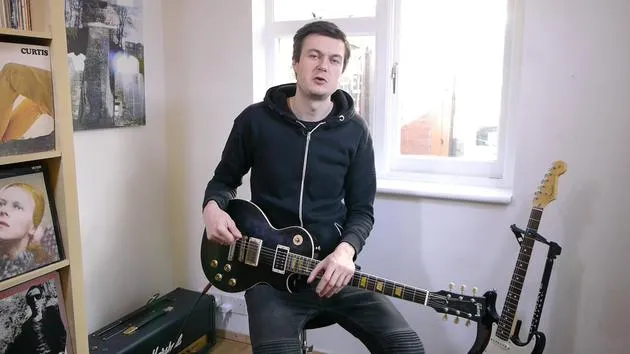
La version pro de Stuart Ryan de la pièce Rockschool 'Cranked', un morceau de classic rock qui introduit le legato -hammer-ons, pull-offs et slides- aux côtés des power chords.

Le contenu du cours
41 leçons (2h 51min) · 1 gratuites
01. Introduction aux approches de l'improvisation
1:00
02. Premiers pas avec l'improvisation
9:22
03. Exercice : trouver les notes des accords
4:05
04. Improviser en utilisant les notes d'accord
10:18
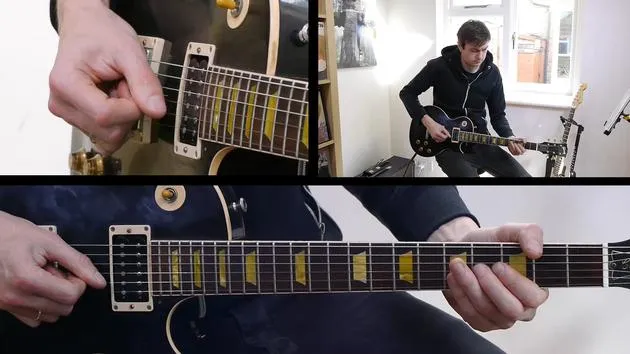
05. Ajouter de l'intérêt rythmique à tes solos
4:11
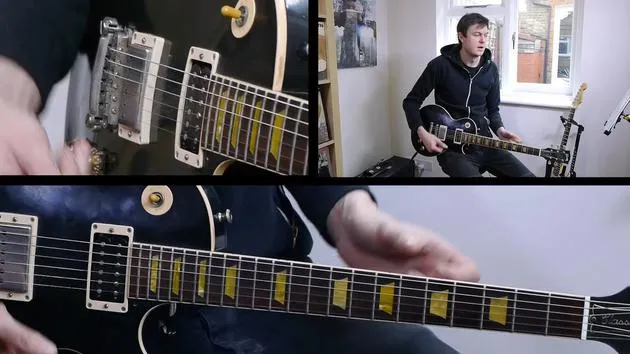
06. Exercice : improviser sur un changement d'accord
2:52
07. Défi : Envoie ton impro
0:24
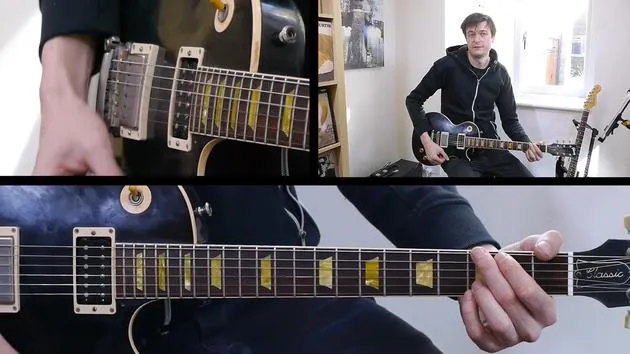
08. Impro rythmique et comping
9:55
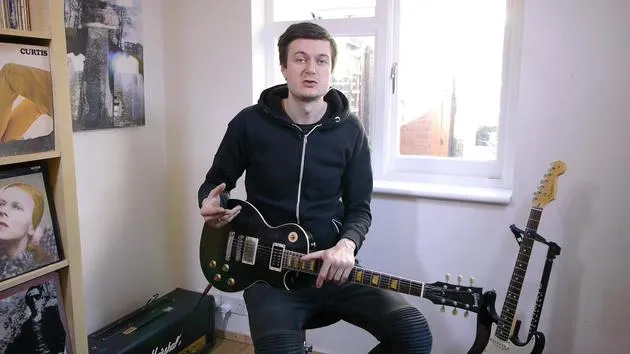
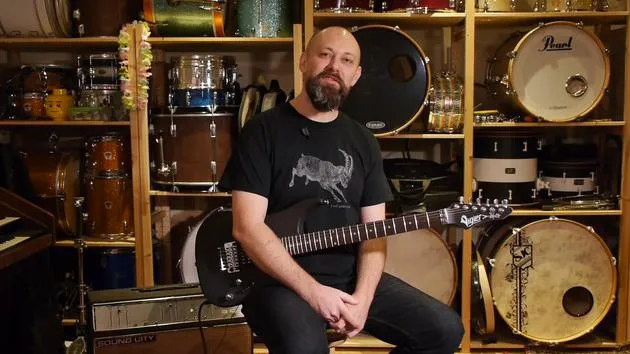
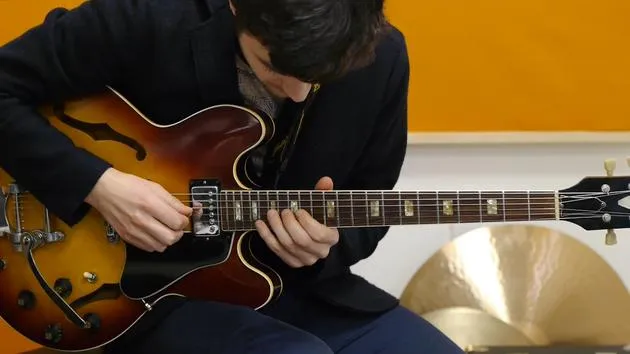
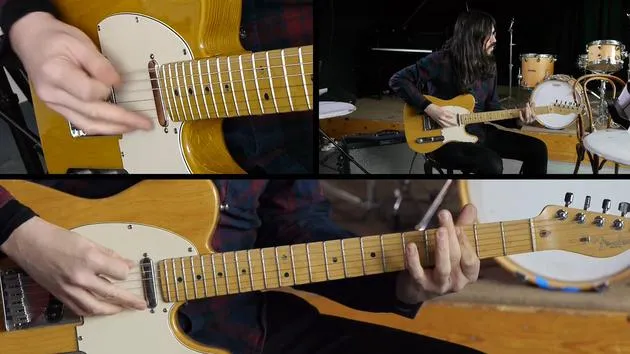
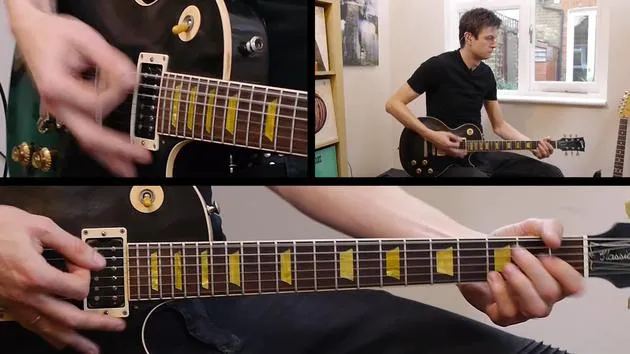
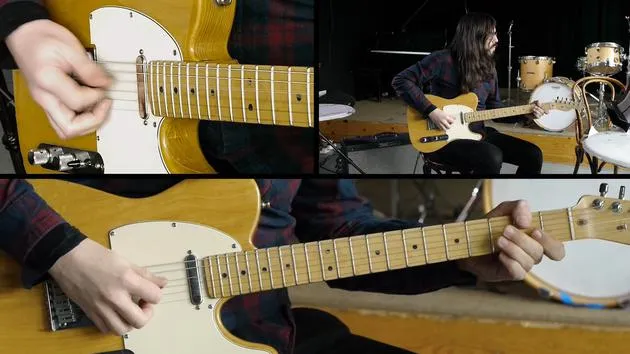
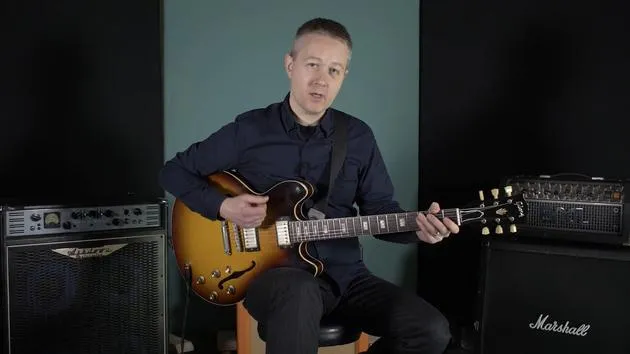
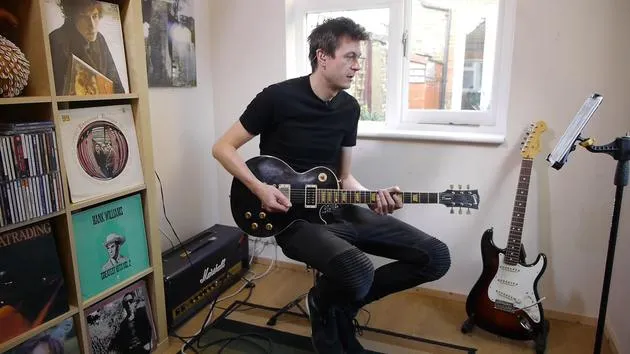
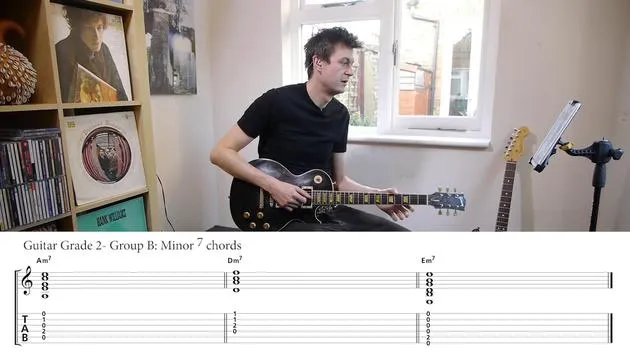
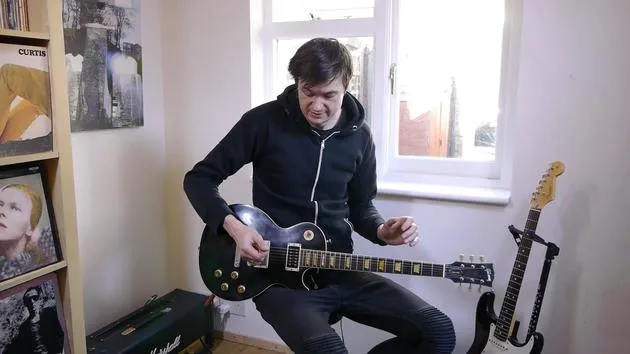
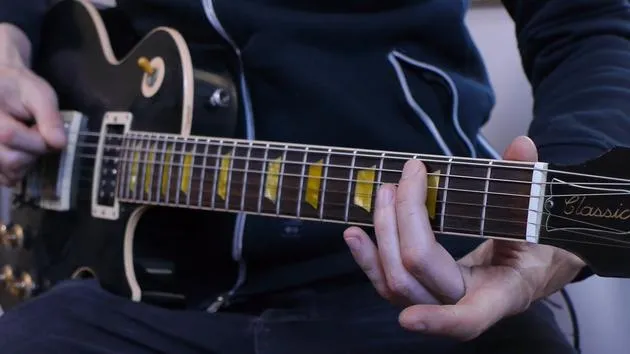
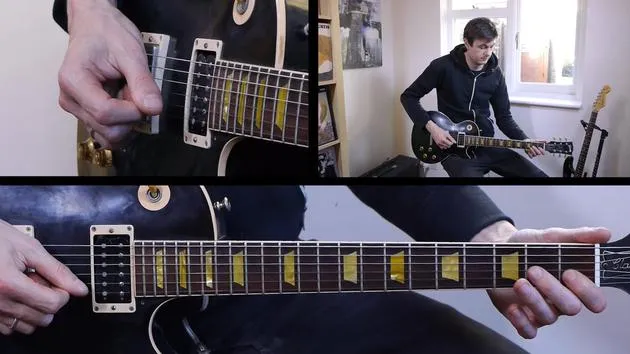
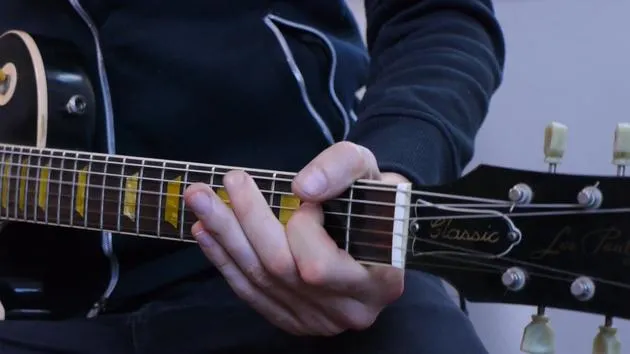
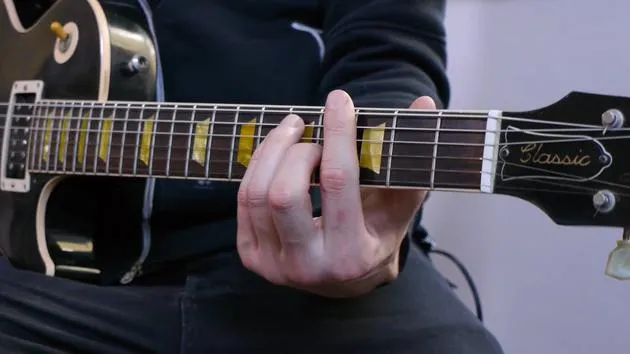
Transcription de la leçon
Cranked: Influences and Techniques
Overview
Cranked is influenced by the classic rock of the late 1960s and 1970s. We're thinking about bands like:
- AC/DC
- Aerosmith
- Free
Power Chords and Legato
We see the power chords that you've already encountered in the earlier grades. Now we introduce the concept of using legato.
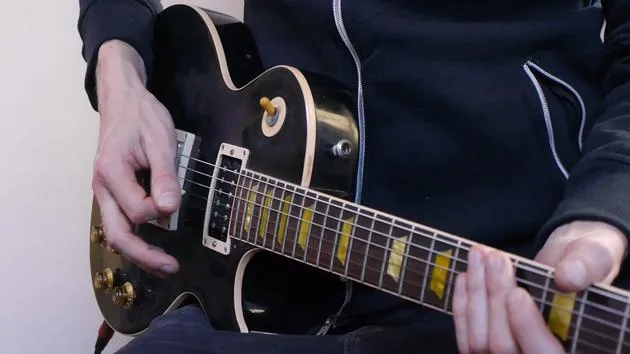
Legato means playing smoothly. In practice, this means using:
- Hammer-ons
- Pull-offs
- Slides
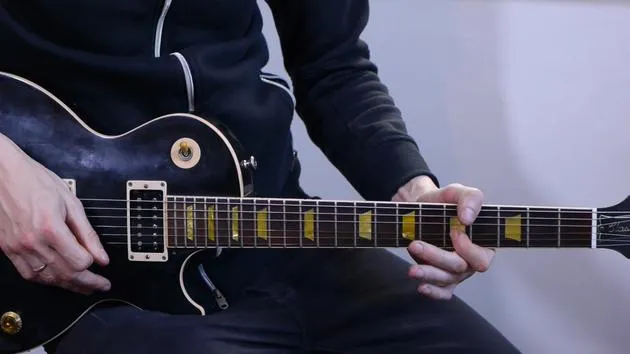
You can see this in the first bar, which features:
- Two power chords
- A legato section (slide, pull-off)
Guitar Solo and Influences
We also have a short guitar solo in this section, influenced by the rock and roll sound of the 1950s, which subsequently influenced the classic rock players.
In this solo, we see something called double stops, two notes played simultaneously. A classic example of this is Chuck Berry's "Johnny B. Goode." So give that a listen if you haven't heard it already.
Structure of Cranked
The structure of Cranked features sections A, B, and C, which are rhythm guitar-based. In this style, there are also those licks in between the chords:
- Legato phrases
- Hammer-ons
- Pull-offs
It often feels like you're playing a rhythm guitar part, followed by a very brief solo. The solo itself comes in Section D and is based around the A minor pentatonic scale.
- Start that scale position with double stops at fret five.
- Move down to the open position to finish the solo and return to the riff.
Practice Focus
Focus on learning your A minor pentatonic scale in this position. This will help you understand where the notes fall under your fingers. Also, try it in the open position, which will help with the riff.
Key Features
-
Legato: Remember that a key feature here is legato, hammer-ons, and pull-offs. While I picked every note, I would also practice using hammer-ons and pull-offs.
- Hammer-on is going up.
- Pull-off is coming back down.
Your teacher can really help you with this.
Exercises for Fretting Hand Strength
There are more exercises to help develop strength in the fretting hand fingers. For example:
- Choose one note and hammer-on and pull-off repeatedly.
- Build up speed.
- Change strings, then change fingers.
Pushes and Muting Techniques
Another feature to look at are pushes. A push is when you play a note on the and of beat four, which you'll see in section B.
When counting this, think:
"1, 2 and 3 and 4, and 1 and 2 and 3 and 4, and 1 and 2 and 3, 4."
We also have that muting technique, where we stop the strings from sounding with both the picking and fretting hands. This enhances the tight, precise feel of the rhythm.
Sound and Gear
To get the sound for classic rock, you need to have overdrive. You can't play this convincingly with a clean tone on an amplifier.
- Pickup Selection:
- You can use single coil and humbucker pickups, but generally avoid the neck pickup, as it makes things sound woolly and muddy.
- For example, if I play through section E with the neck humbucker, the tone isn't as bright as with the bridge humbucker.
Stylistic Devices
A few more stylistic devices to be aware of include:
- Attack: It's crucial to hit the string properly. Too much pressure can make it sound out of tune.
- Small Bends: Apply small bends to certain notes. For example, in those phrases, I bend the note on fret 3 of string 6 slightly, this is called a quarter tone.
Muting: Remember the importance of the picking hand's muting as well.
Staccato and Rhythm
Towards the end of that section, we have notes played staccato, which means they're not played for their full duration, especially when we play the C chord to the D chord.
Again, rely on the relationship between the picking hand and the fretting hand to stop the notes from sounding, making everything clean.
Counting and Timing
Cranked has a solid 4/4 feel, and for this particular piece, count:
"1 and 2 and 3 and 4" all the way through.
Rhythmically, we're dealing with crotchets and quavers (or quarter notes and eighth notes).
Timing and Practice
We've looked at muting, but timekeeping is crucial. It's easy to speed up or slow down on legato phrases.
For example, the phrase occurring in both sections A and the outro of the solo is:
"1 and 2 and 3 and 4."
Play that with your teacher very slowly to a metronome to get the hammer-ons timed perfectly.
- Same applies to pull-offs.
- Pull-offs can often be rushed, which isn't desired.
Remember, all notes should be even and last the same duration:
"1 and 2 and 3 and 4 and."
Beyond this piece, when practicing your scales, apply those rhythms using hammer-ons and pull-offs as well.
41 leçons
2h 51m de leçons vidéo structurées
Fonctions vidéo avancées
Ralentissez, bouclez un passage, suivez la partition
Mobile, tablette et ordinateur
Pratiquez où vous voulez
Satisfaction garantie à 100 %
Garantie remboursement 30 jours







