



Les bases du piano rock 'n' roll de Paddy

Avec
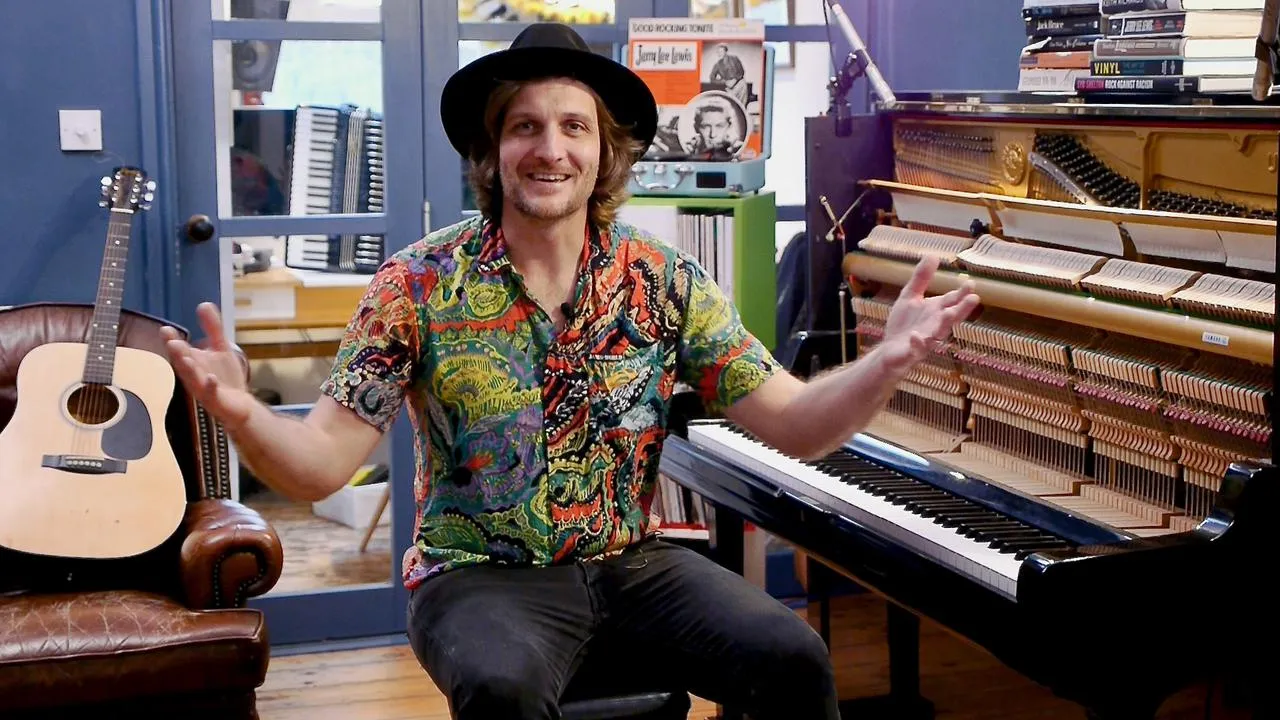
Paddy MilnerPaddy explique la forme du Rock 'n' Roll, en jouant et en t'apprenant un 12-bar simple pour démarrer
Le contenu du cours
25 leçons (2h 34min) · 1 gratuites
01. Comment jouer l'intro
4:09
02. Mélodie et main droite
9:26
03. Comment jouer le solo
7:01
04. Main droite et turnaround
12:43
05. Autres idées
5:42
06. Comment jouer la fin
1:38
07. Développer la partie de piano de Jerry Lee
6:16
08. Développer les idées du solo de Jerry Lee
11:49
09. Utiliser les crushed notes
7:12
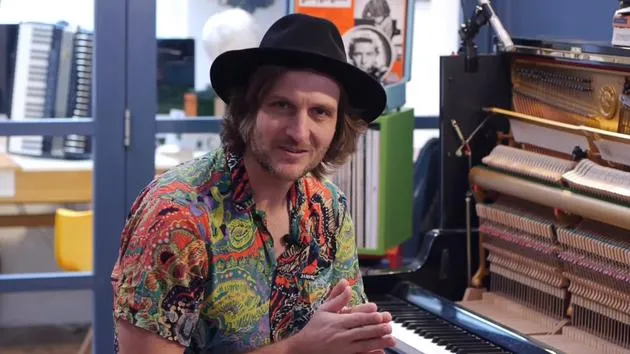
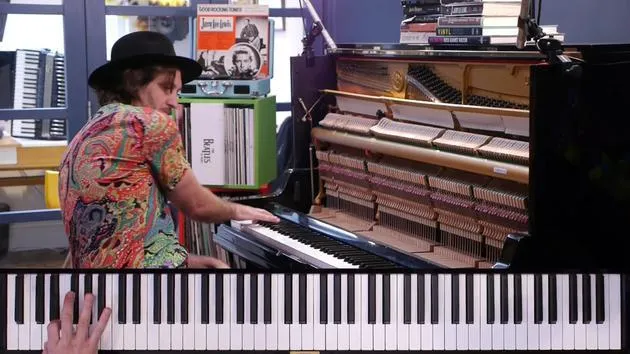
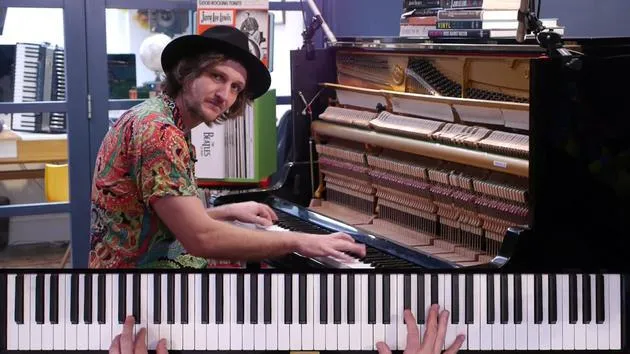
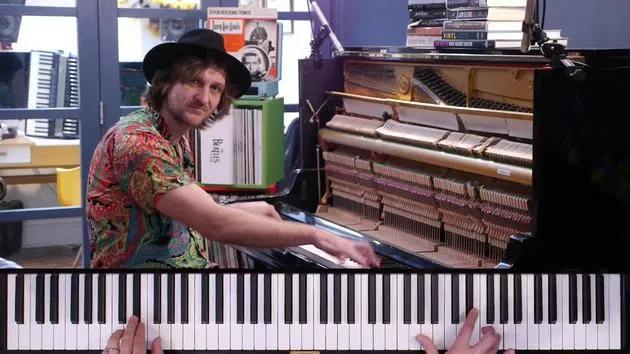
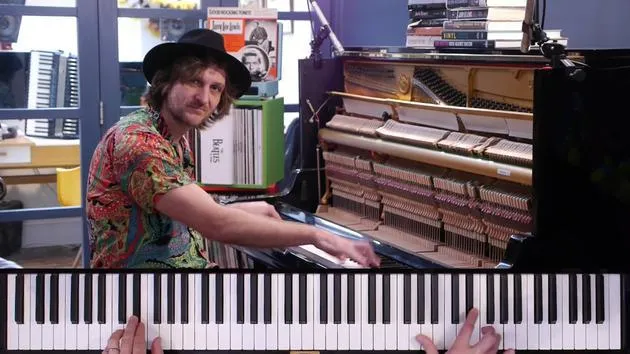
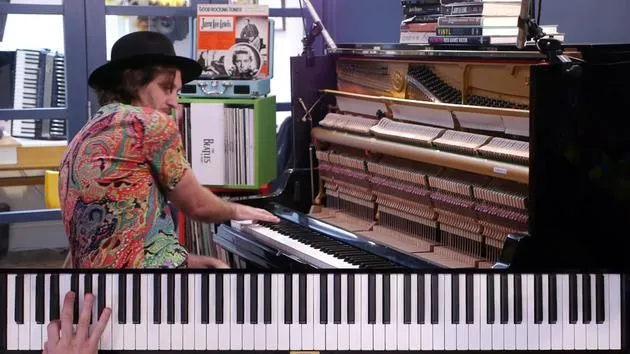
Transcription de la leçon
Introduction to Rock and Roll Music
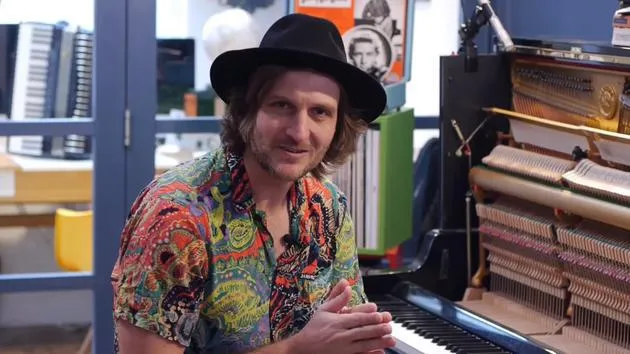
Cool! So before we jump in and look in depth at some Jerry Lee Lewis and other rock and roll ideas, let's briefly discuss what I mean by rock and roll in relation to this course.
Understanding the 12-Bar Blues Form
Essentially, we're looking at the 12-bar blues form, which, if you're not familiar with it, I'll give you a quick rundown:
- This form consists of 12 bars that repeat on a cycle.
- There are different variations, but let's use this basic structure as our foundation:
-
Four bars on chord I
- In the key of C, that would be four bars on the chord of C.
-
Two bars on chord IV
- This is the chord of F.
-
Two bars on chord I
- Back to C again.
-
One bar on chord V
-
One bar on chord IV
-
Two bars on chord I
Distinction Between Rock and Roll and Blues
Rock and Roll Piano Characteristics
So, what makes rock and roll piano different from blues and boogie woogie?
-
Simpler Palette: Rock and roll often features a simpler left hand.
- For example, you might play something straightforward like a basic rhythm pattern.
-
Right Hand Repeats: The right hand often has lots of repeated notes.
We will look at more complicated things later, but for now, think of this as the broad idea for rock and roll.
Influences
- We'll explore the style of Jerry Lee Lewis, and also get inspired by Johnny Johnson, the great piano player who accompanied Chuck Berry on all his notable tunes.
Demonstration
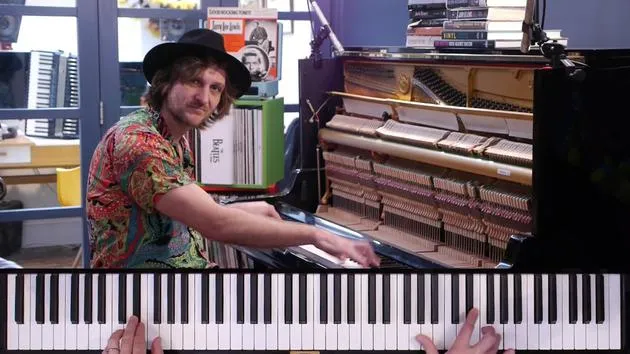
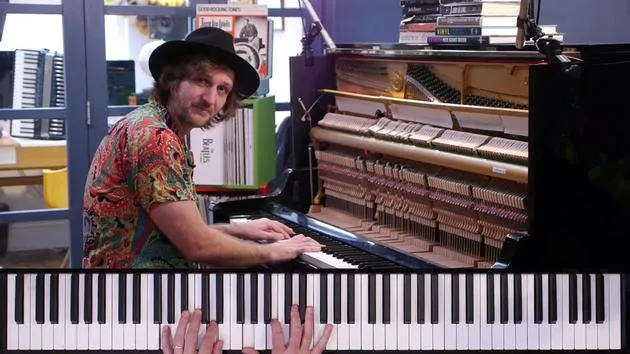
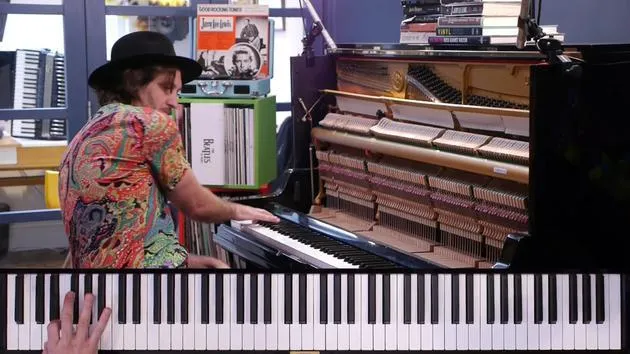
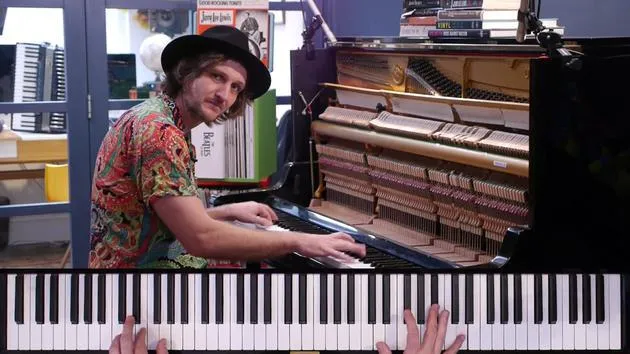
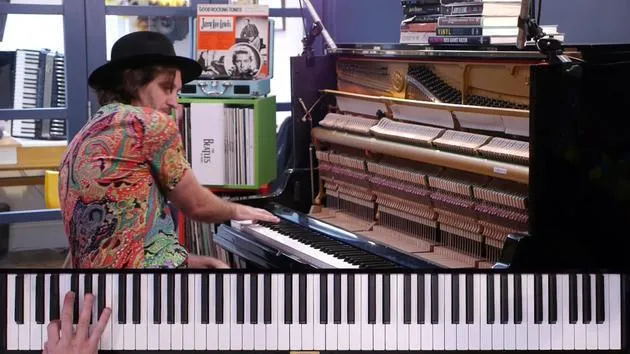
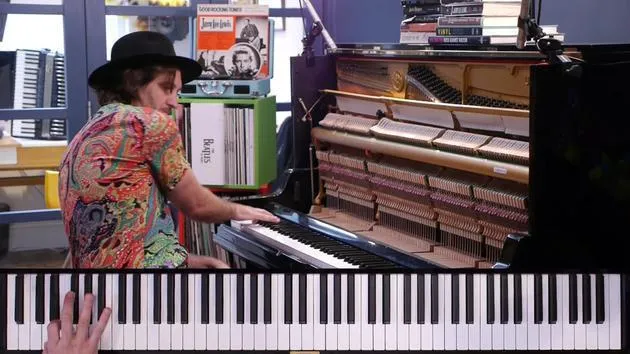
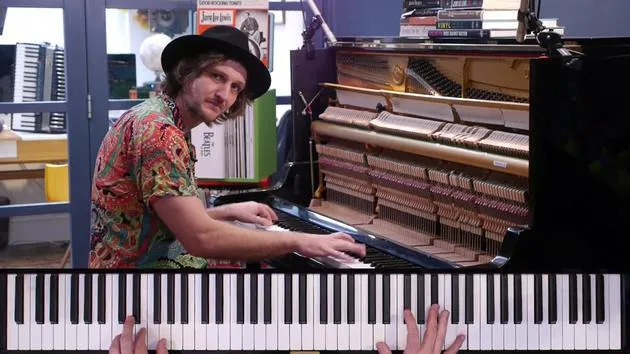
I'm going to play something now that captures the essence of rock and roll without doing anything too crazy.
- You'll hear lots of repeated notes in the right hand and a simple left hand pattern.
- If you can get your fingers around this, you'll have a good basis for exploring other ideas in the course.
Here we go:
"A one, two, a one, two."
So there you go! There's something relatively simple with lots of repeated notes. I did add a few little embellishments, for example: those little runs. But don't worry if you can't get those down right now. Just concentrate on getting the repeated notes together with the left hand.
Conclusion
And remember, with that real rock and roll attitude, we're not just "pussyfooting" around. It's about hammering it out with that spirit of rock and roll.
So, yeah, let's dive into the course!
25 leçons
2h 34m de leçons vidéo structurées
Fonctions vidéo avancées
Ralentissez, bouclez un passage, suivez la partition
Mobile, tablette et ordinateur
Pratiquez où vous voulez
Satisfaction garantie à 100 %
Garantie remboursement 30 jours
Rencontrez votre guru
Rencontrez votre guru
Paddy Milner est reconnu comme l'un des meilleurs pianistes de blues au monde : il est actuellement le claviériste attitré de Sir Tom Jones, après plusieurs années aux côtés du grand et regretté Jack Bruce, mais c'est aussi un superbe auteur-compositeur original et un chanteur au timbre singulier. Il suffit de lire les éloges de personnalités comme Dave Brubeck ci-dessous ! Son jeu figure sur la bande originale du film à succès 'Rocketman' (2019).
Il a remporté à deux reprises le prix du Meilleur claviériste aux British Blues Awards et occupe de longue date une résidence en tant que membre fondateur du Ronnie Scott's Blues Explosion au club mondialement réputé Ronnie Scott's.
Son groupe actuel LONDONOLA joue une musique britannique maison teintée d'une bonne dose d'esprit de La Nouvelle-Orléans, et son projet collectif JAWBONE va de succès en succès depuis la sortie de son premier album éponyme.
- « J'adore... voilà un gars qui sait vraiment jouer du piano » - Dave Brubeck
- « Je le recommande vivement. D'une certaine manière, tout se met à aller beaucoup mieux ! » - Jack Bruce
- « Le meilleur pianiste de blues d'Europe... » - Blues Access, USA
- « Impressionnant et original » - The Times
- « Éblouissant » - The Independent
Au fil de ses cours, Paddy décortique l'authentique shuffle de blues, le slow blues, le boogie-woogie, le rock 'n' roll et le piano de La Nouvelle-Orléans - jusqu'à trois grands classiques du boogie-woogie - pour que vous appreniez ces styles auprès de l'un des tout meilleurs du métier.







