



Mélodie et main droite

Avec
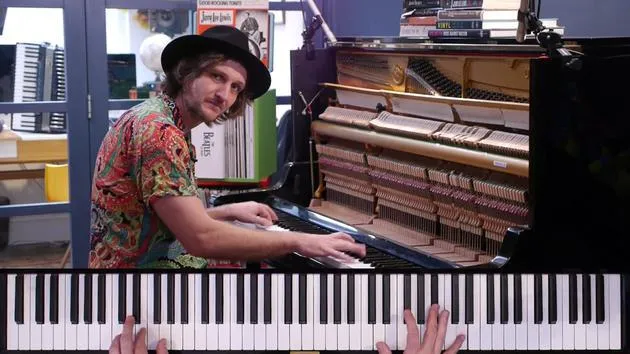
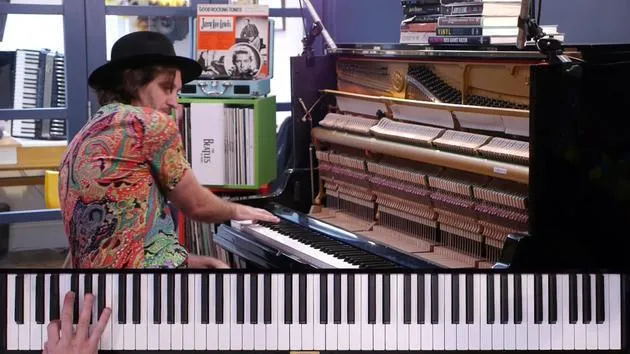
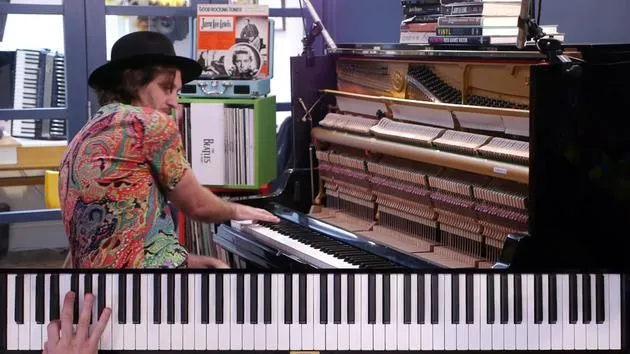
Paddy MilnerCommençons à décomposer le morceau et à examiner la partie de piano, en tonalité de Do. Familiarise-toi avec le rythme, l'articulation et la façon de jouer le morceau de manière authentique

Le contenu du cours
25 leçons (2h 34min) · 1 gratuites
01. Comment jouer l'intro
4:09
02. Mélodie et main droite
Tu es ici9:26
03. Comment jouer le solo
7:01
04. Main droite et turnaround
12:43
05. Autres idées
5:42
06. Comment jouer la fin
1:38
07. Développer la partie de piano de Jerry Lee
6:16
08. Développer les idées du solo de Jerry Lee
11:49
09. Utiliser les crushed notes
7:12
Transcription de la leçon
12-Bar Blues Piano Lesson
Introduction
So, I'm going to just play around the whole 12 bars so you can have a listen to the main feel of the tune.
Count: 2 1, 2, 3, 4.
Breaking It Down
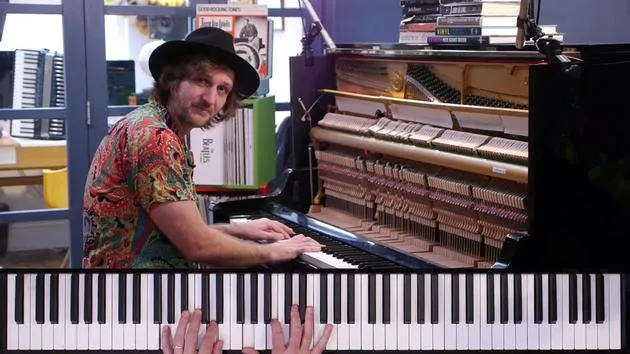
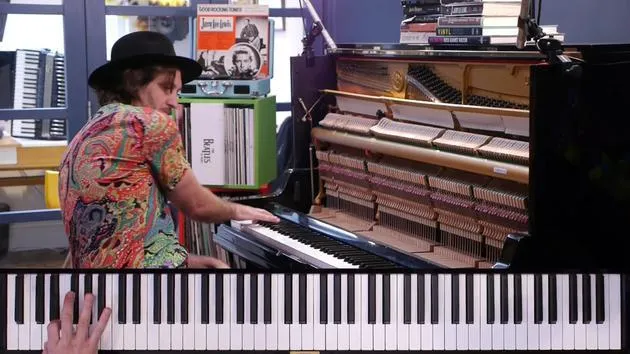
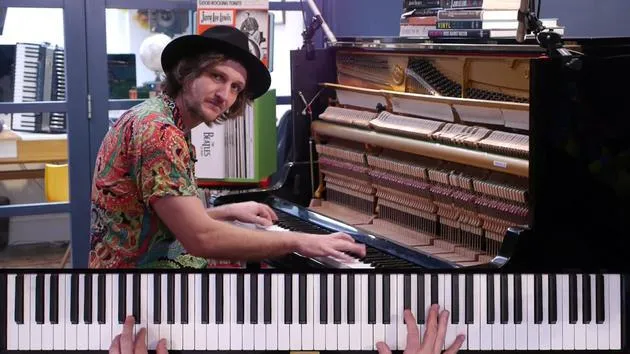
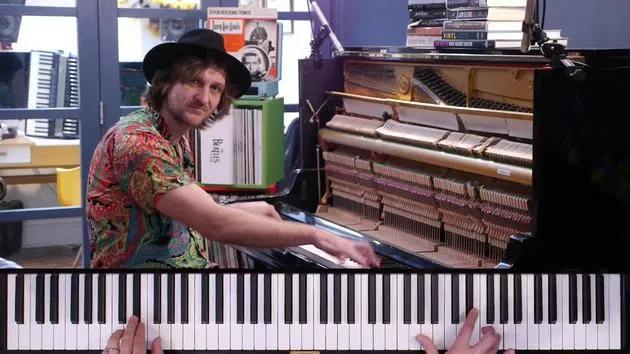
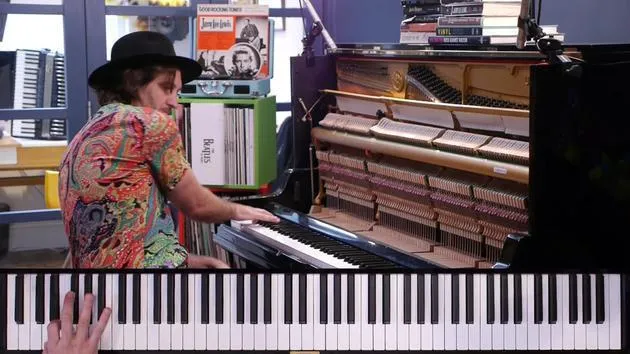
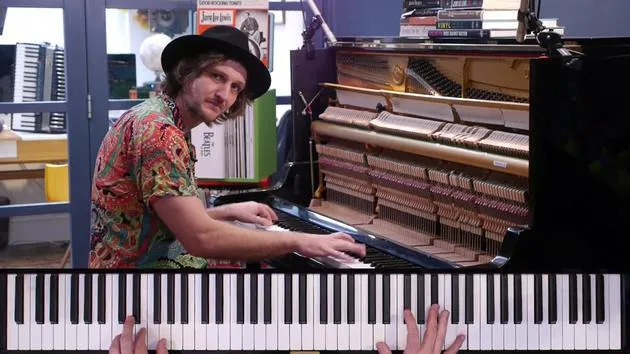
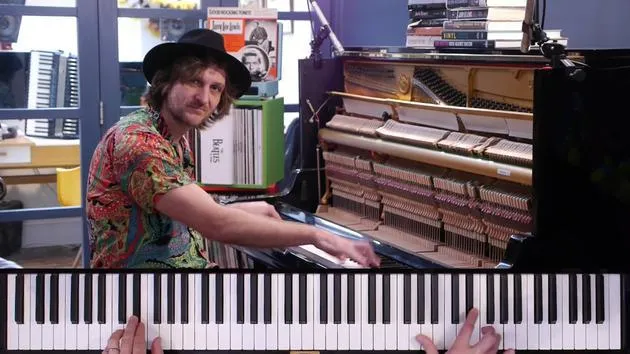
Let's start breaking it down and look at that piano part.
Right Hand
- In the right hand, we're simply playing triads with the third on the top.
Left Hand
- In the left hand, we are essentially outlining a kind of C6 chord, always playing the bottom C with it, which gives it a nice sort of weight.
- We play those chords on the downbeats, while the right hand plays on the upbeats (the off beats).
Chord Progression
When we move up to chord four:
-
The right hand plays the inversion of F, while the left hand continues as it had been on chord one (the chord of C).
-
There's a nice lead-up to chord 4, which adds direction.
-
Chord Progression Summary:
- Chord 1: C
- Chord 4: F
- Chord 1: C
- Chord 5: G (1 bar)
- Chord 4: F (1 bar)
- Chord 1: C (2 bars) with a turnaround (which we'll look at in due course).
Feel and Rhythm
Is It Straight or Swung?
So, there are a few things we should talk about regarding this feel.
- Question: Is it straight? Is it swung? Is it a shuffle?
Let's have a listen.
It's slightly swung, isn't it? It almost sounds a bit like ska or something. It's definitely swung, but not really dotted.
Listening Practice
- Have a listen to how Jerry Lee plays it and try to find that nice balance of how long or how dotted you make that feel.
- It's kind of a heavily swung feel, which I describe as somewhere in the middle:
- The bass is quite heavy, but it's not overpowering.
- Likewise, the right hand is quite solid, but it's not rigid.
Articulation
- Listen to how Jerry Lee articulates the notes:
- Is he playing long notes or short notes?
- He strikes a balance, embodying a smoothness with a nice fat bottom end.
The Importance of Original Recordings
This is crucial in rock and roll; it gives a solid foundation at the bottom end. I can't emphasize enough how important it is to listen to the original recordings and recreate those feels.
Anticipating Chord Changes
There's something quite interesting that helps propel the music along:
- Jerry Lee often anticipates the chord change with the right hand.
For example:
- If we are going from C to F, notice how it happens just before the beat.
Here's a quick demonstration:
- Two bars of C going up to F...
Practice Tips
- So, if you can try to practice that and get it down, that's a good starting point for playing this song.
- Essentially, all the verses are more or less the same with a couple of little embellishments we'll look at as we go along.
Using a Metronome
- If you're finding it difficult to play that figure at speed, use a metronome. Start at half speed.
- As you feel comfortable, you can increase the tempo gradually.
Identifying Trouble Spots
You might find that you come unstuck when changing chords.
- Practice going between two chord changes, like from 5 to 4.
Momentum and Flow
Notice when Jerry Lee moves from the I chord to the IV chord with that run-up, he plays it a little heavier, providing momentum to go.
- It's all about making the music flow; it's not just about mechanically playing the notes, it's about how the music is breathing.
Conclusion
This approach is a testament to Jerry Lee's all-around musicality. He is truly an incredible piano player and musician.
25 leçons
2h 34m de leçons vidéo structurées
Fonctions vidéo avancées
Ralentissez, bouclez un passage, suivez la partition
Mobile, tablette et ordinateur
Pratiquez où vous voulez
Satisfaction garantie à 100 %
Garantie remboursement 30 jours
Rencontrez votre guru
Rencontrez votre guru
Paddy Milner est reconnu comme l'un des meilleurs pianistes de blues au monde : il est actuellement le claviériste attitré de Sir Tom Jones, après plusieurs années aux côtés du grand et regretté Jack Bruce, mais c'est aussi un superbe auteur-compositeur original et un chanteur au timbre singulier. Il suffit de lire les éloges de personnalités comme Dave Brubeck ci-dessous ! Son jeu figure sur la bande originale du film à succès 'Rocketman' (2019).
Il a remporté à deux reprises le prix du Meilleur claviériste aux British Blues Awards et occupe de longue date une résidence en tant que membre fondateur du Ronnie Scott's Blues Explosion au club mondialement réputé Ronnie Scott's.
Son groupe actuel LONDONOLA joue une musique britannique maison teintée d'une bonne dose d'esprit de La Nouvelle-Orléans, et son projet collectif JAWBONE va de succès en succès depuis la sortie de son premier album éponyme.
- « J'adore... voilà un gars qui sait vraiment jouer du piano » - Dave Brubeck
- « Je le recommande vivement. D'une certaine manière, tout se met à aller beaucoup mieux ! » - Jack Bruce
- « Le meilleur pianiste de blues d'Europe... » - Blues Access, USA
- « Impressionnant et original » - The Times
- « Éblouissant » - The Independent
Au fil de ses cours, Paddy décortique l'authentique shuffle de blues, le slow blues, le boogie-woogie, le rock 'n' roll et le piano de La Nouvelle-Orléans - jusqu'à trois grands classiques du boogie-woogie - pour que vous appreniez ces styles auprès de l'un des tout meilleurs du métier.







