



Fight No More : interprétation
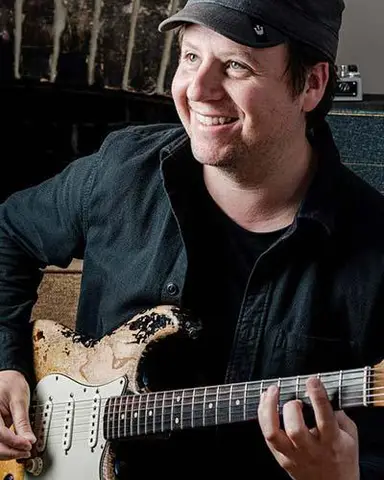
Lesson time: (4min 53sec)
Scott McKeon décortique son solo agressif sur « Fight No More », de l'utilisation appuyée de la pédale fuzz et des motifs répétitifs jusqu'à la gestion de la modulation de ré bémol vers si bémol.
Course preview
This lesson is part of the course Joue de l'authentique guitare blues du Texas
Watch a preview of the full course below.
Lesson transcript:
Enhancing Your Solo for "Fight No More"
Introduction to the Solo
In the solo for "Fight No More," I take an aggressive approach right from the start. Here's how I go about it:
- Fuzz Pedal: I use the fuzz pedal throughout the solo, which contributes to its chaotic energy.
- Entrance: I enter the solo quite forcefully since the build-up is already intense by that point.
Playing Patterns
From there, I focus on playing repetitive patterns, which can be surprisingly effective. Here are some key points to consider:
- Use little patterns that you can stay on for a while.
- For example, I occasionally step back from the fuzz pedal, exploring cleaner sounds.
Modulation and Technique
Let's break down the modulation:
- The solo modulates from D flat down to B flat.
- I might start with a certain motif and then move onto something similar around the 11th fret on the B string.
Influences and Interplay
When I'm performing, certain influences come to mind:
- This style reminds me of Clapton in the early 70s, with two guitars playing similar parts.
- It's essential to play in tandem with the drummer, like Jeremy Stacey, who reacts to my playing, creating a dynamic interaction.
Licks and Bends
Transitioning between licks and bends is crucial:
- I find that certain licks provide a platform to think about where I want to take the solo next.
- Ending on a bend can set up a powerful move into the next section.
Vibrato Techniques
An important consideration in your playing is vibrato:
- Be mindful of when to use vibrato and when to leave it off.
- For instance, when I bend a note, I might add vibrato afterward for a more singing quality.
The Vocal Analogy
Think of your guitar playing as akin to singing:
- Approach notes as if you were vocalizing, allowing yourself to land on the note before adding vibrato.
- Conversely, sometimes leaving a note clean, without vibrato, can be just as effective.
Control and Experimentation
As guitarists, we can easily fall into the habit of adding vibrato to every note, especially once we perfect it:
-
Control is key: Decide when to apply vibrato for maximum impact.
-
Experiment with sustained notes:
- If you let a note die off, it has a different effect than if you sustain it with vibrato.
Conclusion
Have fun exploring these concepts in your solos. The interplay, the dynamics, and the finesse can greatly enhance your performance!
About the instructor
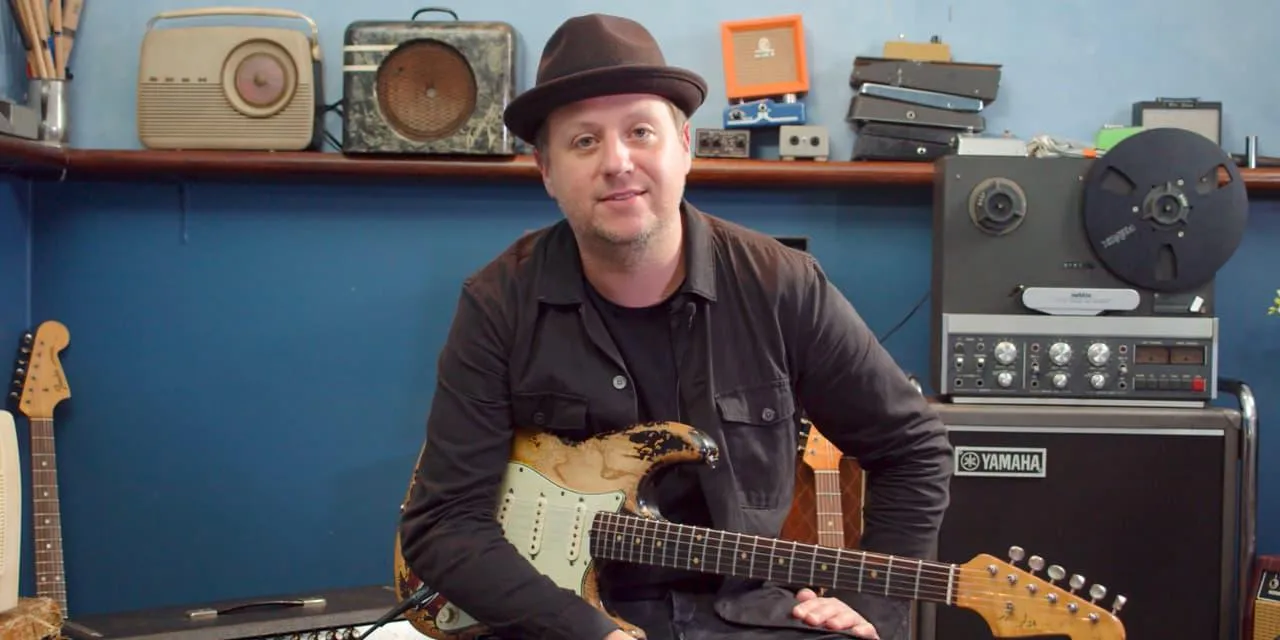
Scott McKeon a consacré toute une vie à son art de guitariste. Inspiré au départ par l'amour de son père pour le blues, la soul et le rock, il a pris la guitare à l'âge de quatre ans et s'est bâti une réputation de l'un des guitaristes les plus demandés du Royaume-Uni, aussi bien en studio qu'en concert. En 2014, Scott a reçu un appel pour jouer dans le groupe de Sir Tom Jones, aux côtés de Robbie McIntosh et du batteur de Pink Floyd Gary Wallis. Le répertoire, orienté blues, rock 'n' roll et gospel, permet à Scott de puiser dans ses premières influences et de parcourir le globe. Les concerts à ce jour ont compté cinq tournées européennes, trois tournées aux États-Unis et en Amérique du Sud, ainsi que des tournées en Australie et en Extrême-Orient, sans oublier des apparitions à la télévision dont Later... with Jools Holland et TFI Friday, et une prestation au New Orleans Jazz Festival en 2019. Le troisième album de Scott, 'New Morning', est un disque terreux, brut et mené par la guitare, qui met en valeur son registre et ses capacités de guitariste. L'album a été enregistré en live au studio RAK à Londres, capturant l'énergie et la spontanéité des sessions. Il a été produit par Paul Stacey (Black Crowes/Oasis), et fait appel à Jeremy Stacey (Sheryl Crow/Tal Wilkenfeld) à la batterie, Rocco Palladino (Tom Misch/D'Angelo) à la basse, et Gavin Conder (Rufus Black/The Kondoors) au chant sur plusieurs morceaux. Scott possède aussi une pédale de fuzz signature et des micros signature, modelés sur sa Strat de 62. Dans son cours, Scott partage le son, le phrasé et le feeling qui sous-tendent l'authentique guitare blues du Texas, te montrant comment mordre dans le style et faire chanter chaque note. read more