



Guitare électrique - Turnarounds classiques
Lesson time: (3min 10sec)
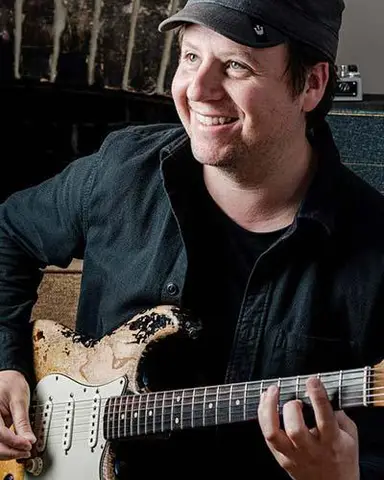
Scott McKeon te montre des façons alternatives de jouer le turnaround de 12 mesures, y compris les approches de Jimmy Reed et Lightning Hopkins, pour garder ton blues du Texas frais.
Course preview
This lesson is part of the course Joue de l'authentique guitare blues du Texas
Watch a preview of the full course below.
Lesson transcript:
Exploring Turnarounds in Blues
Another cool way of playing the turnaround is to play this, which is like an old blues thing that you hear a lot.
Influences
People like:
- Eric Clapton
- Stevie Ray Vaughan
- Buddy Guy
The Technique
You're basically sliding up to the sort of B position for the V chord, and then back down to the A position. It's just a good alternate way to get through that turnaround.
Recap of Techniques
So far, we've got like three ways you could play it:
- The Jimmy Reed way with the open A.
- The Lightning Hopkins way, which is in the style of his playing.
- The lead guitar way, which is more melodic.
It's really handy having those slightly different ways of playing the same thing because you can use that to build or just make it feel good as you're going through the song.
Mixing It Up
You can kind of mix that up as well; it doesn't have to be the same every time. You can:
- Add more to it
- Take away from it a bit
- Even go like [insert your variation here]
Finding Your Own Variation
You can kind of have fun with these things and find your own sort of variation.
Additional Techniques
Another thing I just realized I did, which again, I got from Steve Vaughan, was holding the pick with my middle finger free to pluck.
Practical Application
- It's kind of like a country thing.
- You can use that technique however you want.
Sometimes, it's nice to have a note pop out even while playing the riff. You can either play that with a pick, or you can play [insert alternative technique], and that's really cool for that.
About the instructor
Scott McKeon a consacré toute une vie à son art de guitariste. Inspiré au départ par l'amour de son père pour le blues, la soul et le rock, il a pris la guitare à l'âge de quatre ans et s'est bâti une réputation de l'un des guitaristes les plus demandés du Royaume-Uni, aussi bien en studio qu'en concert. En 2014, Scott a reçu un appel pour jouer dans le groupe de Sir Tom Jones, aux côtés de Robbie McIntosh et du batteur de Pink Floyd Gary Wallis. Le répertoire, orienté blues, rock 'n' roll et gospel, permet à Scott de puiser dans ses premières influences et de parcourir le globe. Les concerts à ce jour ont compté cinq tournées européennes, trois tournées aux États-Unis et en Amérique du Sud, ainsi que des tournées en Australie et en Extrême-Orient, sans oublier des apparitions à la télévision dont Later... with Jools Holland et TFI Friday, et une prestation au New Orleans Jazz Festival en 2019. Le troisième album de Scott, 'New Morning', est un disque terreux, brut et mené par la guitare, qui met en valeur son registre et ses capacités de guitariste. L'album a été enregistré en live au studio RAK à Londres, capturant l'énergie et la spontanéité des sessions. Il a été produit par Paul Stacey (Black Crowes/Oasis), et fait appel à Jeremy Stacey (Sheryl Crow/Tal Wilkenfeld) à la batterie, Rocco Palladino (Tom Misch/D'Angelo) à la basse, et Gavin Conder (Rufus Black/The Kondoors) au chant sur plusieurs morceaux. Scott possède aussi une pédale de fuzz signature et des micros signature, modelés sur sa Strat de 62. Dans son cours, Scott partage le son, le phrasé et le feeling qui sous-tendent l'authentique guitare blues du Texas, te montrant comment mordre dans le style et faire chanter chaque note. read more