



Gamme et tonalité

Avec
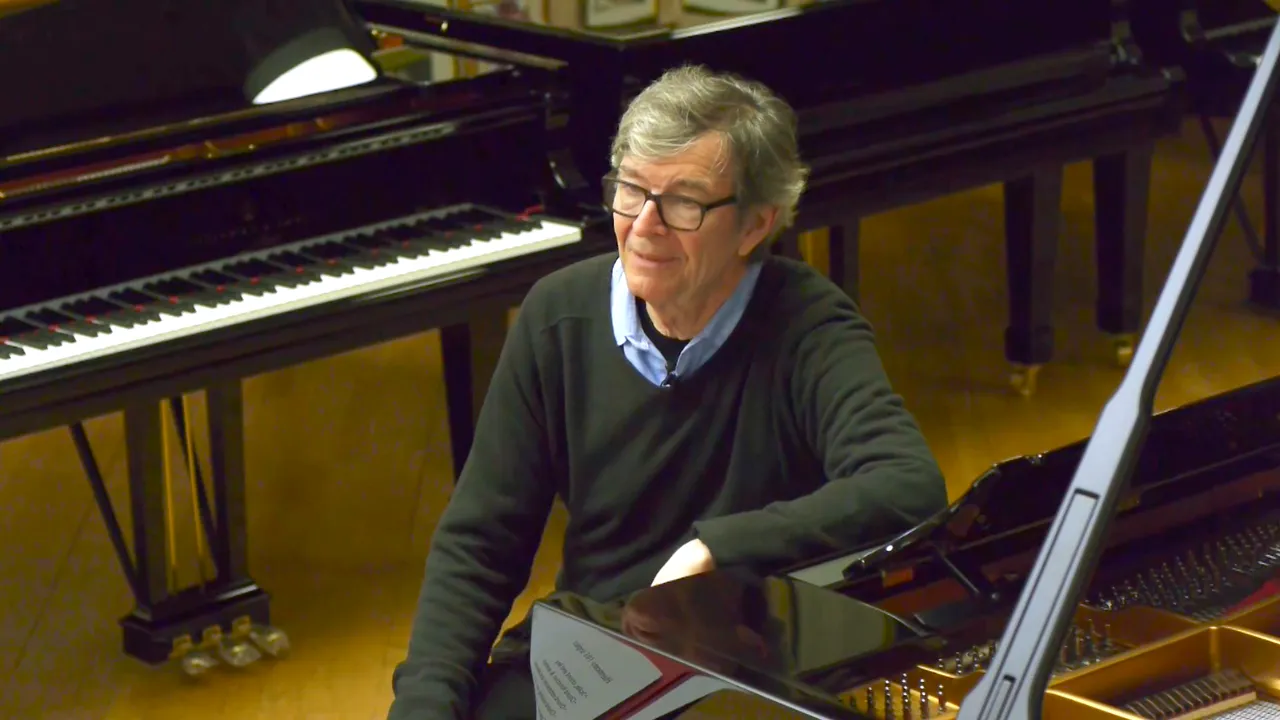
Darius BrubeckDarius Brubeck explique les intervalles et la gamme majeure, et comment la tonique donne sa tonalité à un morceau — l'armure indiquant combien de dièses ou de bémols sont concernés.
Le contenu du cours
11 leçons (1h 48min) · 1 gratuites
Transcription de la leçon
Harmony 101: Lesson 1
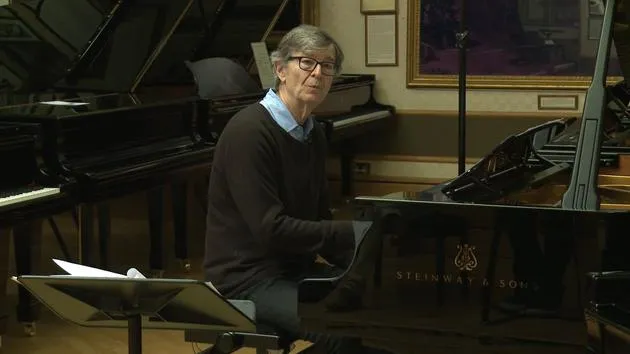
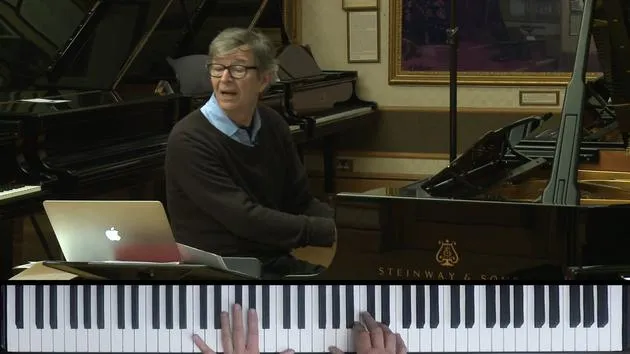
Welcome to the first lesson of Harmony 101 on Music Gurus. Here we are in Steinway Hall, surrounded by magnificent keyboards, and I'm going to use the piano to explain some basic concepts.
Overview of Key Concepts
Now, here are the most basic ideas you can get in studying music:
- Scale
- Chord
- Key
Just be patient because it will get complicated very soon. But to start with, I'll just talk about the scale.
Understanding Scales
We're surrounded by pianos, and we're going to use the piano as a reference to explain all of these concepts. However, it is not necessary to be a pianist at all. It would be useful, though, to have a keyboard for reference.
Suggested Instruments
It would be a good idea for you to get a cheap electric keyboard or a melodica, something where the notes are spelled out as they are at the piano keyboard. This way, you can see how these relationships work.
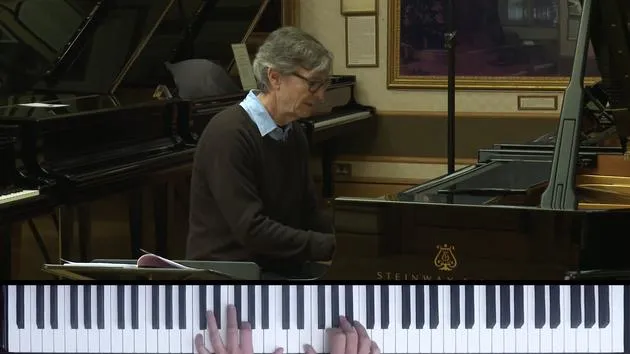
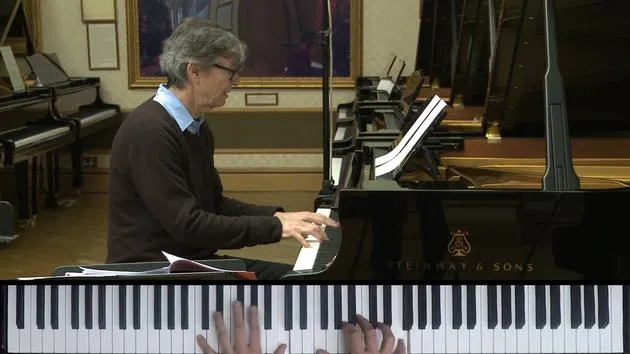
To start with a scale: from here to here, we have a scale.
The Major Scale
There are different possible scales, but right now we're talking about the major scale. This is a series of intervals you get just using the white keys between C and C.
The intervals of this scale are:
- Second
- Major Third (I'll explain why that term is used in a moment)
- Fourth (sometimes called a perfect fourth)
- Fifth (sometimes called a perfect fifth)
- Major Sixth
- Major Seventh
- Octave
When we refer to intervals of the scale (1, 2, 3, 4, 5, 6, 7), it's always just taking them in order from the root, or what's technically called the tonic note of the scale.
Altered Intervals
But these intervals can be altered. For instance:
- There's still a third, sixth, seventh.
- If you have a minor scale, you have a minor third.
This was called a major third because there's a little more distance between the root (the tonic note) and the third.
- Here is the minor sixth
- That's the major sixth
- That's the minor seventh
- That's the raised seventh
So you have a different scale, but the key is still C.
Consistency in Scales
The important thing is to understand that the scale may change, but the root of the scale can be the same. You could have:
- A minor pentatonic scale
- A major pentatonic scale
- A blues scale
The crucial point is to maintain the same relationship between the tonic and the other intervals in the scale.
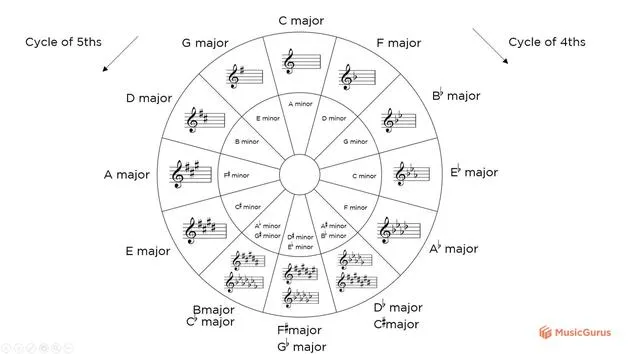
Key Signatures
And that's why we have key signatures.
- For example, if I start on F, there's the B flat in the key signature right there.
- If it weren't there, it would be quite a distinctly different sound.
To maintain the major scale, we need one flat in the case of F.
Further Example
Let's do one more example: there's one sharp in the key of G. All of this is just to keep that relationship constant.
11 leçons
1h 48m de leçons vidéo structurées
Fonctions vidéo avancées
Ralentissez, bouclez un passage, suivez la partition
Mobile, tablette et ordinateur
Pratiquez où vous voulez
Satisfaction garantie à 100 %
Garantie remboursement 30 jours
Rencontrez votre guru
Rencontrez votre guru
Darius Brubeck est un pianiste de jazz et pédagogue reconnu. Il a publié de nombreux albums en tant que leader, tourné à l'international avec ses propres formations et collaboré avec ses frères sur Brubecks Play Brubeck.
Darius a été professeur invité Fulbright en Roumanie et en Turquie. Il a créé le premier cursus diplômant en jazz proposé par une université africaine, à la University of KwaZulu-Natal en Afrique du Sud, où il a enseigné jusqu'en 2005.
Darius collabore souvent avec Mike Rossi, saxophoniste et professeur de musique à la University of Cape Town. Parmi les réalisations de Mike figurent de nombreux enregistrements et apparitions sur les scènes internationales en tant que leader, soliste et sideman aux côtés de Tony Bennett, Dave Liebman, Winston Mankunku Ngozi, George Russell, Clark Terry et Alessio Menconi, entre autres.
Avec Darius pour guide, tu iras droit à l'essentiel. Dans Harmony 101, il démystifie l'harmonie du jazz pour que tu puisses te l'approprier rapidement, et dans Mastering Odd Times, il explique comment jouer et improviser avec assurance dans des mesures inhabituelles.







