



Exemple d'inversions d'accords - My Funny Valentine

Avec
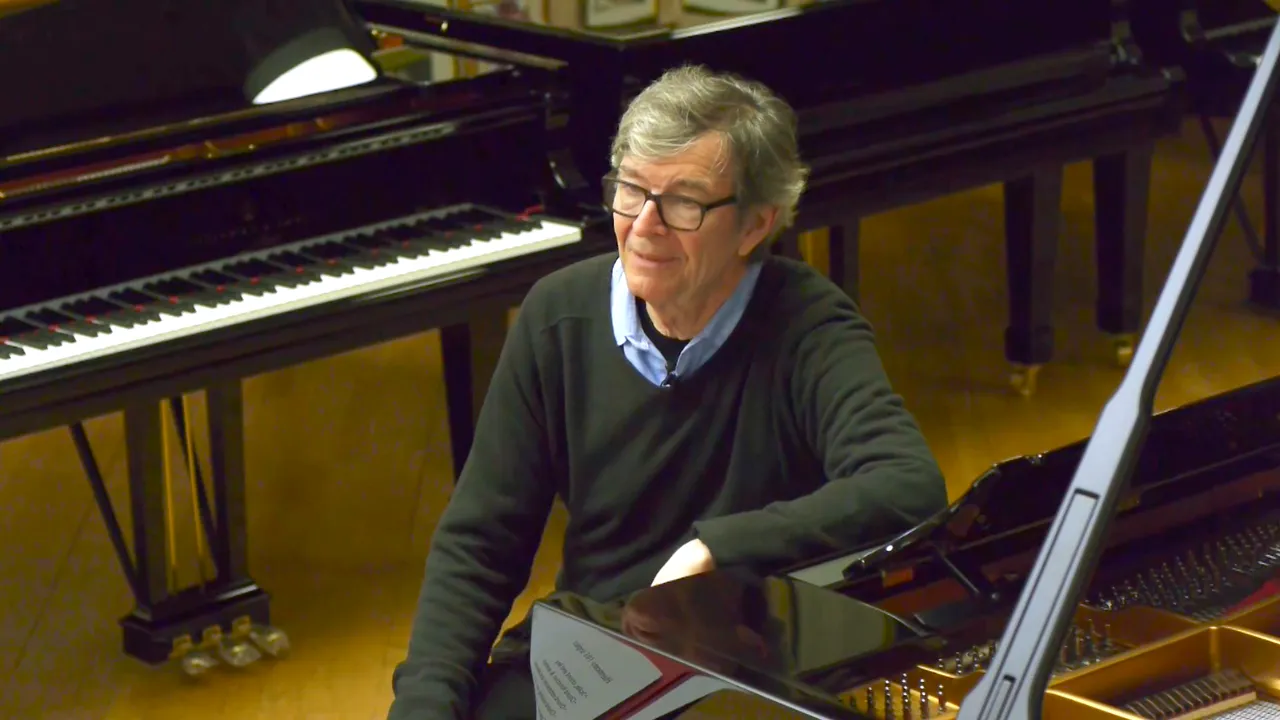
Darius BrubeckCe qu'il faut surtout retenir de la leçon sur les inversions d'accords, c'est que la note la plus grave que tu entends n'est pas nécessairement la fondamentale de l'accord. Darius l'illustre avec le classique My Funny Valentine.
Le contenu du cours
11 leçons (1h 48min) · 1 gratuites
Transcription de la leçon
Understanding Inversions in Chord Progression
Perhaps the single most important piece of information you can take away from just this brief look at inversions is that the lowest note you play or hear may not, in fact, be the root of the chord.
Next Lesson Overview
That's why in the next lesson, we're going to talk about chord progression and understand a little more about how it works.
Illustrating Inversions
To illustrate this point further, besides the B section of Summer Song, which you can see written out, I've thought of a couple of other examples where the commonly applied descending line underneath implies inversions.
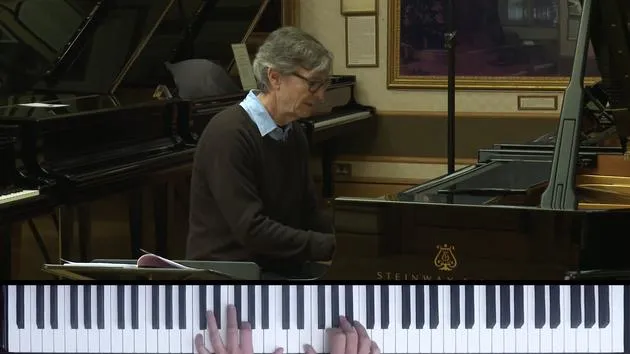
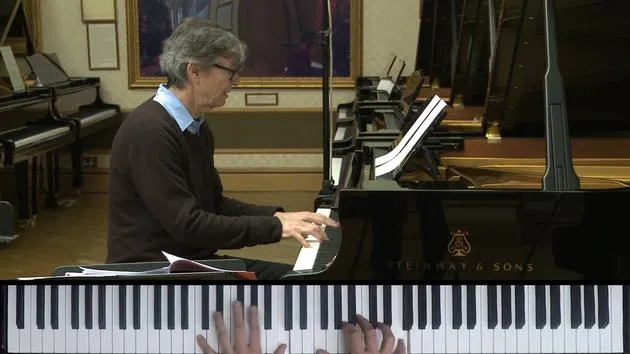
- My Funny Valentine
- This song has received scant attention to minor, something that we'll pick up in the next lesson.
- It's a familiar ballad.
- Usually, you hear it with a descending bass line.
- This means that even though it can be over a pedal C the whole time (since we're in C minor in passing), you can make some nice voicings that don't disturb the overall C minor quality.
- However, that's really an inversion of a G triad: E flat, A minor, half diminished.
- And then to the subdominant.
- Finally, you're at a root position chord, and so on.
Movement Within Chords
You can see how this works: you can have chord changes within chords that come just from using the lowest note to build another chord, which might be an inversion that adds more richness to the progression.
- An Example in Major
- An example in major would be going from C minor to E flat major, like the song Someone in Love.
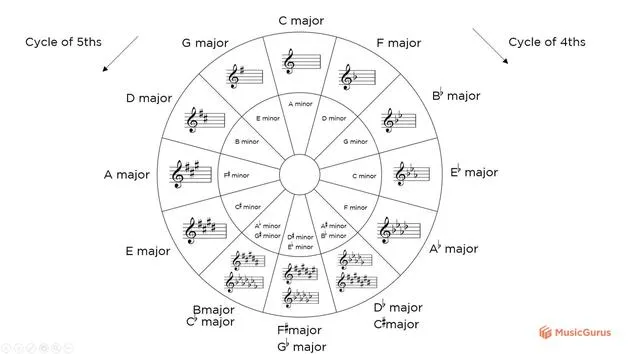
- "So what?" you may ask, this could imply that the lowest note is not the root of the chord (3, 6).
Conclusion
So, even though the important aspect is the root progression, inversions give you a way to build up movement even within that. We'll talk about that a lot more in the context of chord progression, but I just thought I might stick that in before discussing voicings that omit the root altogether.
11 leçons
1h 48m de leçons vidéo structurées
Fonctions vidéo avancées
Ralentissez, bouclez un passage, suivez la partition
Mobile, tablette et ordinateur
Pratiquez où vous voulez
Satisfaction garantie à 100 %
Garantie remboursement 30 jours
Rencontrez votre guru
Rencontrez votre guru
Darius Brubeck est un pianiste de jazz et pédagogue reconnu. Il a publié de nombreux albums en tant que leader, tourné à l'international avec ses propres formations et collaboré avec ses frères sur Brubecks Play Brubeck.
Darius a été professeur invité Fulbright en Roumanie et en Turquie. Il a créé le premier cursus diplômant en jazz proposé par une université africaine, à la University of KwaZulu-Natal en Afrique du Sud, où il a enseigné jusqu'en 2005.
Darius collabore souvent avec Mike Rossi, saxophoniste et professeur de musique à la University of Cape Town. Parmi les réalisations de Mike figurent de nombreux enregistrements et apparitions sur les scènes internationales en tant que leader, soliste et sideman aux côtés de Tony Bennett, Dave Liebman, Winston Mankunku Ngozi, George Russell, Clark Terry et Alessio Menconi, entre autres.
Avec Darius pour guide, tu iras droit à l'essentiel. Dans Harmony 101, il démystifie l'harmonie du jazz pour que tu puisses te l'approprier rapidement, et dans Mastering Odd Times, il explique comment jouer et improviser avec assurance dans des mesures inhabituelles.







