



Accords : triades et septièmes
Avec
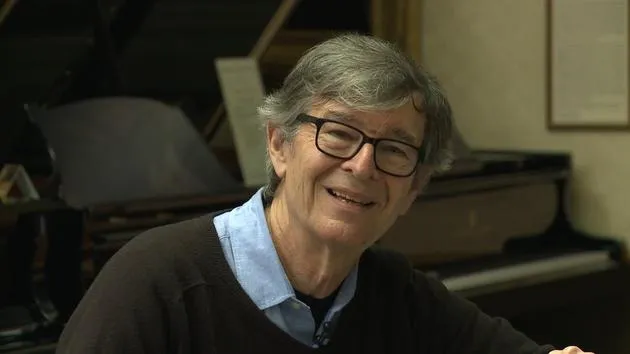
Darius BrubeckDarius Brubeck explique comment se construisent les triades et les accords de septième, en s’appuyant sur ‘Summer Song’, le morceau de ses parents en fa majeur, pour donner vie à tout cela.
Le contenu du cours
11 leçons (1h 48min) · 1 gratuites
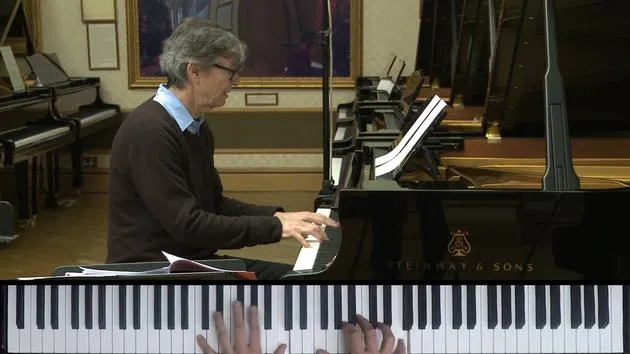
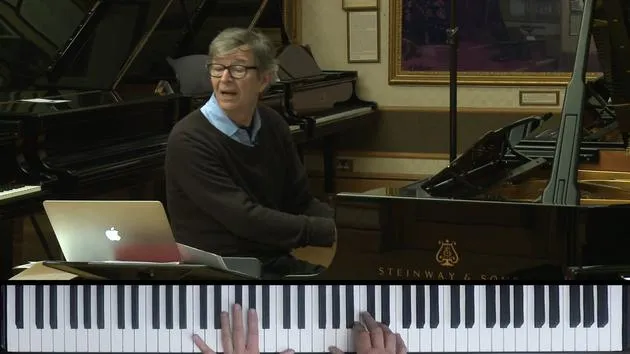
Transcription de la leçon
Music Lesson: Understanding Chords in F Major
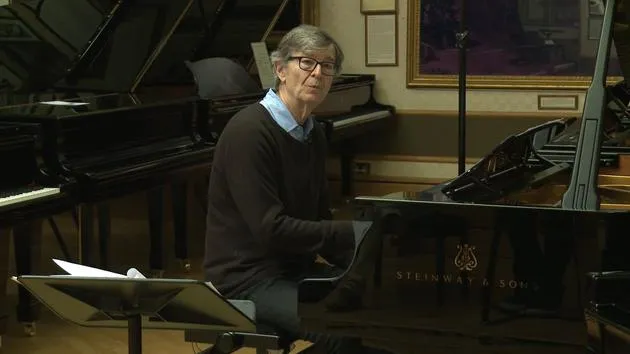
In this lesson, I'll be using a song that my parents, Dave and Iola Brubeck, wrote together called Summer Song. This song will illustrate some of the concepts we'll be discussing throughout the course.
Key Signature
- Key: F major (1 flat)
I chose this particular song not only because I like it, but also because it is very diatonic. It primarily uses notes from the F major scale.
Harmony and Melody
As we move through this piece, you may find it surprising how many ways the melody can be harmonized while maintaining the integrity of the scale.
Chords Built on Scale Degrees
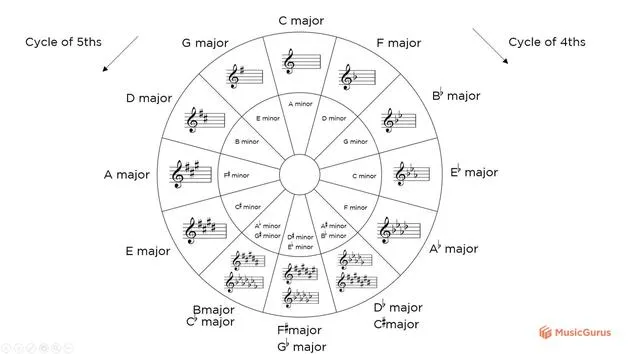
Starting from scales, we can derive chords built on each degree of the scale. For visual clarity, I will switch back to the key of C to demonstrate all of the triads.
- Notation: These chords will be denoted as Roman numerals, which refer to scale degrees and, later on, chord functions.
Triads:
- 1: Tonic chord (I) - 1, 3, 5
- When I say 1, 3, 5, I'm referring to intervals.
For example:
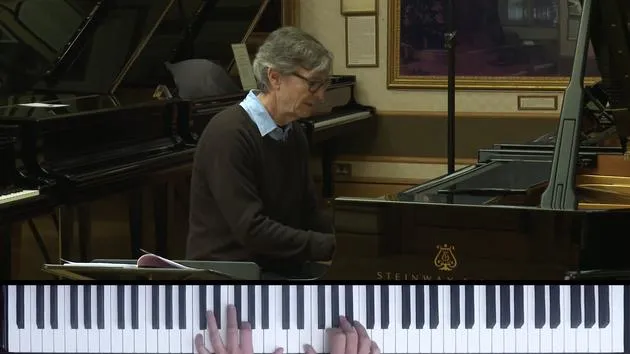
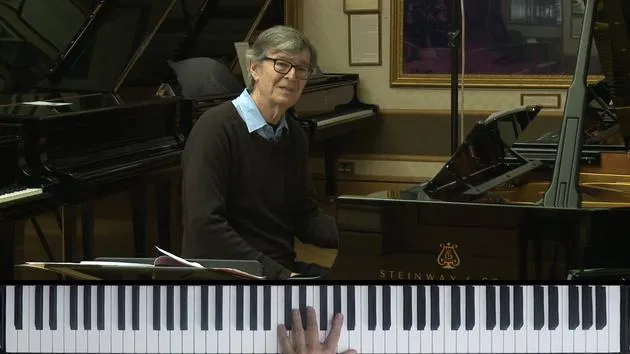
- If my thumb's on F:
- F is 1
- A is 3
- C is 5
This describes the distance between the root and the top note of the chord.
Four Note Chords
To further enrich our harmony, we can make four-note chords:
- 1, 3, 5, 7
By adding an additional interval, we step into the realm of richer contemporary harmony.
Different Qualities of Chords
- I (1): Major seventh
- II (2): Minor seventh (minor triad + flat seventh)
- III (3): Minor seventh
- IV (4): Major seventh
You'll notice that the sounds of these chords are quite similar.
The V Chord
The V chord is distinct:
- It has an interval that is referred to as an augmented fourth or diminished fifth.
The important thing about the V chord is its strong tendency to resolve. Historically, it was referred to in medieval times as the diabolus in musica, or the devil's interval, due to its inherent instability.
Additional Chords
- VI (6): Minor seventh
- VII (7): Diminished fifth and sometimes called a half-diminished chord (minor 7 flat 5).
Lastly, the augmented chord is the only one I've left out. In the major scale, the fifth is extended by a half step.
Summary of Chords in Major Scale
- Primary Triads (I, IV, V):
- I and IV are major.
- V has a flat seventh, referred to as a dominant seventh. This chord has a unique function.
Final Thoughts
This concludes our discussion on chords, scales, and keys. Don't be fooled; we will soon delve into much more advanced harmony. However, mastering these foundational concepts is essential.
Challenge
I encourage you to challenge yourself by playing all of the seventh chords based on scale tones across 12 keys on a keyboard. You may find it quite difficult, but it's a worthwhile exercise that will help you gain mastery over how chords function in every key.
11 leçons
1h 48m de leçons vidéo structurées
Fonctions vidéo avancées
Ralentissez, bouclez un passage, suivez la partition
Mobile, tablette et ordinateur
Pratiquez où vous voulez
Satisfaction garantie à 100 %
Garantie remboursement 30 jours
Rencontrez votre guru
Rencontrez votre guru
Darius Brubeck est un pianiste de jazz et pédagogue reconnu. Il a publié de nombreux albums en tant que leader, tourné à l'international avec ses propres formations et collaboré avec ses frères sur Brubecks Play Brubeck.
Darius a été professeur invité Fulbright en Roumanie et en Turquie. Il a créé le premier cursus diplômant en jazz proposé par une université africaine, à la University of KwaZulu-Natal en Afrique du Sud, où il a enseigné jusqu'en 2005.
Darius collabore souvent avec Mike Rossi, saxophoniste et professeur de musique à la University of Cape Town. Parmi les réalisations de Mike figurent de nombreux enregistrements et apparitions sur les scènes internationales en tant que leader, soliste et sideman aux côtés de Tony Bennett, Dave Liebman, Winston Mankunku Ngozi, George Russell, Clark Terry et Alessio Menconi, entre autres.
Avec Darius pour guide, tu iras droit à l'essentiel. Dans Harmony 101, il démystifie l'harmonie du jazz pour que tu puisses te l'approprier rapidement, et dans Mastering Odd Times, il explique comment jouer et improviser avec assurance dans des mesures inhabituelles.







