



Pour commencer : le blues à 12 mesures

Lesson time: (12min 26sec)
Paddy explique les bases du blues. Il décompose le 'cycle d'accords' du 12-bar, en expliquant en détail le nombre de mesures et les accords à utiliser.
Course preview
This lesson is part of the course Joue du piano blues authentique
Watch a preview of the full course below.
Lesson transcript:
Introduction to Blues Piano
How you doing? I'm Paddy Milner. Welcome to MusicGurus.com, and thanks for checking out this introduction to the Blues piano course.
The Blues Sound World
In this course, I really want to open the door to the sound world of blues piano and get you playing some authentic blues piano. Not just kind of bluesy piano, but some truly authentic-sounding blues piano.
The blues is a big, beautiful, and varied genre with all kinds of different elements within it. We need to find a common point to start from, and I think a great entry point is by looking at the 12 Bar Blues musical form. At the end of the day, this is one of the most common forms used within the blues.
What is the 12 Bar Blues?
As the name suggests, the 12 Bar Blues consists of a repeated form that consists of 12 bars of four beats.
Chords in a 12 Bar Blues
What chords are in a 12 Bar Blues? There are three different chords:
-
I Chord: In the key of C, this is a C.
- A chord is defined as a triad, which is a three-note chord consisting of the first, third, and fifth of the scale.
- For C, these notes are:
- 1: C
- 3: E
- 5: G
-
IV Chord: This is the second chord in the 12 Bar Blues, which is an F.
- The F major scale has:
- 1: F
- 3: A
- 5: C
- The F major scale has:
-
V Chord: This is a G.
- The G major scale has:
- 1: G
- 3: B
- 5: D
- The G major scale has:
Chord Sequence in 12 Bar Blues
The sequence of chords in a 12 Bar Blues is as follows:
- 4 bars on the C chord
- 2 bars on the F chord
- 2 bars on the C chord
- 1 bar on the G chord
- 1 bar on the F chord
- 1 bar on the C chord
- 1 bar on the G chord
While there are different variations, this is the form we'll focus on as a great starting point.
Practicing the 12 Bar Blues
To get used to this 12 Bar form, we'll play it simply at first, using four beats to the bar in both hands.
Note: This won't sound remarkably bluesy initially, but we're focusing on the basics before we vary it to create a classic blues piano sound.
Playing Instructions
- Count off: "One, two, three, four."
- Start the sequence:
- C: 4 beats
- F: 2 beats
- C: 2 beats
- G: 1 beat
- F: 1 beat
- C: 1 beat
- G: 1 beat
I've just demonstrated the 12 Bar Blues played as 4 beats per bar in both left and right hands. The left hand plays the root note of the chords:
- C for the C chord
- F for the F chord
- G for the G chord
Practice Tips
- Fluency: Aim to get these changes between chords as fluent as possible without any gaps.
- Metronome: Use a metronome to ensure a constant tempo.
- Hesitation: Think ahead to avoid any hesitation when changing chords. For example:
- Moving from C to F
- C to G
- G to F
To practice, try playing two beats on each chord to get comfortable with transitions.
Internalizing the 12 Bar Blues
One of the main aims of mastering the 12 Bar Blues is for it to become internalized. This allows you to add more complex elements naturally when improvising.
Demonstration
To demonstrate, I'll play a 12 Bar sequence with some more complex embellishments.
- Left Hand: Acts as the rhythm section.
- Right Hand: Focuses on melodic interest, embellishing the basic chords.
Conclusion
Don't forget, everything in this lesson is available on the downloadable PDF, which includes practice tips and extra resources.
See you in the next lesson!
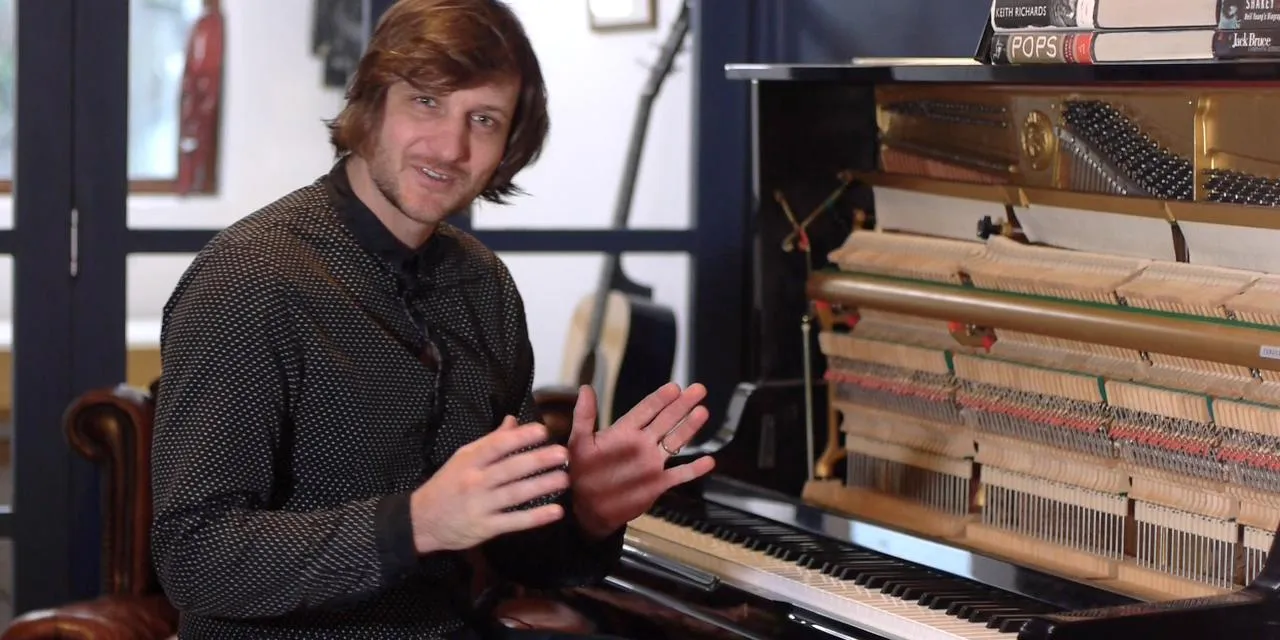
About the instructor
Paddy Milner est reconnu comme l'un des meilleurs pianistes de blues au monde : il est actuellement le claviériste attitré de Sir Tom Jones, après plusieurs années aux côtés du grand et regretté Jack Bruce, mais c'est aussi un superbe auteur-compositeur original et un chanteur au timbre singulier. Il suffit de lire les éloges de personnalités comme Dave Brubeck ci-dessous ! Son jeu figure sur la bande originale du film à succès 'Rocketman' (2019). Il a remporté à deux reprises le prix du Meilleur claviériste aux British Blues Awards et occupe de longue date une résidence en tant que membre fondateur du Ronnie Scott's Blues Explosion au club mondialement réputé Ronnie Scott's. Son groupe actuel LONDONOLA joue une musique britannique maison teintée d'une bonne dose d'esprit de La Nouvelle-Orléans, et son projet collectif JAWBONE va de succès en succès depuis la sortie de son premier album éponyme. « J'adore... voilà un gars qui sait vraiment jouer du piano » - Dave Brubeck « Je le recommande vivement. D'une certaine manière, tout se met à aller beaucoup mieux ! » - Jack Bruce « Le meilleur pianiste de blues d'Europe... » - Blues Access, USA « Impressionnant et original » - The Times « Éblouissant » - The Independent Au fil de ses cours, Paddy décortique l'authentique shuffle de blues, le slow blues, le boogie-woogie, le rock 'n' roll et le piano de La Nouvelle-Orléans - jusqu'à trois grands classiques du boogie-woogie - pour que vous appreniez ces styles auprès de l'un des tout meilleurs du métier. read more