



Riff main droite n° 1 et variations
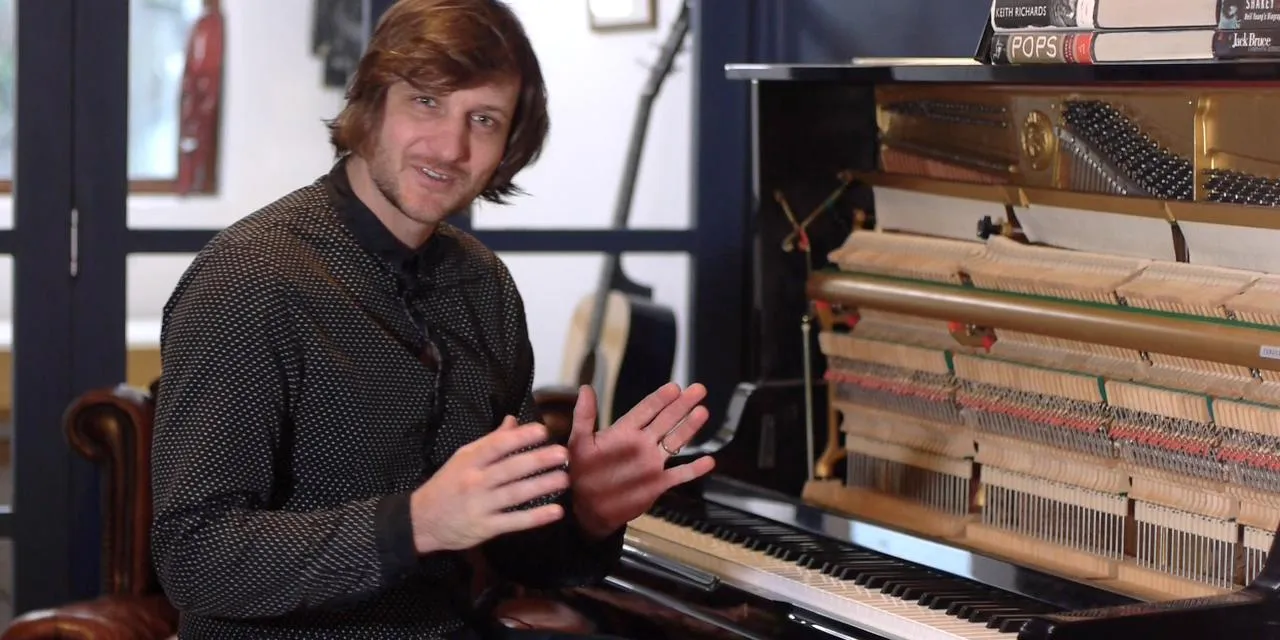
Dans cette leçon, tu apprendras un riff simple basé sur des triades. Paddy te donnera des idées d'improvisation comme le balancement des notes et l'utilisation de la crush note. Plein de conseils de pratique pour conclure la leçon.
Le contenu du cours
10 leçons (1h 49min) · 1 gratuites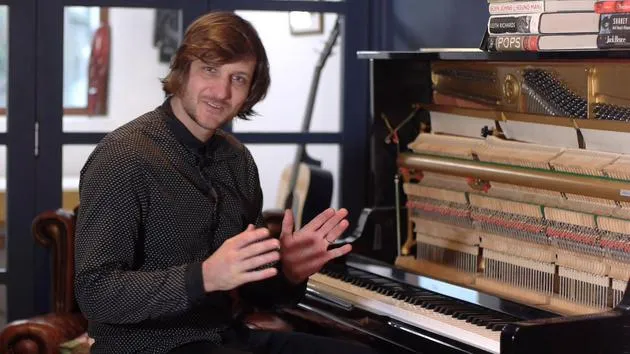
01. Pour commencer : le blues à 12 mesures
12:20
02. La salle des machines : basse à la main gauche
9:31
03. Ajouter la main droite/comping
Leçon gratuite11:47

04. Développer l'harmonie : accords de septième et renversements
15:27
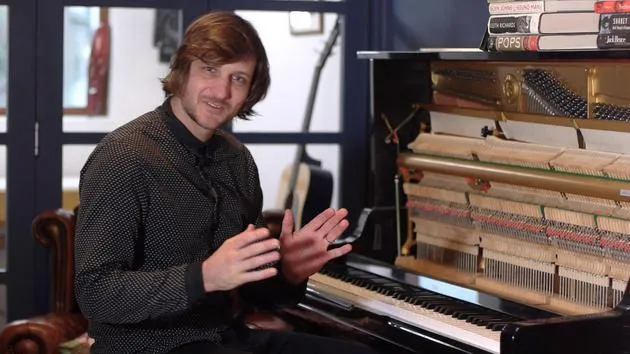
05. Riff main droite n° 1 et variations
Tu es ici13:20

06. Riff de main droite n° 1 : autres variations
14:39
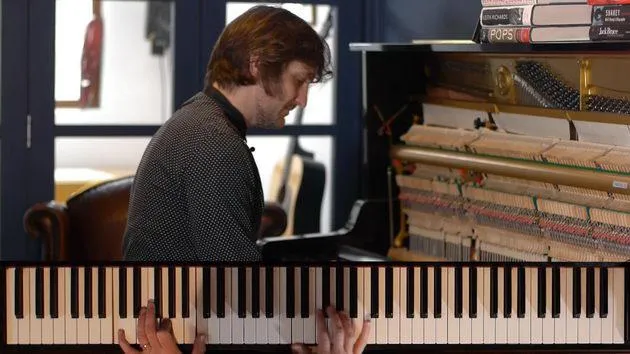
07. La « gamme blues » et ses usages
10:41
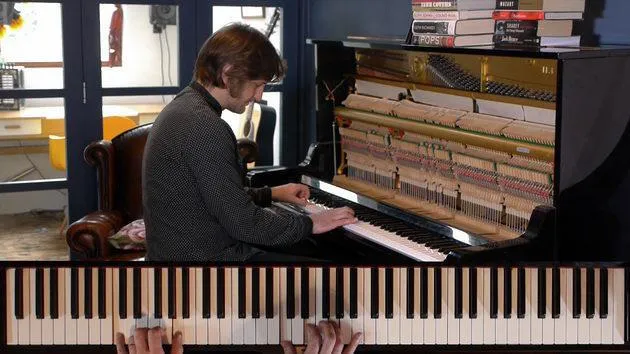
08. Fin nº 1 et variations
9:26
09. Tout mettre ensemble
10:34

10. La sale douzaine - Le défi du blues à douze mesures
1:59
Transcription de la leçon
Lesson: Exploring Right Hand Patterns and Riffs
In this lesson, let's start looking at some more interesting right-hand patterns and riffs. As I said earlier, a lot of the riffs and melodic elements you hear in the right hand are embellishments of the basic chords, either a C or a C7, or when you're on the F, the F7, and the same for the G, of course.
Basic Variations
So, let's take a closer look at a basic variation of that and how we can develop it into something that sounds a lot cooler.
-
Start with the Basic C Chords:
- If we rock between those two notes, it gives us all sorts of scope to create something interesting.
- The left hand is doing this while we fill out the chords.
-
Playing Along with the Left Hand:
- You can literally play the same rhythm with that little variation.
- When playing the F, notice that it has a B flat, which is a slightly different shape from the C.
- The sequence goes: F back to C, and up to G (using the same pattern as C), all the white notes, and then the F with that B flat in.
-
Recognizing Patterns of Intervals:
- All these chords have the same pattern of intervals.
- This is crucial to understanding how to play in different keys.
Practicing the 12-Bar Sequence
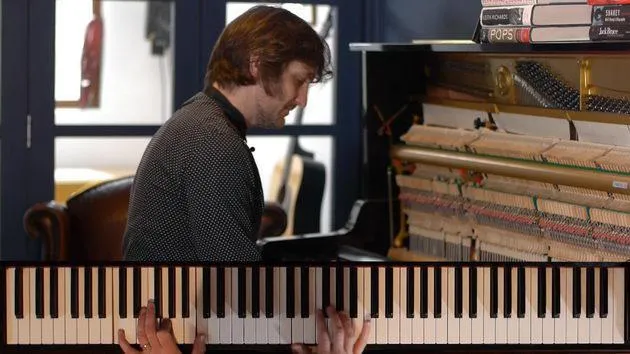
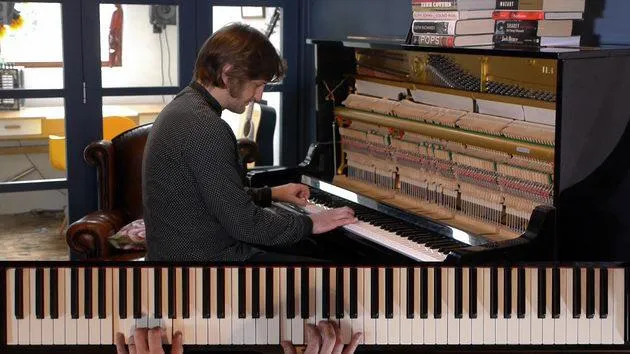
To practice, try to get that whole 12-bar sequence sounding fluent like this:
- C → F → G → F → C → G
Once you've achieved fluency with the practice tips I've provided (such as starting at a slow tempo), we can look at how to make it sound really cool.
Fingering Tips
A quick word on fingering before we proceed:
- There's no need to play different notes with the same finger because it all fits under the fingers.
- Use one finger for each note.
For practice, you might find the independence between fingers, particularly the fourth finger, a little difficult. Try practicing going between these two:
- C and G
You could also try doing it while holding the C down to strengthen those fingers, especially the fourth.
Do this exercise loudly and quietly, as you will find playing quietly often reveals weaknesses in finger control.
Making It More Interesting
Let's explore some simple ways to vary our sound and make things a bit more bluesy.
-
Adding a Crushed Note:
- This instantly makes it sound more bluesy.
- On the C, notice the crushed note is a semitone lower than the third note of the chord, and on the F, it follows the same principle.
-
Crushed Note Practice:
- The crushed note should not be thought of as a separate note but as part of the same movement when hitting that note.
- Experiment by doing this crush note:
- Perhaps do it only on the first instance, alternate it, or vary it.
Variating the Rhythm
At this point, we can also think about varying the rhythm a bit.
-
Simple Variations:
- For example, instead of playing all the notes together, rock between them. This can create an exciting sound.
-
Incorporate the Crush Note:
- Let's have a listen to how that sounds paired with the rhythm variations.
- Practicing with Energy:
- As always, keep a steady rhythm and tempo.
- There's nothing worse than playing with a drummer who speeds up all the time; consistency is key for these practice sessions.
Final Thoughts
Please explore this riff on your own and have fun with it. See what you can come up with! There are more suggestions provided in the PDF that you can download for this lesson, and in the next lesson, we'll look at even more ways to enhance this riff.
10 leçons
1h 49m de leçons vidéo structurées
Fonctions vidéo avancées
Ralentissez, bouclez un passage, suivez la partition
Mobile, tablette et ordinateur
Pratiquez où vous voulez
Satisfaction garantie à 100 %
Garantie remboursement 30 jours
Rencontrez votre guru

Rencontrez votre guru
Paddy Milner est reconnu comme l'un des meilleurs pianistes de blues au monde : il est actuellement le claviériste attitré de Sir Tom Jones, après plusieurs années aux côtés du grand et regretté Jack Bruce, mais c'est aussi un superbe auteur-compositeur original et un chanteur au timbre singulier. Il suffit de lire les éloges de personnalités comme Dave Brubeck ci-dessous ! Son jeu figure sur la bande originale du film à succès 'Rocketman' (2019).
Il a remporté à deux reprises le prix du Meilleur claviériste aux British Blues Awards et occupe de longue date une résidence en tant que membre fondateur du Ronnie Scott's Blues Explosion au club mondialement réputé Ronnie Scott's.
Son groupe actuel LONDONOLA joue une musique britannique maison teintée d'une bonne dose d'esprit de La Nouvelle-Orléans, et son projet collectif JAWBONE va de succès en succès depuis la sortie de son premier album éponyme.
- « J'adore... voilà un gars qui sait vraiment jouer du piano » - Dave Brubeck
- « Je le recommande vivement. D'une certaine manière, tout se met à aller beaucoup mieux ! » - Jack Bruce
- « Le meilleur pianiste de blues d'Europe... » - Blues Access, USA
- « Impressionnant et original » - The Times
- « Éblouissant » - The Independent
Au fil de ses cours, Paddy décortique l'authentique shuffle de blues, le slow blues, le boogie-woogie, le rock 'n' roll et le piano de La Nouvelle-Orléans - jusqu'à trois grands classiques du boogie-woogie - pour que vous appreniez ces styles auprès de l'un des tout meilleurs du métier.







