



Tout mettre ensemble

Lesson time: (10min 34sec)
Dans cette leçon, Paddy va te montrer comment les riffs peuvent être interchangés et reliés pour créer quelque chose de plus spontané et improvisé.
Course preview
This lesson is part of the course Joue du piano blues authentique
Watch a preview of the full course below.
Lesson transcript:
Conclusion of the Course
Right, here we are at the end of the course. Last video. Well done for getting this far! We've actually covered quite a lot of ground.
Putting It All Together
In this lesson, we're going to look at putting it all together, everything we've learned.
Key Topics
- The 12 Bar Blues
- Left-hand variations
- Right-hand chord movements
- Dominant sevenths
- Different inversions
- Riffs and variations
We'll also explore some blues scale concepts, mixing everything into the 12 bar form, and finish with a nice little ending.
Question and Answer Concept
One very simple idea we can use to start off is the question and answer technique.
- For example, I could pose a musical question with something based on this riff and answer it with a phrase based on the blues scale.
In this context, I'll do two-bar phrases around the entire 12 bar sequence. See if you can hear the transition from the question to the answer in the blues scale.
Here we go:
1, 2, 3, 4...
Notice how the first half posed the question, and the second half responded with something in the blues scale.
Variations in Phrase Lengths
We can experiment with two-bar phrases and then gradually reduce it to one-bar phrases. For example:
- Two-bar phrase followed by a two-bar answer.
- Then a one-bar phrase followed by two bars to finish.
Changing your phrase lengths can really add variety and is essential since we're diving into the realms of improvisation.
The Importance of Structure in Improvisation
Improvisation doesn't just mean playing any notes you want; there must be some structure and form. This includes:
- The notes you are using
- The actual pitches (whether it's a riff or the blues scale)
- Musical phrasing to give direction and momentum
Starting with two-bar phrases and then transitioning to one-bar phrases can provide direction and pace to the music.
Expanding Techniques
We've discussed the question and answer phrases, and I've demonstrated some examples.
But there are other techniques we can explore, such as:
- Octave Changes: Experiment with changing the octave in your question and answer phrasing.
For instance:
"So that's clearly two different phrases going on, one based on this riff and the other one up the octave doing something else."
Gradually Elongating or Shortening Phrases
One effective approach is to gradually elongate or shorten your phrases. For example:
- Start with one bar each, then move to two bars, back to one bar, and then two bars, and eventually to four bars.
It can be quite effective to stay on the same riff before releasing the tension at the ending.
Using Dynamics in Phrasing
Dynamics are also important for generating direction in phrasing.
For example:
"Within the 12 bar blues form, there's a sort of urgency towards the bar and the F chord in bar five."
You'll hear this kind of movement throughout classic records, often with a drum fill building up toward that chord.
Final Demonstration
To finish, I'll play through a 12 bar sequence two or three times, giving you some ideas.
- Listen for:
- Dynamics
- Question and answer phrasing
- Phrase lengths
- The musical material in use (is it a riff, comping, or a blues scale riff?)
Here we go:
1, 2, 3, 4...
Conclusion
This should give you some food for thought. Don't forget, you can download the PDF for this lesson, just like for all the other lessons from the website.
Most importantly, well done for making it this far! I hope you've learned a lot. Remember to keep practicing hard, and hopefully, I'll see you again in some more courses!
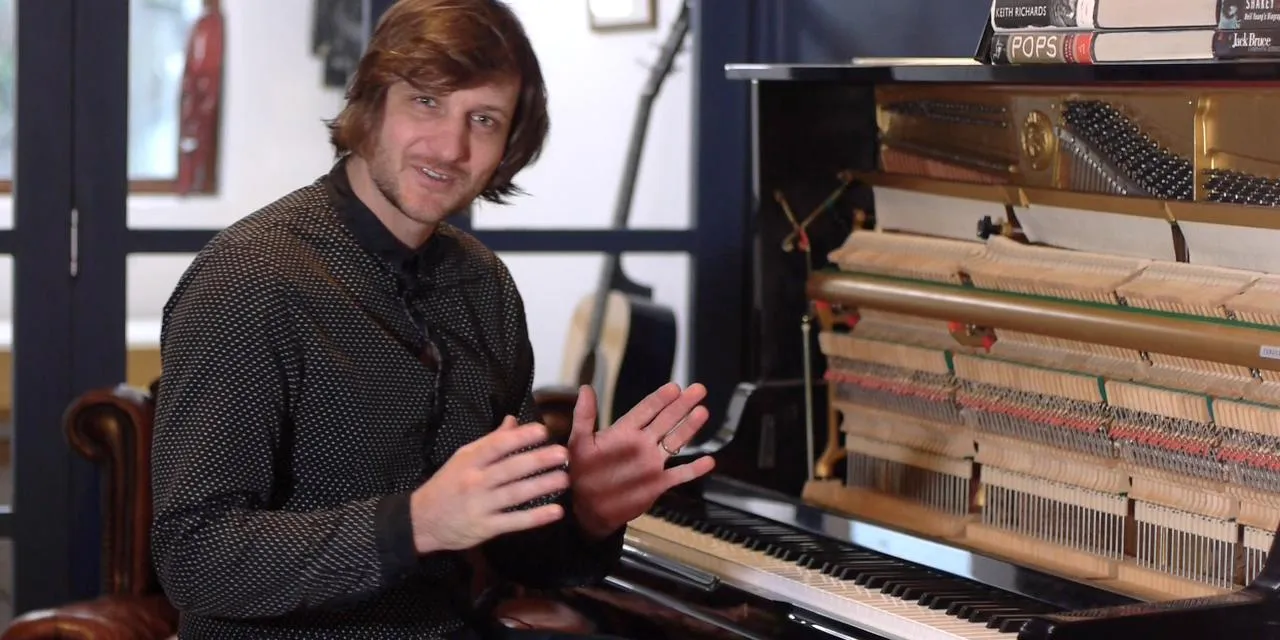
About the instructor
Paddy Milner est reconnu comme l'un des meilleurs pianistes de blues au monde : il est actuellement le claviériste attitré de Sir Tom Jones, après plusieurs années aux côtés du grand et regretté Jack Bruce, mais c'est aussi un superbe auteur-compositeur original et un chanteur au timbre singulier. Il suffit de lire les éloges de personnalités comme Dave Brubeck ci-dessous ! Son jeu figure sur la bande originale du film à succès 'Rocketman' (2019). Il a remporté à deux reprises le prix du Meilleur claviériste aux British Blues Awards et occupe de longue date une résidence en tant que membre fondateur du Ronnie Scott's Blues Explosion au club mondialement réputé Ronnie Scott's. Son groupe actuel LONDONOLA joue une musique britannique maison teintée d'une bonne dose d'esprit de La Nouvelle-Orléans, et son projet collectif JAWBONE va de succès en succès depuis la sortie de son premier album éponyme. « J'adore... voilà un gars qui sait vraiment jouer du piano » - Dave Brubeck « Je le recommande vivement. D'une certaine manière, tout se met à aller beaucoup mieux ! » - Jack Bruce « Le meilleur pianiste de blues d'Europe... » - Blues Access, USA « Impressionnant et original » - The Times « Éblouissant » - The Independent Au fil de ses cours, Paddy décortique l'authentique shuffle de blues, le slow blues, le boogie-woogie, le rock 'n' roll et le piano de La Nouvelle-Orléans - jusqu'à trois grands classiques du boogie-woogie - pour que vous appreniez ces styles auprès de l'un des tout meilleurs du métier. read more