



Partie de guitare

Lesson time: (4min 58sec)
Paul Whalley décortique la partie de guitare du morceau, de l'enregistrement DI sec à l'émulation d'ampli et au traitement qui lui donnent vie.
Course preview
This lesson is part of the course Produis un morceau pop qui déchire
Watch a preview of the full course below.
Lesson transcript:
Guitar Part Breakdown
So guys, the first of these parts we're going to have a look at is the guitar part of the song. This is actually what we wrote. Most of the record around is me and her sat in the room, sort of jamming it out pretty old school style.
Guitar Part Sound
On its own, this is what the guitar part sounds like. I'm going to break down the sound of that part for you.
- The way it was recorded dry, just DI'd into my audio interface:
- It sounds pretty jarry, pretty dead.
Processing Steps
One by one, I'm going to show you what I've got on each of these:
-
Waves Guitar Amp Emulator
Just helps it sound a bit more organic, a bit more real.- You can hear there: suddenly the sound is starting to come alive a bit.
- The highs are a lot more pronounced, and it's taken away some of that muddiness.
-
Noise Gate
This helps get rid of some of the fret noise in between the various bits and bobs and also some of the noise coming from the guitar amp.- It just helps tidy it up because, at the end of the day, this is quite an important part of the record.
- It's exposed quite a few times.
-
Compression
This is going on just to knock off a little bit of the harsh transients, some of the peaks and the accents that happen as you play the instrument.- It just helps smooth it out again.
-
Distortion
I've added a bit of distortion here just to help boost the sound out a little bit more and make it quite pronounced in the record.- Up till now, these are all quite subtle movements.
- They just all come together to really help the guitar stand out.
From this into this, it sounds like a lot more polished sound, almost as though it might have even come out of a big professional recording studio.
Adding the Sparkle
Next, we've got the bits that add what I like to think of as "sugar and spice." They add the real sparkle and magic:
-
Delay
I've set it to an eight dotted note because the guitar part is pretty straight, one chord every two beats.- This just helps add some movement to the part really subtly and keeps things moving along.
-
Reverb
This is added to really set the tone of it all and adds some space to it.- It starts to set the sonic palette of the whole record.
-
EQ
Finally, just to tidy everything up, I've got a bit of EQ on the end here:- Rolling off some of the low end.
- Taking out a bit more of this harsh transient where the note pops every time you play it.
- Adding in a little bit more of the high end here, just to help it be quite pronounced.
Showcasing the Difference
To show you what a difference all this makes, I'll play you the introduction of the record with the guitar, with none of that processing on. You'll notice how different the whole thing sounds.
Add that all back in, but remember, all this processing can be done within the box, using any software anywhere. You can do it on your headphones, in your bedroom. This is done right here in this room. It really helps polish the whole thing and bring it all together.
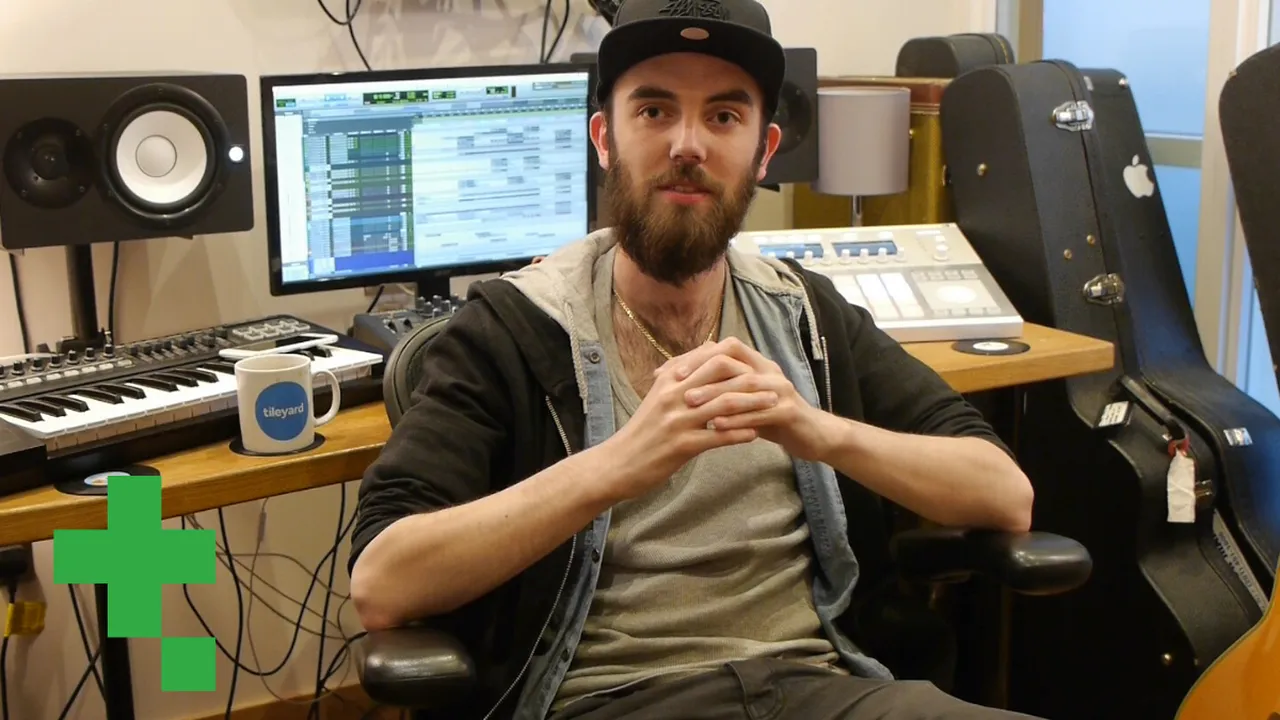
About the instructor
Paul Whalley est multi-instrumentiste, producteur et auteur-compositeur au son délibérément large. Il a passé des années sur la route comme musicien de studio en tournée avec des artistes tels que Mumford & Sons et Ellie Goulding. De formation classique, il est titulaire d'une licence en interprétation instrumentale et d'un Master en composition de la Guildhall School of Music. Depuis qu'il est passé de la tournée à la production et à l'écriture, il a travaillé avec des artistes comme NAO, Wretch 32 et Nina Nesbitt, et a joué sur des disques classés dans le top 40 partout dans le monde, dont 'Shout Out to My Ex' de Little Mix. Il est installé aux Tileyard Studios, dans le nord de Londres, où il écrit et produit pour de grands labels britanniques et développe de nouveaux artistes. Sur MusicGurus, lui et Emmi Green décortiquent un disque de pop à partir de zéro — chaque choix d'arrangement et de production mis à nu — pour les auteurs-compositeurs et les producteurs qui veulent entendre comment les tubes sont réellement construits. read more