



Western swing : Beaumont Rag
Avec
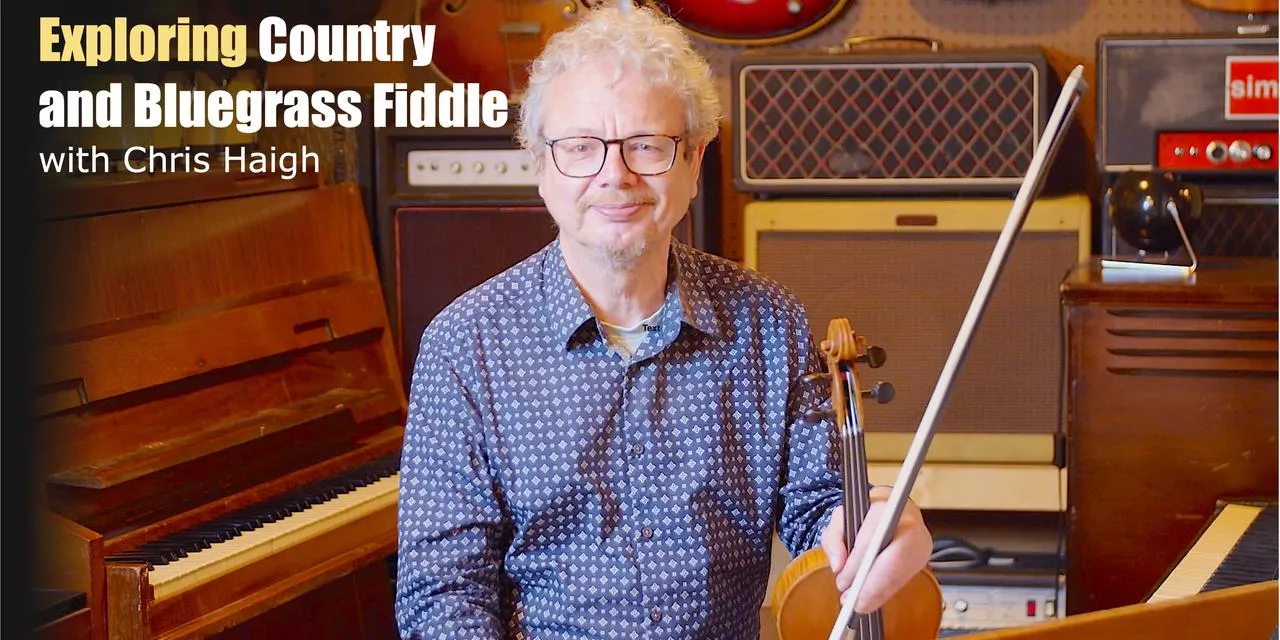
Chris HaighChris Haigh présente le western swing, le style entre country et jazz de Bob Wills, et commence par « Beaumont Rag » avec ses blue notes et ses glissés au violon.
Le contenu du cours
25 leçons (1h 30min) · 1 gratuites
01. Le Georgia Shuffle
5:42
02. Whiskey Before Breakfast (Performance)
0:44
03. Doubles cordes dans Wednesday Night Waltz
8:34
04. Wednesday Night Waltz (interprétation)
0:54
05. Plus de doubles cordes : Cheatem County Breakdown
4:06
06. Cheatem County Breakdown (Interprétation)
0:44
07. Cowboys chantants : Yellow Rose of Texas
5:34
08. Yellow Rose of Texas (Interprétation)
0:22
01. Western swing : Beaumont Rag
Tu es ici9:50
02. Beaumont Rag (interprétation)
1:12
03. Bob Wills - Red River Valley
5:25
04. Red River Valley (Interprétation)
0:33
05. Violon à deux voix : gamme, Goodbye Liza Jane
3:35
06. Solos en Western Swing
5:06
07. Goodbye Liza Jane (interprétation en solo)
1:17
08. Licks de Western swing
9:19
09. Girl I Left Behind Me (analyse du solo)
2:33
10. Girl I Left Behind Me (performance solo)
0:28
Transcription de la leçon
Lesson: Introduction to Western Swing
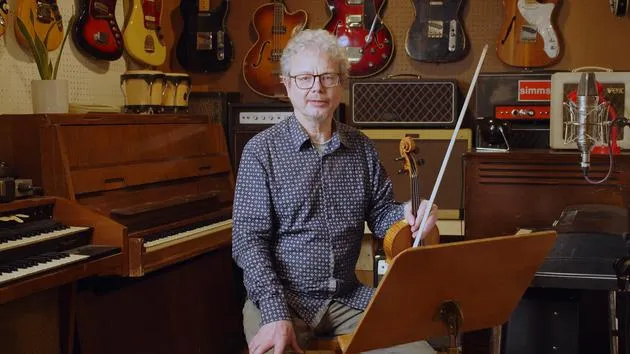
Hello! In this lesson, we're going to talk about Western swing. This is just the introduction, but we have several lessons planned on the topic.
The Origins of Western Swing
I first heard about Western swing when I was in my early 20s while playing in an awful working men's club band. After one gig, the band leader mentioned the existence of Western swing, describing it as:
"A cross between country music and jazz."
At first, I thought he was joking; the idea seemed so ridiculous that it couldn't possibly be true. But indeed, there is such a thing as Western swing. It blends country and jazz into a wonderful type of music. I feel lucky to play in a couple of Western swing bands, which is a rarity in the UK.
A Brief History
Western swing began in the 1930s and 40s, with Bob Wills being the best-known artist. He started with a duo alongside his brother and gradually added more instruments, eventually playing with around 20 instruments at his peak. They performed popular music in a Western style, incorporating a lot of jazz, which created a fascinating blend of music.
Listen to the Greats
You must listen to some Bob Wills, as well as Asleep at the Wheel, a contemporary American band that has been performing Western swing since the late 70s at the highest possible standard. If anyone from Asleep at the Wheel is listening, they are the band I would most like to play with one day!
The Beaumont Rag
Now, let's play a tune called "The Beaumont Rag," which includes many elements of Western swing. This piece was recorded by Bob Wills.
Elements of the Lesson
Let's go through the tune slowly.
1, 2, 3, 4.
Key Techniques
-
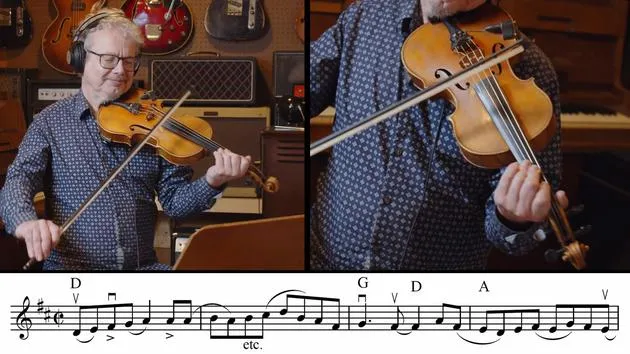
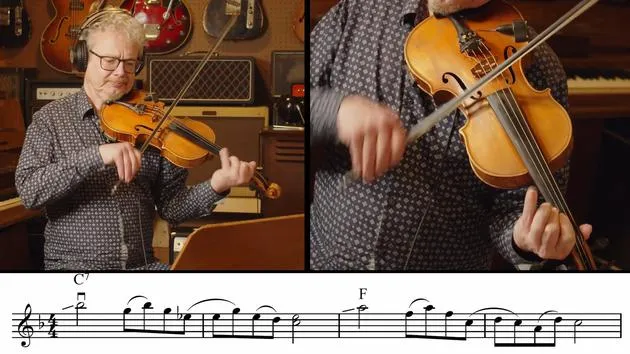
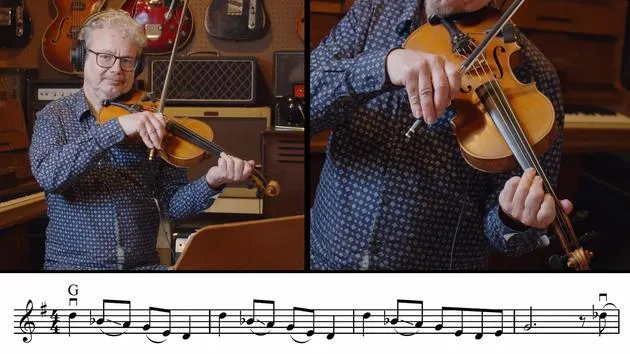
We have blue notes and sliding notes.
-
For example, I'm sliding up with my fourth finger from around A flat and then down again.
- The E flat is a flattened third, the most important blue note in the C major scale.
-
Another sliding note occurs here, presenting syncopation by sliding down from the second finger.
Chord Sequences
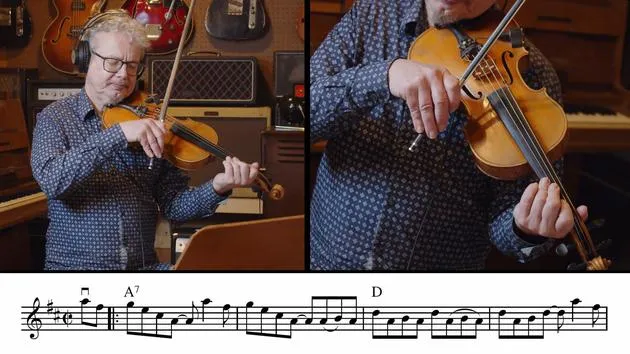
Remember our previous discussions on chord sequences? We have a similar pattern here. That sequence of chords in the background is very typical of rags or ragtime music.
Let's go through that section one more time.
1, 2, 3, 4.
The B Section
Now, into the B section, we begin with a bit of syncopation and repeat. Notice that little triplet in bar 25:
- If you played it separately, it would sound ridiculous, so slur that!
- Slur four notes into the next bow.
We also have a few double stops here. For example:
- Emphasizing the C chord with an E under the C.
- The final F chord with an A above it.
Let's do that section again.
1, 2, 3, 4.
The Final Section: Double Shuffle
The third and final section features the double shuffle. We will explain this further in a later lesson, but for now, try to copy what's going on.
- It's a pattern that spans two bars.
The double shuffle is sometimes called hokum bowing, first popularized by jazz fiddle player Joe Venuti. It has become a hallmark of Western fiddling, although it's somewhat of a trick and is banned from contest fiddling, which I find quite amusing.
If you find this impossible to do, I suggest either setting it aside until our later lesson on the double shuffle or checking out YouTube videos on the technique.
I also recommend my video on the Fiddle Channel about the double shuffle and hokum bowing, which will aid your understanding.
I remember first hearing the double shuffle played on the Orange Blossom Special. It seemed impossible to me at the time. I left it for six months, and when I returned, it felt easy. So, it is possible!
Final Practice
Let's do that section one more time, and then we'll try the whole piece.
1, 2, 3, 4.
Now, let's try the whole thing!
Your Assignment for This Lesson:
- Listen to the Bob Wills version of "The Beaumont Rag."
- Listen to Joe Venuti playing "Wild Dog," where you will hear one of the first recorded versions of the double shuffle.
25 leçons
1h 30m de leçons vidéo structurées
Fonctions vidéo avancées
Ralentissez, bouclez un passage, suivez la partition
Mobile, tablette et ordinateur
Pratiquez où vous voulez
Satisfaction garantie à 100 %
Garantie remboursement 30 jours
Rencontrez votre guru
Rencontrez votre guru
Chris Haigh est violoniste professionnel depuis 25 ans et possède une expérience dans de nombreux genres. Il a joué sur plus de 75 albums, aux côtés d'artistes comme Alison Moyet, Bob Geldof, All About Eve, Michael Ball, David Soul, Oumou Sangare, The Quireboys, Riverdance, Morcheeba, James Galway et Steps.
Il a joué du swing et du jazz avec The Kimbara Brothers, Diz Disley, Le Jazz, The Hot Club of London et les Quecumbar Allstars, et dirige un ensemble de swing soviétique à sept musiciens, The Kremlinaires.
Chris donne des cours et des ateliers sur la technique du violon jazz et a enseigné le violon jazz aux universités de Middlesex, Brunel et Newcastle ainsi qu'au Truro College. Parmi ses ouvrages figurent neuf livres consacrés au violon, dont The Fiddle Handbook.
Il anime également Fiddling Around (fiddlingaround.co.uk), sans doute la source d'information sur le violon la plus complète et la plus consultée du web.







