



Doubles cordes dans Wednesday Night Waltz
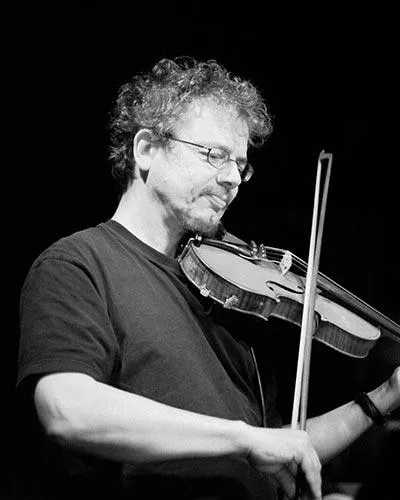
Avec
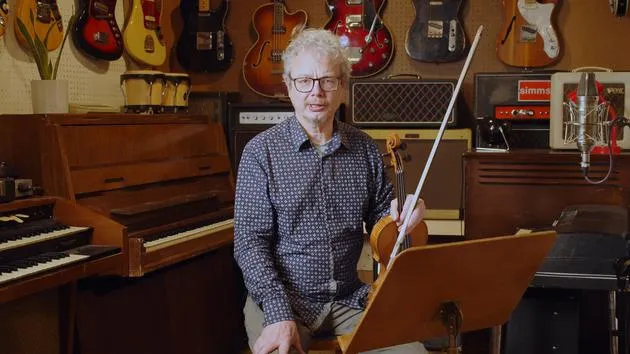
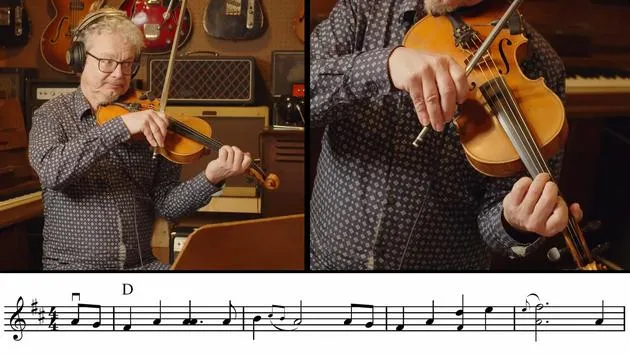
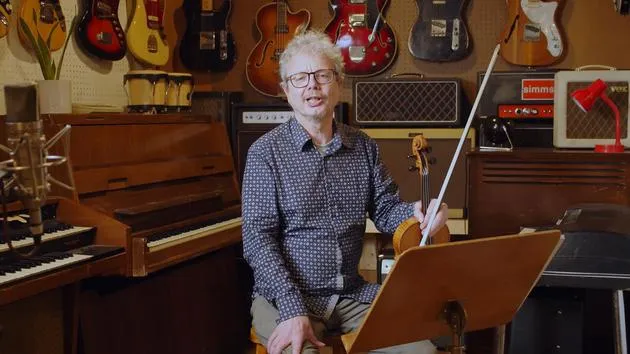
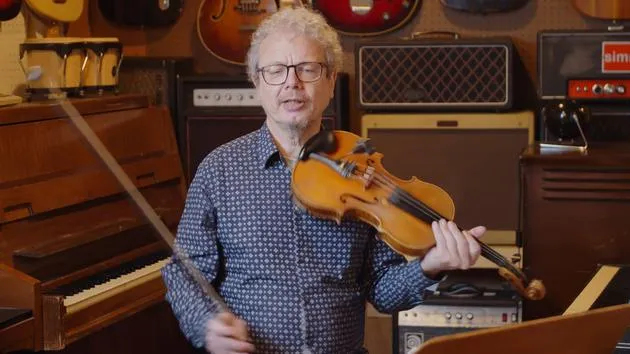
Chris HaighChris Haigh explique la différence entre un bourdon (une corde à vide) et une double corde jouée sur le violon, puis met les doubles cordes à l'œuvre dans 'Wednesday Night Waltz'.
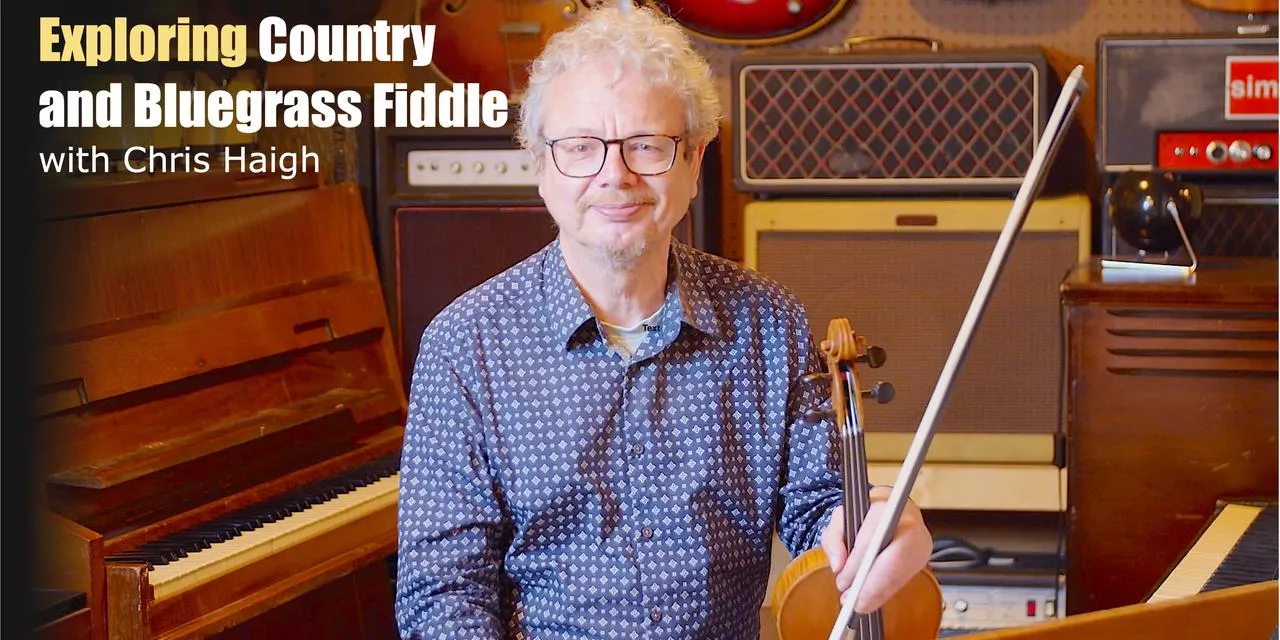
Le contenu du cours
25 leçons (1h 30min) · 1 gratuites
01. Le Georgia Shuffle
5:42
02. Whiskey Before Breakfast (Performance)
0:44
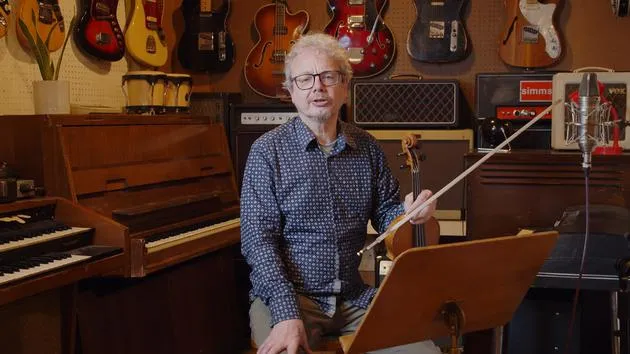
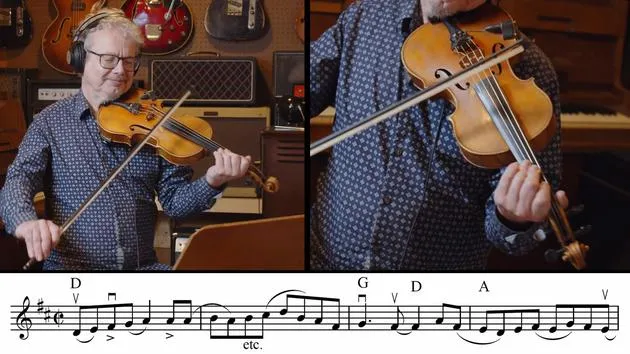
03. Doubles cordes dans Wednesday Night Waltz
Tu es ici8:34
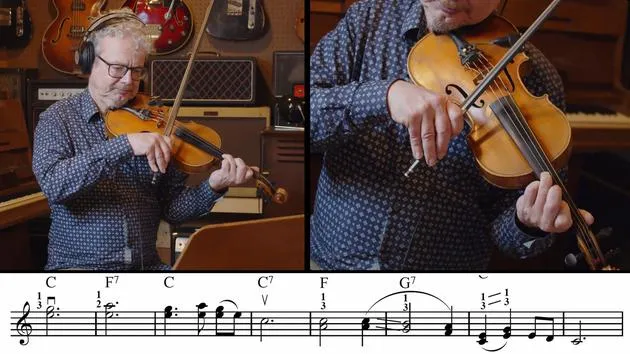
04. Wednesday Night Waltz (interprétation)
0:54
05. Plus de doubles cordes : Cheatem County Breakdown
4:06
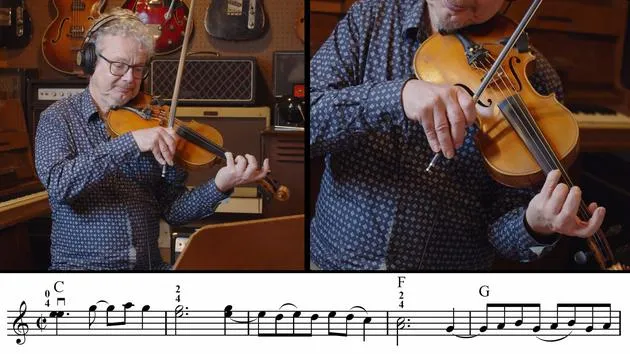
06. Cheatem County Breakdown (Interprétation)
0:44
07. Cowboys chantants : Yellow Rose of Texas
5:34
08. Yellow Rose of Texas (Interprétation)
0:22
01. Western swing : Beaumont Rag
9:50
02. Beaumont Rag (interprétation)
1:12
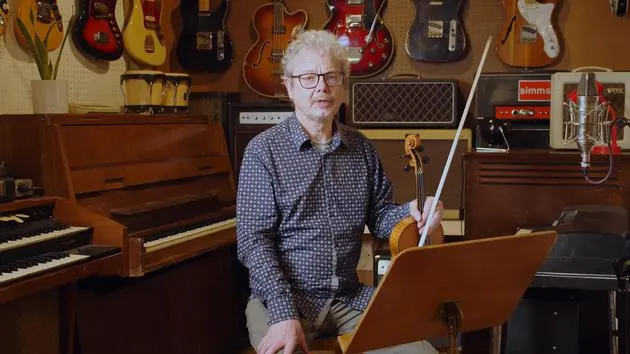
03. Bob Wills - Red River Valley
5:25
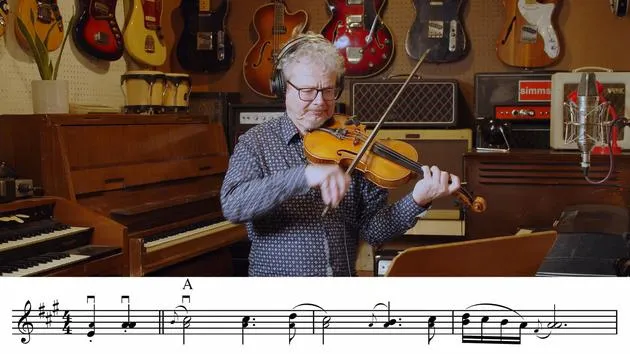
04. Red River Valley (Interprétation)
0:33
05. Violon à deux voix : gamme, Goodbye Liza Jane
3:35
06. Solos en Western Swing
5:06
07. Goodbye Liza Jane (interprétation en solo)
1:17
08. Licks de Western swing
9:19
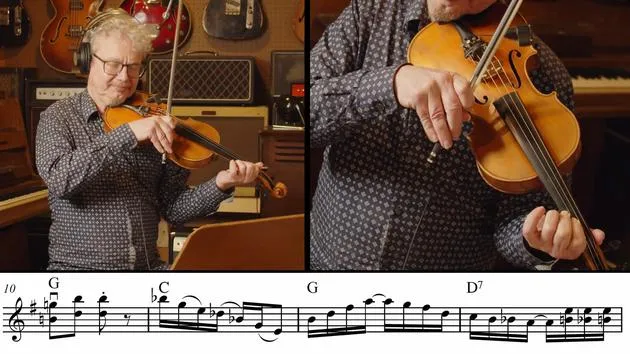
09. Girl I Left Behind Me (analyse du solo)
2:33
10. Girl I Left Behind Me (performance solo)
0:28
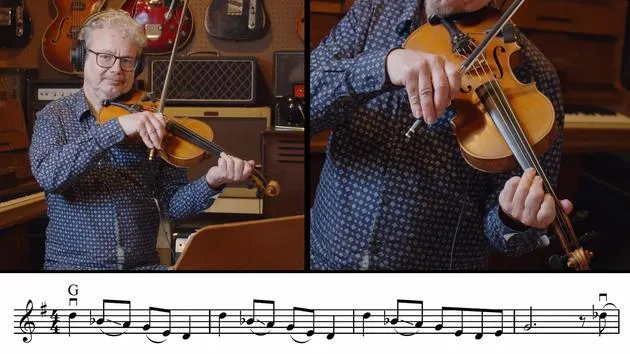
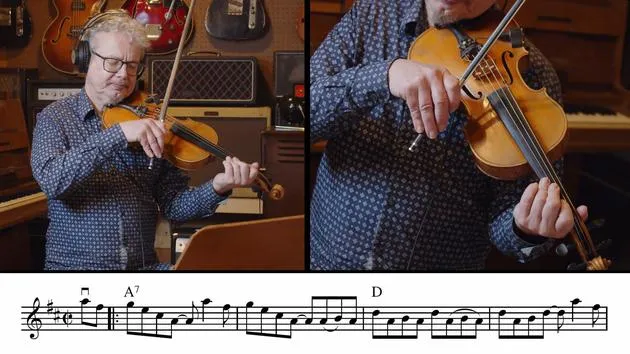
Transcription de la leçon
Double Stops Lesson
Welcome to today's lesson on double stops. Let's clarify the distinction between a drone and a double stop:
- Drone: An open string extra note.
- Double Stop: A fingered extra note, which is slightly more difficult to play.
Understanding the Difference
-
Playing a Drone:
- Requires minimal effort; just angle the bow slightly.
-
Playing a Double Stop:
- Involves more thought and finger positioning.
Advantages of Double Stops
- Double stops provide greater flexibility in terms of keys and notes.
- Drones typically confine you to specific keys (D, A, or G), while fingered double stops can be played in almost any key.
Historical Context
- Double stops became more common in the 20th century.
- In the 1920s and 30s, several fiddle players started recording with a focus on double stops.
Example Tune: "Wednesday Night Waltz"
We will explore "Wednesday Night Waltz" by Clark Kessinger, one of the most sophisticated early players.
Basic Exercises
-
Melody Without Chords:
- The melody has two chords, which become evident only with double stops.
-
Melody With Drones:
- Playing with drones provides a hint of chord changes (E drone to D drone).
-
Melody With Fingered Double Stops:
- Fingering clarifies the chord structure:
- First Finger: Plays E (the fifth of A).
- Second Finger: Plays F# (the third note of the D chord).
- Fingering clarifies the chord structure:
Importance of Double Stops
- When playing solo, emphasizing chords helps to communicate the music clearly to the listener.
- While playing with backing is less critical, understanding the chords is still beneficial.
Clark Kessinger's Legacy
- Kessinger was a recording star in the 1920s, known for his tune "Wednesday Night Waltz," which features tricky fingering.
Technique Breakdown
-
Positioning: Start in second position; use your first finger for G:
- Move the whole hand up a half step.
- Place the third finger below, creating a G and an E.
-
Sliding Exercise:
- Slide your whole hand down and back up while keeping the first finger over the third.
-
Finger Placement:
- The second finger plays F# below the third finger on D.
-
Choice of Position:
- Options: Fourth, third, or returning to first position.
- Work with what is easier for you.
-
Final Bars:
- Use second over first and slide up to the third finger.
Practice Session
- We will do the complete exercise without backing, followed by practicing with backing.
1, 2, 3...
Final Thoughts
- If you find this challenging, especially if you're new to sliding double stops, remember it's a key part of American fiddling tradition, specifically the Double Stop Waltz.
- If you encounter difficult sections, simplify the tune as best you can, but keep practicing:
- Aim to master the difficult bits over time.
Assignment
- Try playing a simple major scale (D or G) and harmonize it in your own way.
- I will demonstrate a more structured approach to this exercise later in the course, but for now, experiment and see what you can create!
25 leçons
1h 30m de leçons vidéo structurées
Fonctions vidéo avancées
Ralentissez, bouclez un passage, suivez la partition
Mobile, tablette et ordinateur
Pratiquez où vous voulez
Satisfaction garantie à 100 %
Garantie remboursement 30 jours
Rencontrez votre guru
Rencontrez votre guru
Chris Haigh est violoniste professionnel depuis 25 ans et possède une expérience dans de nombreux genres. Il a joué sur plus de 75 albums, aux côtés d'artistes comme Alison Moyet, Bob Geldof, All About Eve, Michael Ball, David Soul, Oumou Sangare, The Quireboys, Riverdance, Morcheeba, James Galway et Steps.
Il a joué du swing et du jazz avec The Kimbara Brothers, Diz Disley, Le Jazz, The Hot Club of London et les Quecumbar Allstars, et dirige un ensemble de swing soviétique à sept musiciens, The Kremlinaires.
Chris donne des cours et des ateliers sur la technique du violon jazz et a enseigné le violon jazz aux universités de Middlesex, Brunel et Newcastle ainsi qu'au Truro College. Parmi ses ouvrages figurent neuf livres consacrés au violon, dont The Fiddle Handbook.
Il anime également Fiddling Around (fiddlingaround.co.uk), sans doute la source d'information sur le violon la plus complète et la plus consultée du web.







