



Plus de doubles cordes : Cheatem County Breakdown
Avec
Chris HaighAttaque-toi aux doubles cordes au violon à travers Cheatem County Breakdown, en t'appuyant sur le style deuxième par-dessus quatrième doigt d'Arthur Smith et son feeling syncopé.
Le contenu du cours
25 leçons (1h 30min) · 1 gratuites
01. Le Georgia Shuffle
5:42
02. Whiskey Before Breakfast (Performance)
0:44
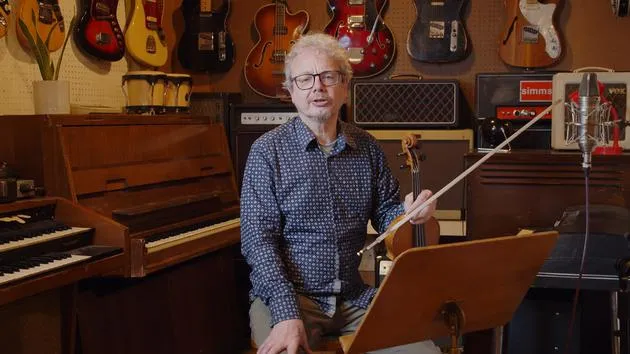
03. Doubles cordes dans Wednesday Night Waltz
8:34
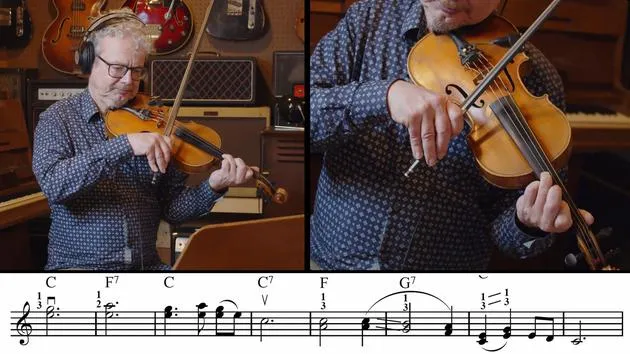
04. Wednesday Night Waltz (interprétation)
0:54
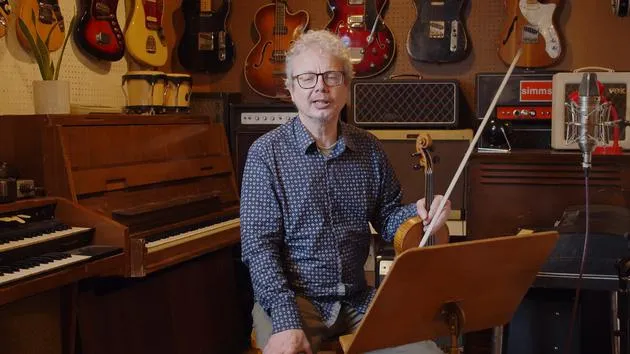
05. Plus de doubles cordes : Cheatem County Breakdown
Tu es ici4:06
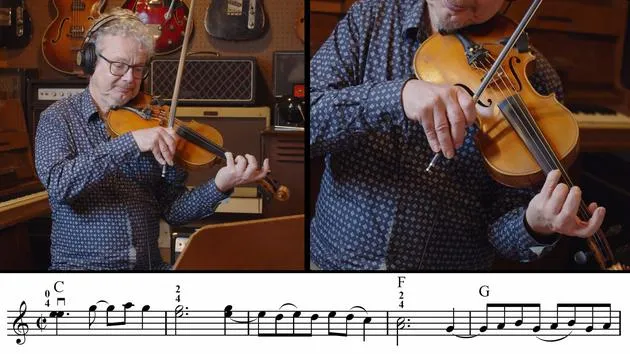
06. Cheatem County Breakdown (Interprétation)
0:44
07. Cowboys chantants : Yellow Rose of Texas
5:34
08. Yellow Rose of Texas (Interprétation)
0:22
01. Western swing : Beaumont Rag
9:50
02. Beaumont Rag (interprétation)
1:12
03. Bob Wills - Red River Valley
5:25
04. Red River Valley (Interprétation)
0:33
05. Violon à deux voix : gamme, Goodbye Liza Jane
3:35
06. Solos en Western Swing
5:06
07. Goodbye Liza Jane (interprétation en solo)
1:17
08. Licks de Western swing
9:19
09. Girl I Left Behind Me (analyse du solo)
2:33
10. Girl I Left Behind Me (performance solo)
0:28
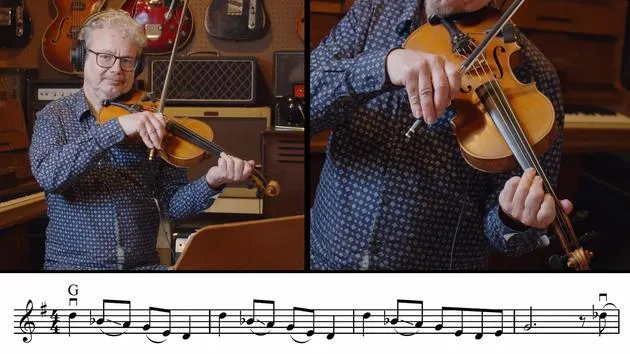
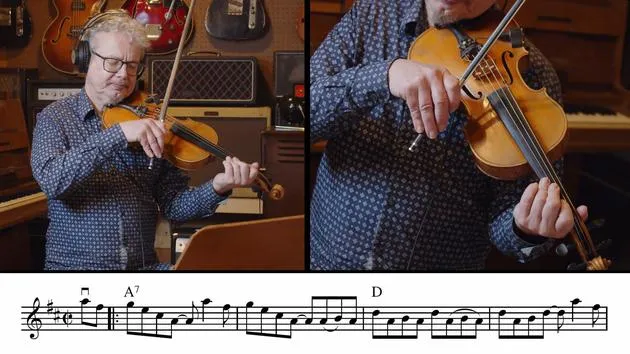
Transcription de la leçon
Music Lesson: Double Stops in American Fiddling
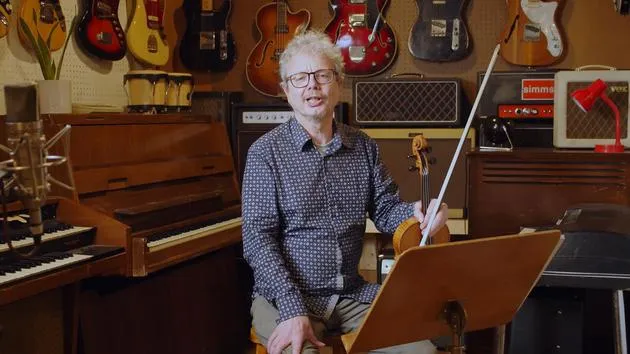
Hello! In this lesson, we're going to look at more double stops. I have to say that double stops are where a lot of the challenge of American fiddling lies.
Spotlight on Arthur Smith
We're going to examine the playing of Arthur Smith, often referred to as "Fiddling Arthur Smith." He was one of the early stars of the Grand Ole Opry, making his debut in 1927, and he was particularly skilled in double stops.
The Tune: Cheetham County Breakdown
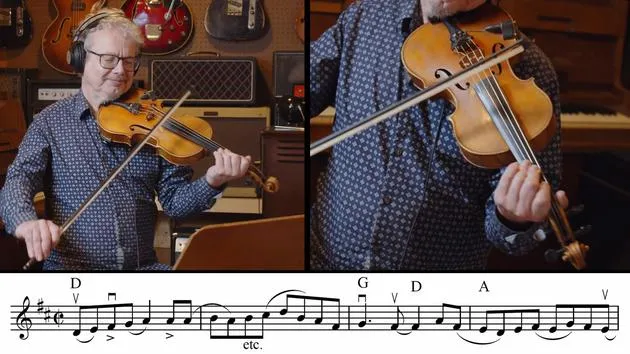
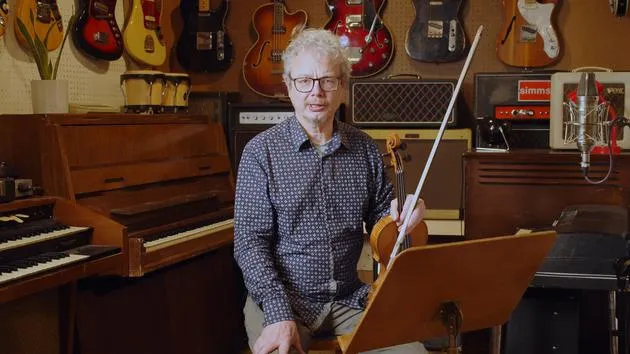
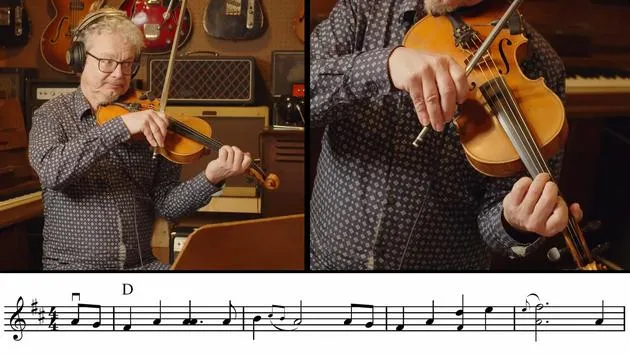
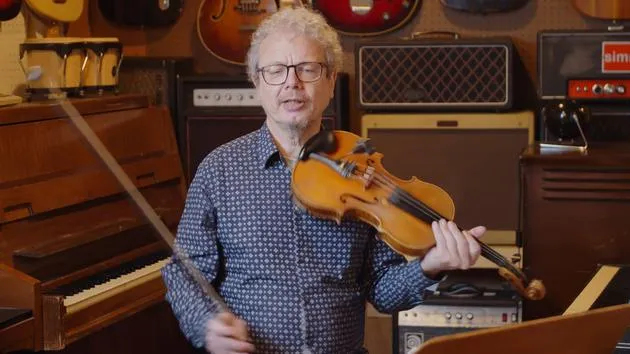
One of the tunes we're going to play, which featured prominently in his performances, includes a whole load of second over fourth finger combinations.
- Second Finger: Goes down first
- Fourth Finger: Then placed on the string
Stretch and Positioning
You may find that your fourth finger interferes with the second finger when playing on the E string. If this happens, you'll need to adjust your hand position to ensure it's at the right angle.
Another Common Technique
We also have open over four, which is another prevalent technique in American fiddling.
- The open E string and the fourth finger play the same note simultaneously.
Again, it's crucial to have your hand positioned well so that your finger is pointing straight down, avoiding any unwanted sounds.
Playing the Tune
Let's go straight into the tune, Cheetham County Breakdown.
Cheetham County, which can be spelled in various ways, is actually named after a county just west of Tennessee.
I'm going to play this tune nice and slow, and we'll follow with some backing:
- Count: 1, 2, 3, 4.
Important Elements
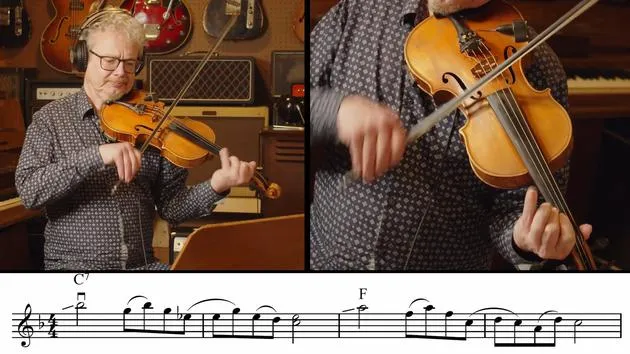
- You'll notice that not only do we have these double stops, but there is also a significant amount of syncopation in this tune, which is something we've already covered.
Practice Exercise
Now, let's try the same thing, but this time slightly faster and with backing.
For your assignment in this lesson:
- Go back over some of the tunes we've covered and play slow versions while creating some double stops.
- Focus on finding either open over fourth or second over fourth harmonies like we've practiced.
Happy fiddling!
25 leçons
1h 30m de leçons vidéo structurées
Fonctions vidéo avancées
Ralentissez, bouclez un passage, suivez la partition
Mobile, tablette et ordinateur
Pratiquez où vous voulez
Satisfaction garantie à 100 %
Garantie remboursement 30 jours
Rencontrez votre guru
Rencontrez votre guru
Chris Haigh est violoniste professionnel depuis 25 ans et possède une expérience dans de nombreux genres. Il a joué sur plus de 75 albums, aux côtés d'artistes comme Alison Moyet, Bob Geldof, All About Eve, Michael Ball, David Soul, Oumou Sangare, The Quireboys, Riverdance, Morcheeba, James Galway et Steps.
Il a joué du swing et du jazz avec The Kimbara Brothers, Diz Disley, Le Jazz, The Hot Club of London et les Quecumbar Allstars, et dirige un ensemble de swing soviétique à sept musiciens, The Kremlinaires.
Chris donne des cours et des ateliers sur la technique du violon jazz et a enseigné le violon jazz aux universités de Middlesex, Brunel et Newcastle ainsi qu'au Truro College. Parmi ses ouvrages figurent neuf livres consacrés au violon, dont The Fiddle Handbook.
Il anime également Fiddling Around (fiddlingaround.co.uk), sans doute la source d'information sur le violon la plus complète et la plus consultée du web.







