



Syncope : Pig Ankle Rag (Cours)
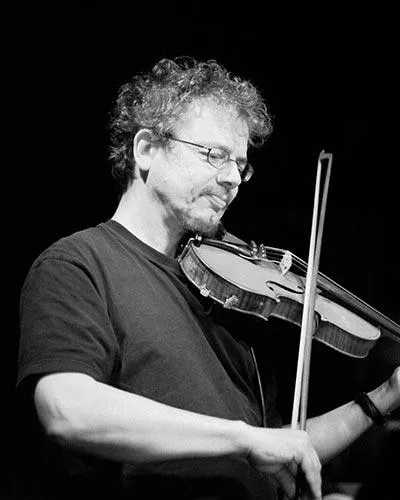
Avec
Chris HaighChris Haigh explique la syncope - ajouter un accent inattendu au sein de la mesure - et la fait remonter au ragtime, avant d'apprendre l'air de fiddle 'Pig Ankle Rag'.
Le contenu du cours
25 leçons (1h 30min) · 1 gratuites
01. Le Georgia Shuffle
5:42
02. Whiskey Before Breakfast (Performance)
0:44
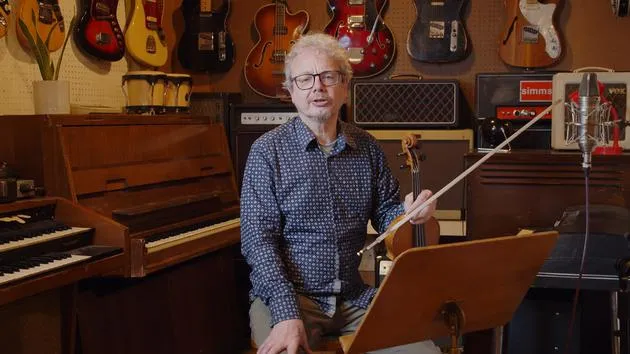
03. Doubles cordes dans Wednesday Night Waltz
8:34
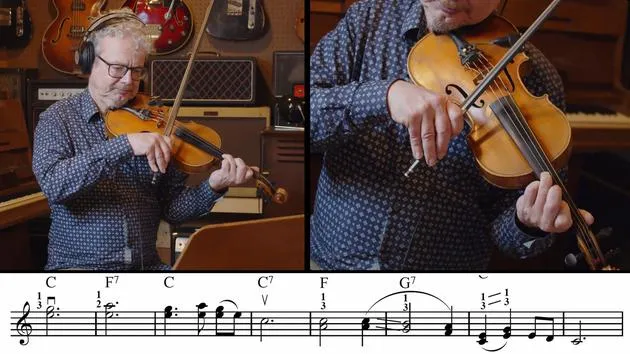
04. Wednesday Night Waltz (interprétation)
0:54
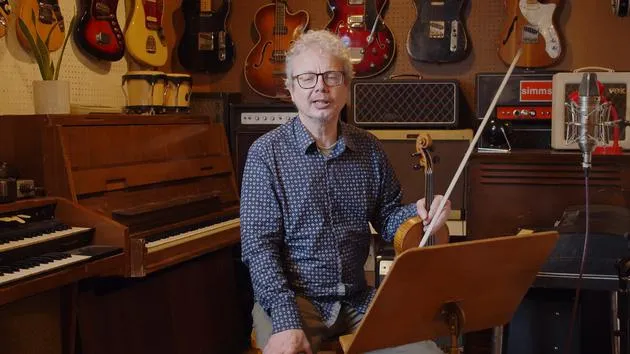
05. Plus de doubles cordes : Cheatem County Breakdown
4:06
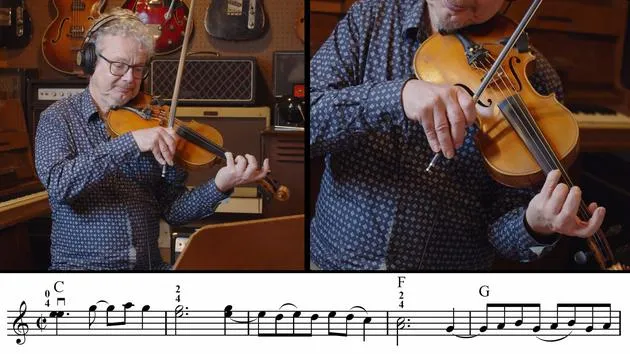
06. Cheatem County Breakdown (Interprétation)
0:44
07. Cowboys chantants : Yellow Rose of Texas
5:34
08. Yellow Rose of Texas (Interprétation)
0:22
01. Western swing : Beaumont Rag
9:50
02. Beaumont Rag (interprétation)
1:12
03. Bob Wills - Red River Valley
5:25
04. Red River Valley (Interprétation)
0:33
05. Violon à deux voix : gamme, Goodbye Liza Jane
3:35
06. Solos en Western Swing
5:06
07. Goodbye Liza Jane (interprétation en solo)
1:17
08. Licks de Western swing
9:19
09. Girl I Left Behind Me (analyse du solo)
2:33
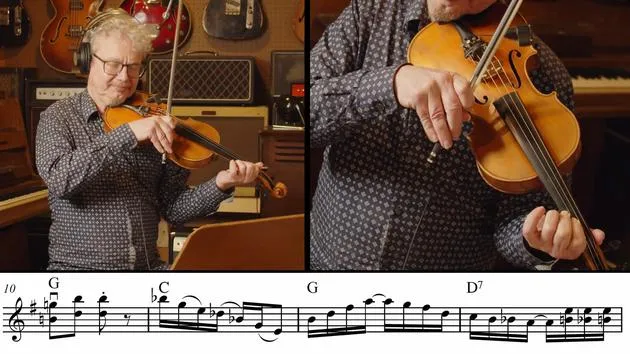
10. Girl I Left Behind Me (performance solo)
0:28
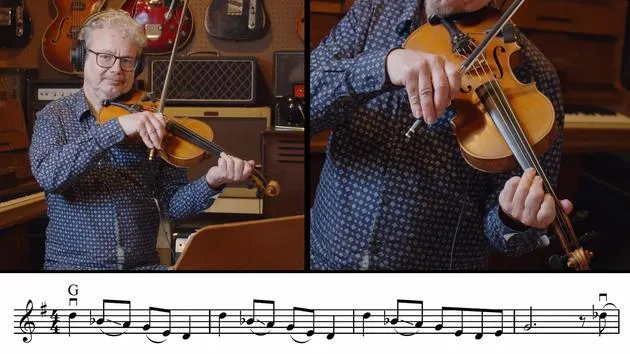
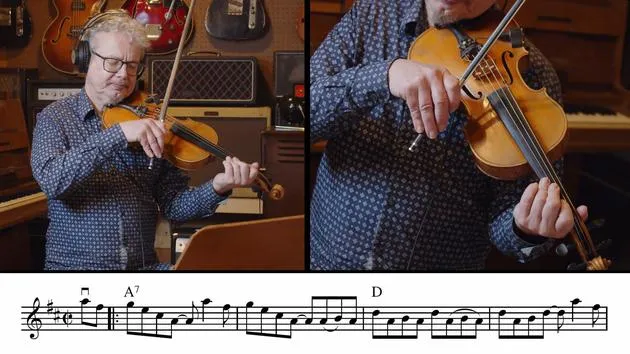
Transcription de la leçon
Lesson on Syncopation
In the last lesson, we mentioned syncopation, and this lesson is going to be more about that.
What is Syncopation?
Syncopation is the adding of an unexpected emphasis somewhere within a bar or across a bar line.
- An expected way of playing eight quavers might involve slurring a couple of notes but then adding an unexpected emphasis.
- This unexpected emphasis is the key to syncopation.
Historical Context
Syncopation has its roots in African American music and became widely recognized through ragtime, which was primarily piano music.
- The term "rag" refers to a tune that originates from ragtime.
- Many old-time tunes became known as "rags" and featured distinctive syncopated rhythms.
- The chord sequences used in ragtime often came from pianists, who naturally created these patterns.
Example Tune: Pig Ankle Rag
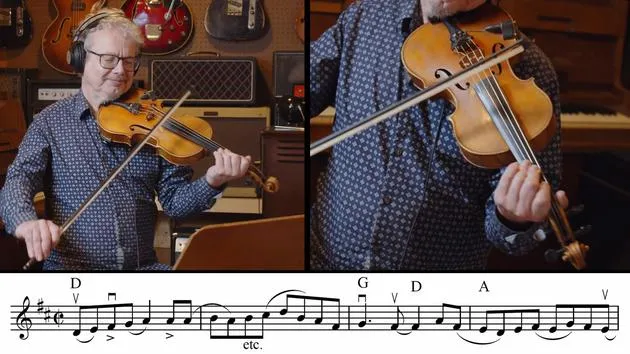
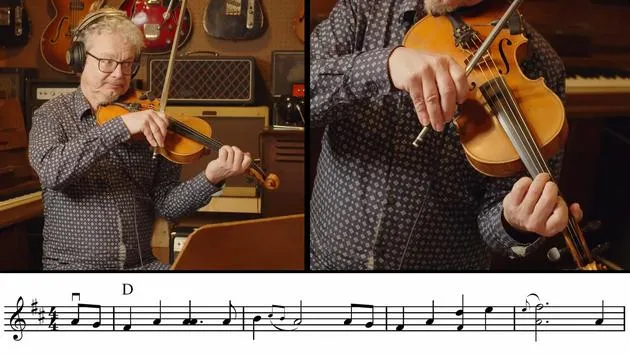
A tune that we'll be playing is the Pig Ankle Rag. This piece includes a characteristic sequence at the end:
- Chord Sequence: G, D, B, A
When you hear this sequence, you'll recognize it as a typical ragtime element. This sequence contrasts sharply with what you would find in Celtic music, which is the origin of many old-time tunes.
Common Syncopated Rhythm
A prevalent rhythm in syncopation is:
1, 2, 3, 1, 2, 3, 1-2
This rhythmic structure is very much syncopated.
Playing the Pig Ankle Rag
Let's play the Pig Ankle Rag, which is a classic old-time rag. I'll start slowly, without backing, and then we'll add the backing and speed it up a bit.
Count: 1, 2, 3, and repeat.
Important Note on Swing
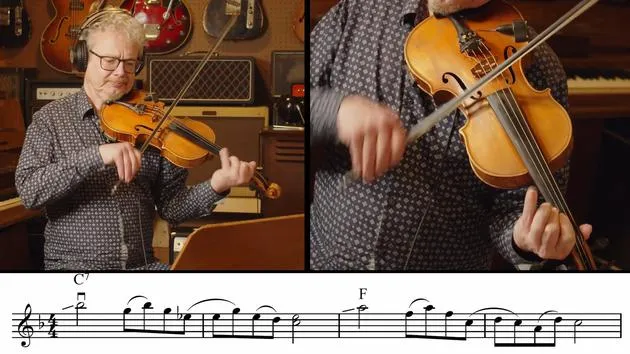
One important aspect of ragtime music is that the eighth notes are played with a swing feel.
- It's not played evenly; it's long, short, long, short throughout whenever there are quavers, unless they're tied together.
- In that case, you often go to a longer note on the accented tied note.
You'll quickly get used to this style.
Assignment
For your assignment, try playing the Pig Ankle Rag without slurs and without syncopation. This unusual task will help you understand what we've been practicing.
- It might sound something like this:
It's not until you attempt this that you realize what we've learned about syncopation. Have fun with this!
Additional Practice
Try playing some scales using syncopation. This will help you develop your skills for later soloing.
- For example, a D major scale might sound like this.
Remember: Adding the syncopation yourself, rather than just reading it, will significantly enhance your ability to use it while soloing later on.
25 leçons
1h 30m de leçons vidéo structurées
Fonctions vidéo avancées
Ralentissez, bouclez un passage, suivez la partition
Mobile, tablette et ordinateur
Pratiquez où vous voulez
Satisfaction garantie à 100 %
Garantie remboursement 30 jours
Rencontrez votre guru
Rencontrez votre guru
Chris Haigh est violoniste professionnel depuis 25 ans et possède une expérience dans de nombreux genres. Il a joué sur plus de 75 albums, aux côtés d'artistes comme Alison Moyet, Bob Geldof, All About Eve, Michael Ball, David Soul, Oumou Sangare, The Quireboys, Riverdance, Morcheeba, James Galway et Steps.
Il a joué du swing et du jazz avec The Kimbara Brothers, Diz Disley, Le Jazz, The Hot Club of London et les Quecumbar Allstars, et dirige un ensemble de swing soviétique à sept musiciens, The Kremlinaires.
Chris donne des cours et des ateliers sur la technique du violon jazz et a enseigné le violon jazz aux universités de Middlesex, Brunel et Newcastle ainsi qu'au Truro College. Parmi ses ouvrages figurent neuf livres consacrés au violon, dont The Fiddle Handbook.
Il anime également Fiddling Around (fiddlingaround.co.uk), sans doute la source d'information sur le violon la plus complète et la plus consultée du web.







