



Introduction à Ultrabeat
Avec
Dov WatermanDov Waterman présente Ultrabeat, le synthé de batterie intégré de Logic, en abordant ses sources sonores et son séquenceur pas à pas pour créer des beats.
Le contenu du cours
14 leçons (1h 19min) · 1 gratuites
01. Introduction à la programmation des rythmes et des beats
1:18
02. Introduction à Ultrabeat
Tu es ici7:56
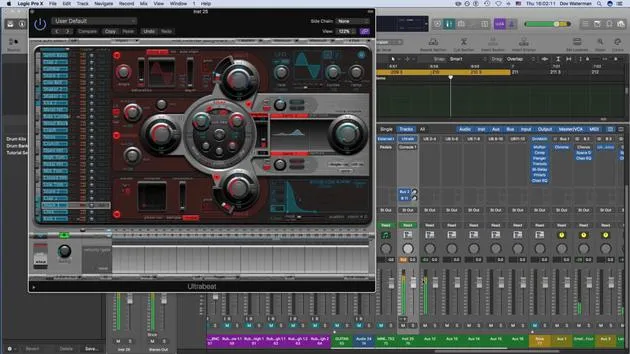
03. Ultrabeat en tant qu'instrument multi-sorties
5:53
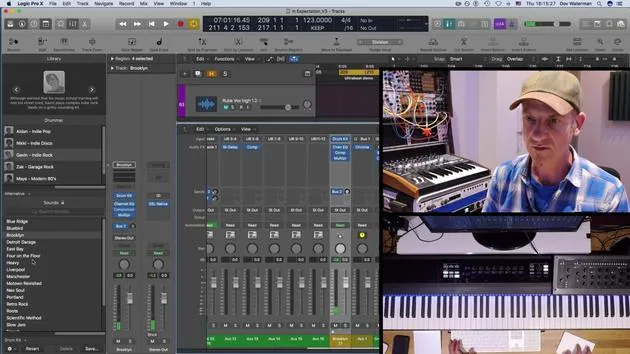
04. Introduction à Virtual Drummer
9:27
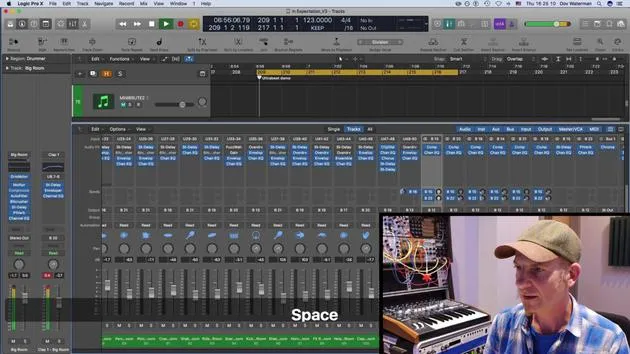
05. Virtual Drummer - effets avancés et superposition
11:18
06. Introduction aux Apple Loops
4:40
07. EXERCICE : Drum Machine Designer
1:07
Transcription de la leçon
Understanding Rhythm and Beat Programming
In this section, we're going to discuss rhythm, the backbone of a song. We'll cover:
- Rhythm and Beat Programming
- Ultra Beat and the Virtual Drummer (which we'll explore in the next section)
Introduction to Ultra Beat
Ultra Beat is one of the stock instruments in Logic and has been around for a long time. However, it remains massively underused.
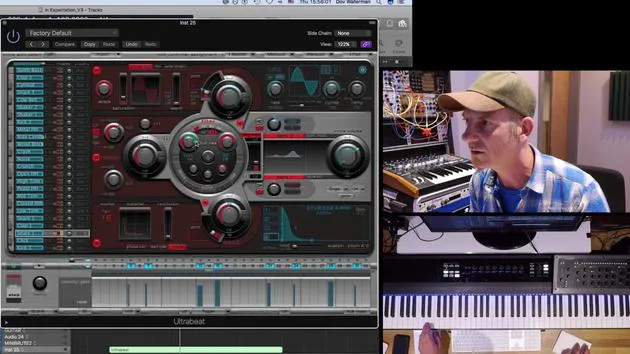
I'm not going to provide a comprehensive overview of everything within Ultra Beat but suffice to say that it is a drum synth. It follows the same structure of signal flow as most other synths in Logic. Each one of these elements is essentially a sound source, which you can see illustrated here.
Sound Sources
- Oscillators: Each sound source has three different oscillators.
- Noise Source: In addition to the two oscillators, there's a noise source as well.
- Sample or Oscillator Options: Each source can utilize either a sample or a drum wave oscillator.
Exploring the Sequencer
One of the most interesting aspects of Ultra Beat is its built-in sequencer.
Using the Sequencer
- Basic Sequence: We've got Ultra Beat playing a basic sequence down here. You can pull out any of the pre-made sequences available.
- Creating Custom Sequences: You can easily create your own sequences with the sound sources available.
Example Actions:
- Take the kick first.
- Add a snare for a basic sequencer effect.
While I won't dive too much into this due to time constraints, you get the idea.
Making it Unique
Dragging MIDI Patterns
This pattern can be dragged out as a MIDI file into your workstation's arrange page.
- For example, you can take the pattern and move it over to open it as a MIDI pattern.
- Upon doing this, it copies the MIDI data seamlessly.
Modulating Parameters
Another exciting feature of Ultra Beat is the ability to modulate parameters, transforming your sound into something vibrant and alive, similar to external synthesizers.
Steps to Modulate
- Activate the Step Sequencer: Turn it on to access the sections highlighted in yellow.
- Select Parameters: For instance, highlight the snare.
- Certain parameters are sequencer-enabled, while some are not.
Applying Modulation
- For the snare, select a parameter, such as filter resonance or envelope length.
- Adjust the notes in the sequencer to create movement.
Example Adjustments
- Bring the filter down and adjust the envelope settings to add subtle changes.
- By clicking on non-blue notes, you can add events to increase modulation within your sequence.
Experimentation and Creativity
Using the step sequencer to modulate certain parameters is a great way to add movement and unique sounds to your tracks.
This process allows you to transform a simple loop into something more dynamic and lively.
Takeaway: Be creative and experiment with these features to discover unique sounds and make your tracks truly your own.
14 leçons
1h 19m de leçons vidéo structurées
Fonctions vidéo avancées
Ralentissez, bouclez un passage, suivez la partition
Mobile, tablette et ordinateur
Pratiquez où vous voulez
Satisfaction garantie à 100 %
Garantie remboursement 30 jours
Rencontrez votre guru
Rencontrez votre guru
Dov Waterman est compositeur, pianiste et producteur. Il a écrit et conçu le son de films tels que After Earth, Terminator Genisys, Transformers: The Last Knight et The Snowman, et travaille comme monteur audio de bibliothèques de samples et sound designer avec des sociétés comme Native Instruments et SonoKinetic.
Sa série Composition in Logic parcourt la construction d'un morceau de bout en bout dans Logic Pro — des templates et du workflow jusqu'à la synthèse et la programmation de beats, les effets MIDI, le montage et le mix final — pour les producteurs qui veulent transformer leurs idées en disques aboutis.







