



Introduction aux Apple Loops

Avec
Dov Waterman
Le contenu du cours
14 leçons (1h 19min) · 1 gratuites
01. Introduction à la programmation des rythmes et des beats
1:18
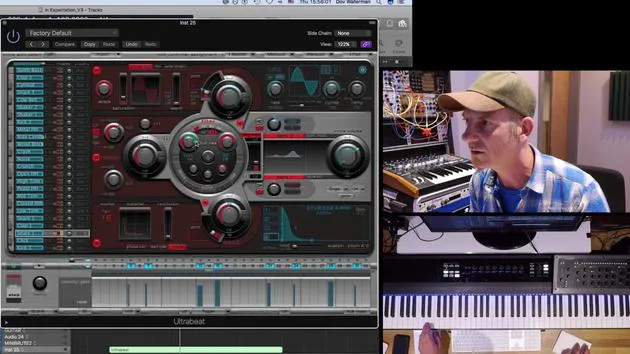
02. Introduction à Ultrabeat
7:56
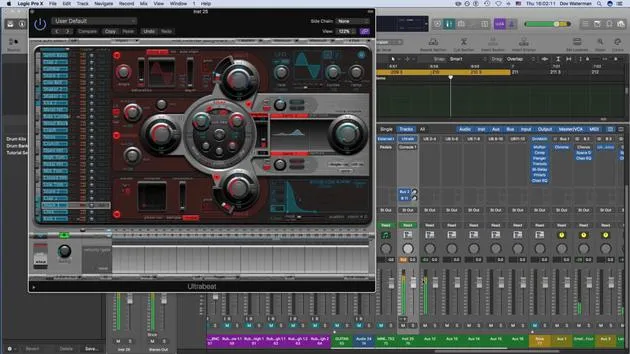
03. Ultrabeat en tant qu'instrument multi-sorties
5:53
04. Introduction à Virtual Drummer
9:27
05. Virtual Drummer - effets avancés et superposition
11:18
06. Introduction aux Apple Loops
Tu es ici4:40
07. EXERCICE : Drum Machine Designer
1:07
Transcription de la leçon
Understanding Apple Loops in Rhythm and Beat Programming
Okay, one last aspect we'll talk about for now on rhythm and beat programming is Apple Loops.
What Are Apple Loops?
Underneath the guise of Apple Loops,
I'm not going to go into what an Apple Loop is exactly. For all intents and purposes, it is an audio file that, when dragged into an arrange page in Logic, will conform to the beat tempo.
- Harmonic Content: Depending on what it is, if it has any harmonic melodic content, it will conform to the pitch of the track.
- Practical Use: This is very handy. If you've purchased Logic 10 and downloaded all the sample packs, you will have all these not grayed out like I do. I just haven't downloaded everything.
Using Apple Loops
It's a great source of loops and inspiration. Because they are audio files, you can essentially do the following with them:
- Cut them up
- Reverse them
- Manipulate them in various ways
A great way to start is to play your track and preview Apple Loops.
Filtering and Searching
On your interface, you've got different loop packs that you can choose from. Filter down to find what you're looking for. Here are some categories to consider:
- Instrument Type: Say you're looking for a tambourine loop just for the heck of it.
Types of Apple Loops
Apple Loops are categorized into three different types:
- Audio Loops
- MIDI Loops (normally green)
For example, this green MIDI loop:
- If dragged into an audio track, it will convert into an audio file.
- If dragged into an instrument track, it will open up as a MIDI instrument.
Channel Strip Settings: What's saved in this Apple Loop is information about what instrument it is, specifically, a channel strip setting.
Example in Practice
Here's how it works:
- I'm going to drag this file over here.
- Notice these yellow files; they look the same as the green ones. These yellow files are virtual drummer tracks, which are preset options in your library.
Going back to the green MIDI loop, Alchemy Swirl arp:
- I will drag it in.
- It hasn't turned into a piece of audio; it has remained as MIDI.
- When I check my instrument, it has pulled up Alchemy.
In this Apple Loop, I dragged in from my Apple Loops folder, it saved both the MIDI content and the channel strip.
Creating Your Own Apple Loops
What does this mean? You can create your own Apple Loops! This is very handy for our philosophical talk about keeping in the flow and creating a sound palette.
When you are in your creative zone and ideas are flowing, a great way to save these is by using Apple Loops.
"I will talk much more about how you do that in a later part of the course, but for now, over and out."
14 leçons
1h 19m de leçons vidéo structurées
Fonctions vidéo avancées
Ralentissez, bouclez un passage, suivez la partition
Mobile, tablette et ordinateur
Pratiquez où vous voulez
Satisfaction garantie à 100 %
Garantie remboursement 30 jours
Rencontrez votre guru
Rencontrez votre guru
Dov Waterman est compositeur, pianiste et producteur. Il a écrit et conçu le son de films tels que After Earth, Terminator Genisys, Transformers: The Last Knight et The Snowman, et travaille comme monteur audio de bibliothèques de samples et sound designer avec des sociétés comme Native Instruments et SonoKinetic.
Sa série Composition in Logic parcourt la construction d'un morceau de bout en bout dans Logic Pro — des templates et du workflow jusqu'à la synthèse et la programmation de beats, les effets MIDI, le montage et le mix final — pour les producteurs qui veulent transformer leurs idées en disques aboutis.







