



Old-time vs bluegrass
Avec
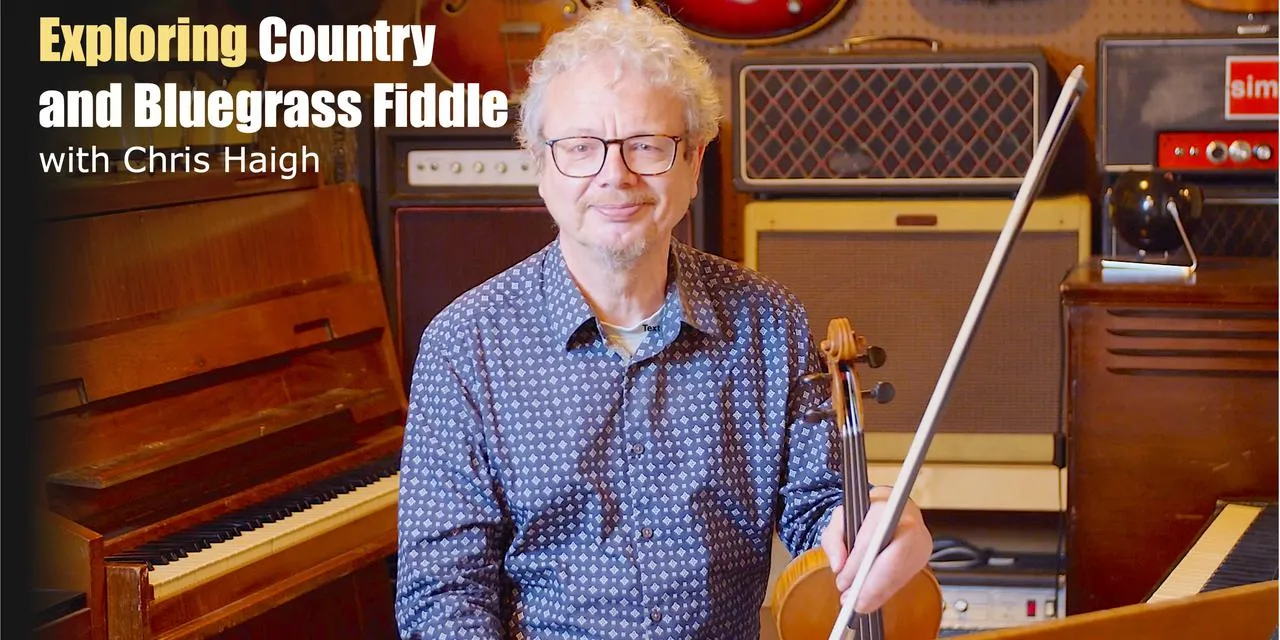
Chris HaighChris Haigh explique en quoi le bluegrass et la musique de violon old-time diffèrent, et comment Bill Monroe a façonné le bluegrass en un style à part entière dans les années 1940 et 1950.
Le contenu du cours
22 leçons (1h 51min) · 1 gratuites
01. Old-time vs bluegrass
Tu es ici11:17
02. Bluegrass : mélodie et fills
7:52
03. Bluegrass : kickoffs et solos
7:28
04. Bluegrass : Licks de Chubby Wise
5:25
05. Bluegrass: Roll in my Sweet Baby's Arms (solo de Chubby Wise)
2:02
06. Bluegrass : licks de Benny Martin et Kenny Baker
5:50
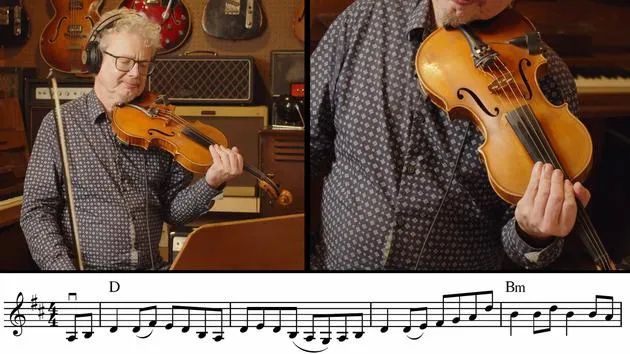
07. Bluegrass : Lost Indian (interprétation)
0:40
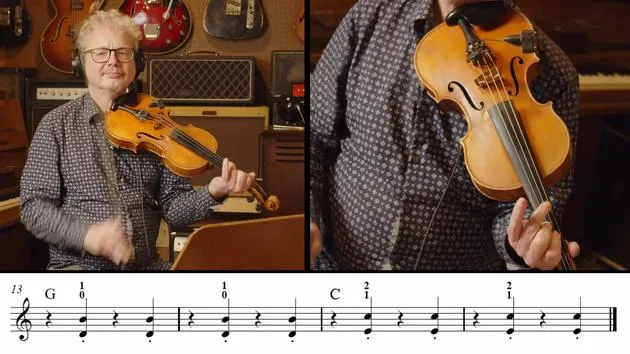
Transcription de la leçon
Lesson on Bluegrass vs. Old Time Music
Okay, the next few lessons are going to be about bluegrass. In the minds of a lot of people, bluegrass and old time music are pretty much the same kind of thing. They both involve fiddles and banjos and lots of lively stuff. However, they are quite different and distinct.
The Origins of Bluegrass
- Timeline: Bluegrass started in the late 30s and didn't reach its proper form until the 1950s. The popular misconception that bluegrass is "as old as the hills" is quite wrong. The origins of bluegrass are indeed old, but the genre itself really started around 1942.
- Bill Monroe: Bill Monroe, the mandolin player and band leader, uniquely invented the genre all by himself. He started off playing with his brother as a duo and gradually evolved the style of bluegrass. The name "bluegrass" comes from bluegrass (two separate words), which is a type of grass that grows in Kentucky and is representative of the state. Monroe called his band the Bluegrass Boys, and eventually, bluegrass became a recognized genre.
Monroe's Influence
Interestingly, Bill Monroe was very protective of his music and disliked the idea that other people were starting to play music that he created. Some musicians he played with, like Lester Flatt (guitarist) and Earl Scruggs (banjo player), left to form their own band, which annoyed him immensely. Many fiddle players he employed later joined Flatt and Scruggs.
Key Differences Between Old Time and Bluegrass
-
Purpose of Performance:
- Old Time Music: Mainly for dancing.
- Bluegrass: Show-off music, intended for performance and listening.
-
Speed:
- Old time music tends to be quite a lot slower, while bluegrass is often very fast.
- Example: "Whereas old time might sound like something like this, bluegrass might sound like this."
-
Instrumentation:
- Old Time Music: A variety of instruments can be used, such as solo fiddle, fiddle and guitar, or fiddle and banjo, almost any combination.
- Bluegrass: The standard lineup set in 1942 by Bill Monroe includes:
- Fiddle
- Banjo
- Guitar
- Mandolin
- Double Bass
- Three-part harmony vocals (common but not mandatory).
-
Improvisation:
- Bluegrass: Involves a lot of improvised soloing. Fiddlers are expected to play melodies, back singing, and improvise solos within the bluegrass style.
- Old Time Music: Typically performed in a circle for one another. The idea of someone standing up to do a solo is discouraged. Improvisation is small-scale and limited to the melody.
-
Key Limitations:
- Old Time Music: Primarily played in G, D, or A.
- Bluegrass: Musicians are expected to play in various keys, including flats and sharps, often changing keys even within tunes.
-
Tuning and Bowing Techniques:
- Old Time Music: Fiddlers may frequently retune their instruments to use different open tunings. Bowing lends a lot of drive, contributing to the overall style.
- Bluegrass: Fiddlers typically stay in the same tuning and may transition between keys quickly. Smoothness is essential in bowing.
-
Tone:
- Old Time Playing: A bit of roughness and scratchiness is acceptable.
- Bluegrass: Clarity of tone and vibrato are preferred.
Summary of Differences
-
Old Time:
- Fluid instrumental lineup
- Slower pacing
- Very little improvisation
- Limited key options
-
Bluegrass:
- Specific instrumental lineup
- Fast-paced performance
- Significant improvisation expected
- Ability to change keys frequently
Assignment
- Watch: "O Brother, Where Art Thou?" ? an amazing film featuring great music and fiddling from Alison Krauss, among others.
- Listen to: Bill Monroe recordings with the Bluegrass Boys and compare them to fiddling by John Carson, one of the first recording old-time stars.
- Explore: Check out the documentary video on The Fiddle Channel titled "What's the Real Difference between Old Time and Bluegrass." You will find it very interesting.
22 leçons
1h 51m de leçons vidéo structurées
Fonctions vidéo avancées
Ralentissez, bouclez un passage, suivez la partition
Mobile, tablette et ordinateur
Pratiquez où vous voulez
Satisfaction garantie à 100 %
Garantie remboursement 30 jours
Rencontrez votre guru
Rencontrez votre guru
Chris Haigh est violoniste professionnel depuis 25 ans et possède une expérience dans de nombreux genres. Il a joué sur plus de 75 albums, aux côtés d'artistes comme Alison Moyet, Bob Geldof, All About Eve, Michael Ball, David Soul, Oumou Sangare, The Quireboys, Riverdance, Morcheeba, James Galway et Steps.
Il a joué du swing et du jazz avec The Kimbara Brothers, Diz Disley, Le Jazz, The Hot Club of London et les Quecumbar Allstars, et dirige un ensemble de swing soviétique à sept musiciens, The Kremlinaires.
Chris donne des cours et des ateliers sur la technique du violon jazz et a enseigné le violon jazz aux universités de Middlesex, Brunel et Newcastle ainsi qu'au Truro College. Parmi ses ouvrages figurent neuf livres consacrés au violon, dont The Fiddle Handbook.
Il anime également Fiddling Around (fiddlingaround.co.uk), sans doute la source d'information sur le violon la plus complète et la plus consultée du web.







