



Bluegrass : Vassar Clements 1
Avec
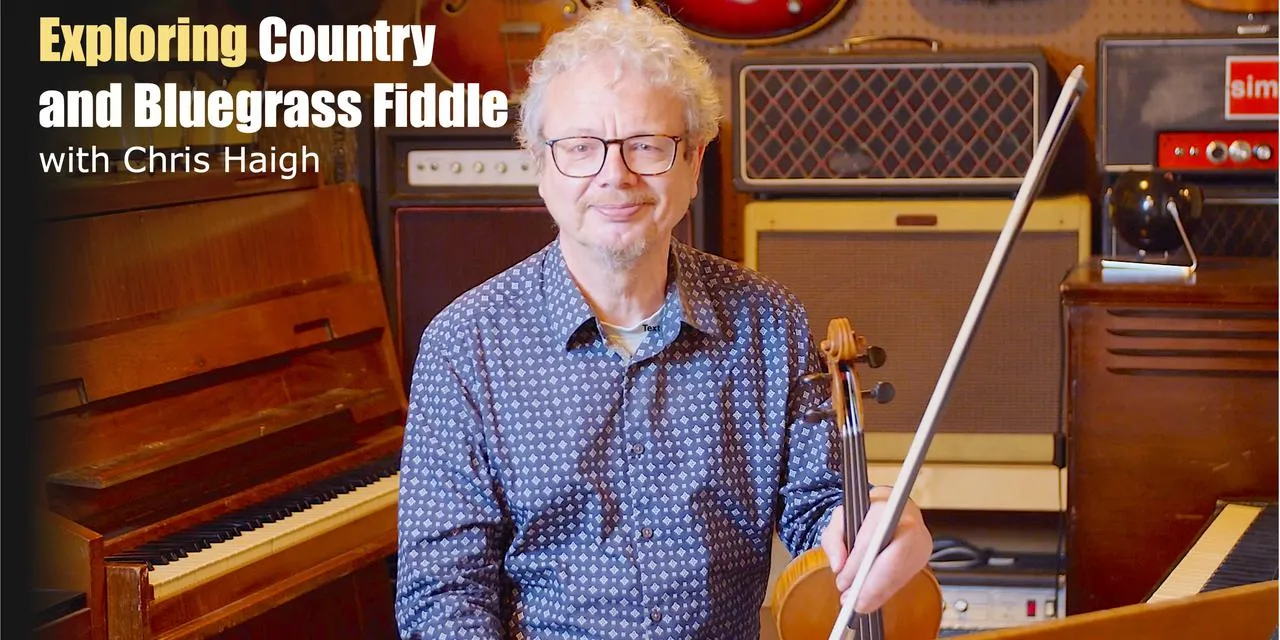
Chris HaighUn portrait du fiddler de bluegrass Vassar Clements : sa carrière de Bill Monroe au Nitty Gritty Dirt Band, et ce qui rendait son jeu si singulier.
Le contenu du cours
22 leçons (1h 51min) · 1 gratuites
01. Old-time vs bluegrass
Leçon gratuite11:17
02. Bluegrass : mélodie et fills
7:52
03. Bluegrass : kickoffs et solos
7:28
04. Bluegrass : Licks de Chubby Wise
5:25
05. Bluegrass: Roll in my Sweet Baby's Arms (solo de Chubby Wise)
2:02
06. Bluegrass : licks de Benny Martin et Kenny Baker
5:50
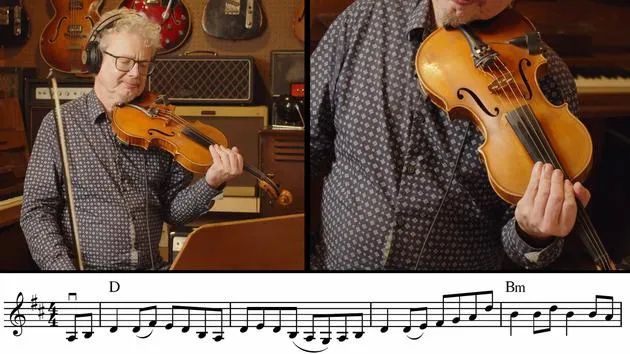
07. Bluegrass : Lost Indian (interprétation)
0:40
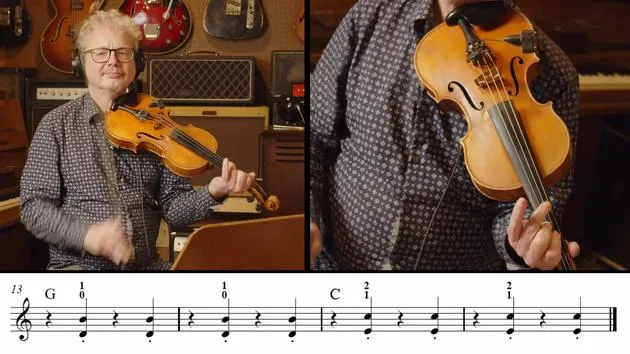
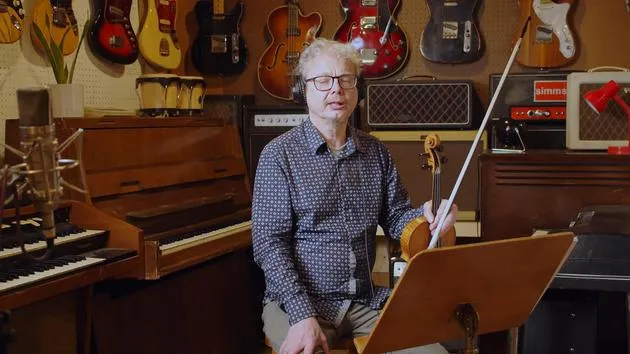
Transcription de la leçon
Vassar Clements: A Tribute to an Iconic Fiddler
Now we have a couple of lessons dedicated to Vassar Clements. Of all the fiddlers in the world, I think he's my favorite, or was my favorite, because he died a while back.
Early Collaborations
Vassar Clements played with Bill Monroe from 1949 to 1956. To be honest, what he did with that band was not particularly outstanding; he was simply copying what the other guys had done. He didn't step beyond what was asked of him by Bill Monroe.
After leaving Monroe, he went on to play with John Hartford, Norman Blake, and Earl Scruggs.
Breakthrough Moment
However, it was in 1972, with the Nitty Gritty Dirt Band on an album called Will the Circle Be Unbroken, that he finally revealed the amazingness of his fiddle playing to the world. From there, he played in 1975 with a band called Olden in the Way, which included Jerry Garcia on banjo and David Grisman on mandolin.
As I mentioned previously, the first time I heard bluegrass was when I listened to Olden in the Way. It truly was a startling development of what had come before in bluegrass, and everything Vassar did was remarkable.
Musical Style
Vassar was a completely untrained musician in that he didn't understand any theory whatsoever. But what came from his fingers was some of the most dynamic and exciting music you'll ever hear on the fiddle.
Learning Vassar's Licks
Now, I'm going to give you a selection of my favorite licks, which I have religiously learned and practiced over many years. We'll start off with a series of blues licks, because he was a very bluesy player.
Blues Licks
-
Key of E Over A Major Chord
- Emphasize the flattened seventh, then slide from a flattened third down to an A.
- Listen: [Backing Track]
-
Another Blues Lick
- Triplet from the 7th to the flattened third going up to the major third.
- Listen: [Backing Track]
-
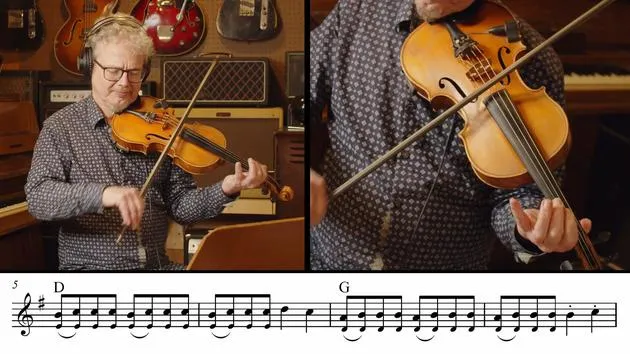
D Sharp to A Lick
- Uses the first and second fingers playing a D sharp, followed by A and E natural with the second finger.
- It sounds like it's in A minor but clashes beautifully with the A major chords.
- Listen: [Backing Track]
-
Fast Blues Lick with Slur
- Aim for a big long slur.
- Listen: [Backing Track]
Dissonant Licks
Next, we'll look at what I call dissonant licks. Deliberate dissonance is one of the features of startling bluegrass soloing, and Vassar Clements was certainly the master of this.
-
A Over B Dissonance
- Start off hitting hard on the two notes together, then slide them down and up again with a big, wide vibrato at the end.
- Listen: [Backing Track]
-
E Chord Lick
- Starting with a G natural over A, sliding down to AB and G flat.
- This makes almost no sense over an E chord, but sounds incredible.
- Listen: [Backing Track]
-
Single Note Dissonance
- Instead of a single note apart, try playing a C sharp with your fourth finger, then play one note down.
- This creates real dissonance, which can be slid up and down.
- Listen: [Backing Track]
Vassar Symmetric Licks
Now we have a group of licks that I call Vasar symmetric licks. These do the same thing on different strings with the same fingers.
-
Lick Variations
- You can do either 3, 2, 2, 1 or 4, 3, 2, 1 across three alternate strings.
- It works well over anything in C but doesn't translate well to different keys.
-
Parallel Fifths
- Again, use 3, 2, 2, 1 or 4, 3, 2, 1.
-
Haunted House Lick
- This one sounds very peculiar, but it fits over the key of C and probably works in other keys as well.
Your Assignment
- Listen to Olden in the Way and be prepared to be amazed, using the backing track of the A chord.
- Practice these licks and try making up your own solos.
- Finally, reflect on how truly astonishing Vassar Clements was and how you might never reach the heights of what he played.
22 leçons
1h 51m de leçons vidéo structurées
Fonctions vidéo avancées
Ralentissez, bouclez un passage, suivez la partition
Mobile, tablette et ordinateur
Pratiquez où vous voulez
Satisfaction garantie à 100 %
Garantie remboursement 30 jours
Rencontrez votre guru
Rencontrez votre guru
Chris Haigh est violoniste professionnel depuis 25 ans et possède une expérience dans de nombreux genres. Il a joué sur plus de 75 albums, aux côtés d'artistes comme Alison Moyet, Bob Geldof, All About Eve, Michael Ball, David Soul, Oumou Sangare, The Quireboys, Riverdance, Morcheeba, James Galway et Steps.
Il a joué du swing et du jazz avec The Kimbara Brothers, Diz Disley, Le Jazz, The Hot Club of London et les Quecumbar Allstars, et dirige un ensemble de swing soviétique à sept musiciens, The Kremlinaires.
Chris donne des cours et des ateliers sur la technique du violon jazz et a enseigné le violon jazz aux universités de Middlesex, Brunel et Newcastle ainsi qu'au Truro College. Parmi ses ouvrages figurent neuf livres consacrés au violon, dont The Fiddle Handbook.
Il anime également Fiddling Around (fiddlingaround.co.uk), sans doute la source d'information sur le violon la plus complète et la plus consultée du web.







