



Foggy Mountain Breakdown Vamp - accords mineurs

Lesson time: (3min 57sec)
Avram Siegel enseigne les positions d'accords de mi mineur et la mineur dont tu as besoin pour accompagner en vamp 'Foggy Mountain Breakdown' au banjo.
Course preview
This lesson is part of the course Le banjo pour débutants avec Avram Siegel
Watch a preview of the full course below.
Lesson transcript:
Understanding Chords: A Guide to E Minor and A Minor
Now, in order to play the chords of this song, if you want to vamp along, you'll need to learn a new chord.
Overview of E Minor
- We've had this chord in some of the other songs, but it's been so short that we haven't really had to think about it.
- Down the Road has a quick E minor that you barely notice, and so does Cumberland Gap.
- However, in Foggy Mountain Breakdown, you get a nice long E minor.
That's an E minor.
A Minor Shape
Let's talk about how to play the A minor shape. If you want to play the chords from your basic F shape, you'll need to make one little change.
Chord Structure
If you know about chord structure, you'll understand that you have to change the third of the chord.
- You have to lower the third of the chord by one note to make A major into A minor.
- I don't want to get into the details of that right now because we just don't have that much time, but if you already understand some of it, you'll know what's happening.
Chord Fingering
Just knowing the chord will help. Here's how it works:
- This is an F shape, but I'm playing a G chord.
- I'm going to move my middle finger note down by barring across with my index finger.
Major to Minor Transition
- From this shape, the D shape, I have to move two notes down. This means I'll have to re-finger the whole thing, and it looks like this: minor.
- From the bar shape, I have to move this note down. However, I can't use a whole bar now, so I have to change the way I finger it. It looks like this: Major, minor.
Basic Chords Overview
- There are only three basic chords.
- We have three basic minor chords.
Major and Minor Relationships
There's a practical thing you need to know about major chords and minor chords:
- You don't typically go from G major to G minor; you usually go from G major to E minor.
- This is called the relative minor because it is relative. They share many notes and have a very similar sound.
Example Transition
- If this is G major, its relative minor is E minor. You can find the relative minor by moving that finger.
- When transitioning from D to B minor from the bar shape, you just have to change it.
You keep that bar and add two notes.
- For G minor, transitioning from G to E minor up here looks like this.
- We also had that down the neck.
Conclusion
Knowing these relationships is handy because that's what you'll be doing most often when transitioning between a major chord and a minor chord. That's where you'll find it.
About the instructor
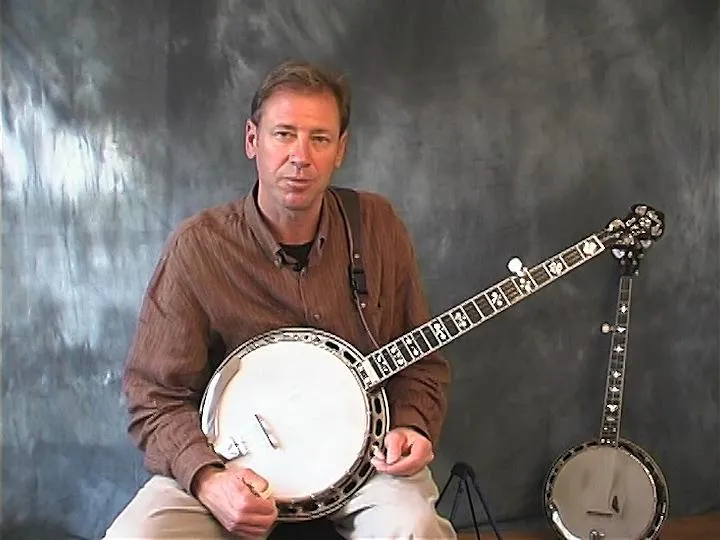
Avram Siegel est un joueur de banjo et un pilier de la scène bluegrass californienne. Il a joué avec le Kathy Kallick Band et True Blue, entre autres, et enseigne depuis des décennies : sa méthode pas à pas a formé certains des jeunes musiciens les plus respectés de l'État. Dans ses cours, il décompose les rolls à trois doigts façon Scruggs, l'accompagnement et le jeu mélodique pour que tu puisses développer un timing et une sonorité nets à ton propre rythme. read more