



Presión del arco y longitud de la cuerda
Lesson time: (2min 13sec)
Simon explica los principios que rigen las relaciones entre la presión del arco, la longitud de la cuerda y el tono.
Course preview
This lesson is part of the course Los secretos de la producción de sonido, Parte 1: conoce tu instrumento
Watch a preview of the full course below.
Lesson transcript:
Understanding String Pressure and Bowing Techniques
-
Pressure Dynamics
The further from the bridge, the less pressure
The closer to the bridge, the more pressure -
Positioning
- Low positions
- Middle positions
- Higher positions
These change the length of the string:
- This is a long string
- This is a short string
The shorter the string (or the higher up you play), the nearer to the bridge you must bow to keep all the proportions right.
Playing High Notes
When playing high notes, you need to:
- Play near the bridge
- Use more weight
However, there's another principle that applies:
- The shorter the string length, the less pressure it can take.
So, when playing high notes:
- Bow nearer to the bridge
- But use less pressure
Practical Demonstration
You can easily prove this:
- Play a very high note next to the bridge with a pure tone.
- Memorize the exact amount of weight you are using.
Then: 3. Play a low note using exactly the same amount of weight.
It just doesn't work! This exercise will make you realize just how little weight you had when playing near the bridge.
Common Challenges
When playing close to the bridge:
- You may get a nasty scratch if you don't adjust your technique.
- If you play a low note and memorize the amount of weight, using the same on a high note near the bridge will often lead to scratches.
This rule, the shorter the string, the less pressure, is why you so often hear scratches when students play in high positions on the G or E string. Instead, remember to play lightly near the bridge.
About the instructor
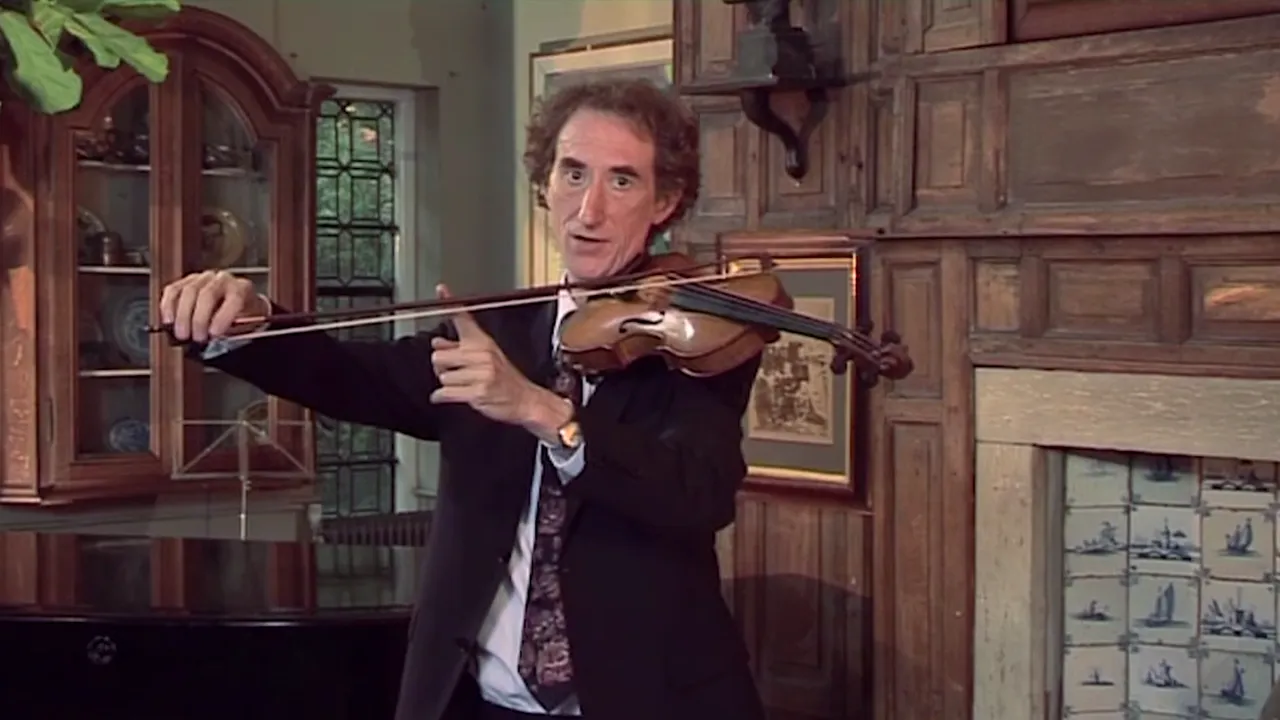
Simon Fischer disfruta de una distinguida y polifacética carrera como intérprete, pedagogo y artista de grabación. Ha actuado por todo el mundo como recitalista y ha grabado tres Sonatas de Brahms, una grabación que recibió grandes elogios en la revista Gramophone. Simon está reconocido como uno de los profesores de élite del mundo. Es profesor en la Guildhall School of Music y ha ocupado cargos en la Yehudi Menuhin School, la Wells Cathedral School y la Purcell School, y durante 15 años fue profesor visitante en la Royal Scottish Academy of Music. Tras estudiar en Londres con Yfrah Neaman y en Nueva York con Dorothy DeLay, el enfoque de Fischer une los mejores elementos de las tradiciones violinísticas francesa, rusa y estadounidense. La obra publicada de Fischer ejerce una gran influencia en la enseñanza del violín. Autor de artículos para la revista The Strad desde 1991, sus columnas mensuales han atraído seguidores en todo el mundo. Publicados por Edition Peters, sus libros de técnica Basics and Practice (traducido al coreano, italiano y alemán), Scales y The Violin Lesson, así como el DVD The Secrets of Tone Production (ahora disponible en streaming a través de MusicGurus), se han convertido en referencias en muchos continentes. Su libro y DVD Warming Up fue descrito por la revista The Strad como "23 páginas de oro técnico puro". En 2014, Simon Fischer recibió el premio de la European String Teachers Association "en reconocimiento a toda una vida de contribución a la enseñanza de instrumentos de cuerda". En su curso de cuatro partes Secrets of Tone Production, Simon te guía para que conozcas tu instrumento y luego trabajes sus ejercicios fundamentales de sonido paso a paso, de modo que puedas producir un sonido más rico, más controlado y más hermoso con el violín. read more