



Sobre la resonancia
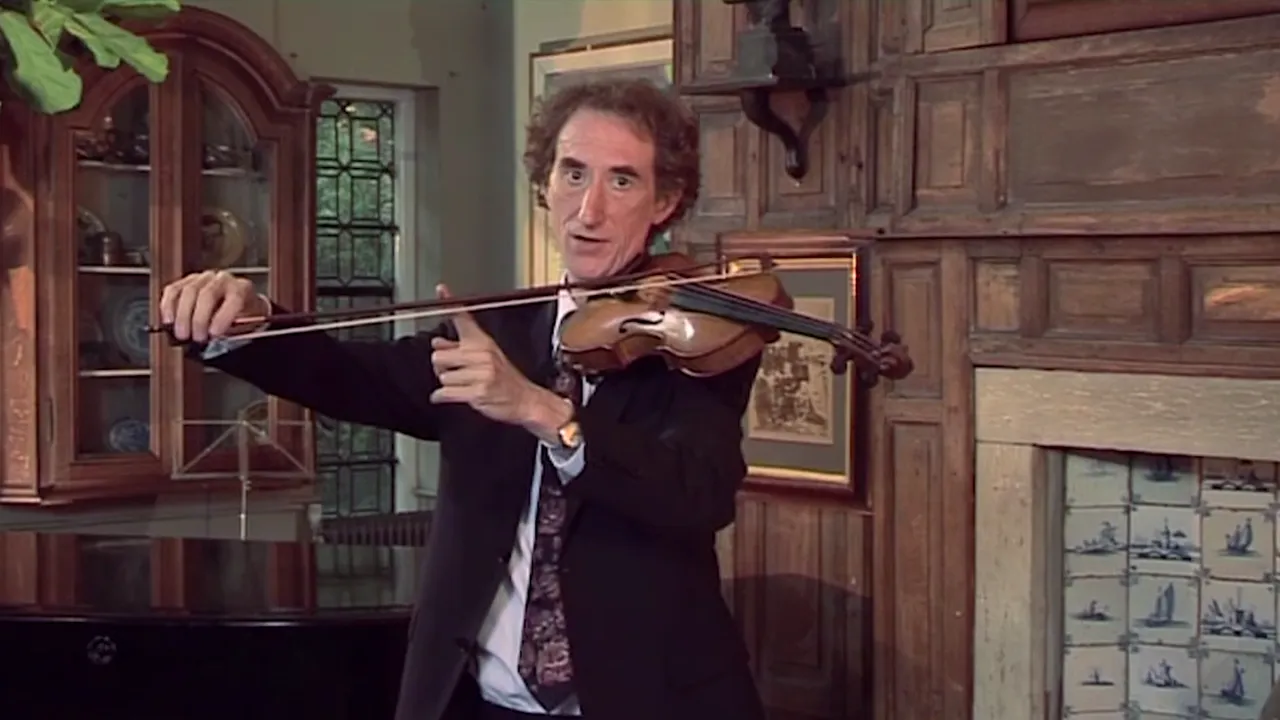
Simon Fischer explica cómo el cuerpo hueco de tu instrumento hace resonar las notas que tocas, y cómo trabajar con esa resonancia en notas de distinta duración.
Qué incluye el curso
11 lecciones (0h 42m) · 1 gratis
01. Introducción
0:49
02. Cuatro formas de abordar los ejercicios
2:14
03. Cinco puntos de sonido
Lección gratis4:39
04. El pelo del arco y la cuerda
5:18
05. Presión del arco y afinación
0:48
06. Presión del arco y longitud de la cuerda
2:13
07. La inclinación del arco
4:14
08. Sobre la resonancia
Estás aquí3:15
09. No seguir la línea de menor resistencia
2:24
10. Calidad del sonido: los armónicos superiores
2:14
11. Proporciones
14:04
Transcripción de la lección
Understanding the Resonance of String Instruments
The body of a string instrument is a resonating box. If it were made of solid wood instead of being hollow, the sound of the bowed string would be small and thin.
The Role of the Bridge
The bridge transmits the vibrations down into the resonating box, where they are amplified.
-
Using your knuckles, gently tap the body.
- Listen to the sound of each tap resonating through the instrument. This is a nice thing to do.
-
Using your fingernail, scratch the top of the bridge lightly between the strings and listen to how the sound is amplified.
- If you make the same scratching movement on something solid, like a tabletop, you can't hear anything.
You can hear this background resonance in every note you play.
Playing and Listening
-
Play a short note and listen to the ring.
- You can hear how the note continues to ring on after the end of the bow stroke.
-
The Question: What happens to that ring during a longer note?
- If you listen carefully, you can hear two distinct sounds:
- The sound of the fundamental note
- A continuous background ring, which is like a distinct note ringing on its own.
- If you listen carefully, you can hear two distinct sounds:
Many players listen only to the fundamental sound, the sound of the string vibrating from the contact with the rosin bow hair.
- The moment they start to focus on the background echo as well, an entirely new quality comes into the playing.
Practical Tips
- Use all the bow.
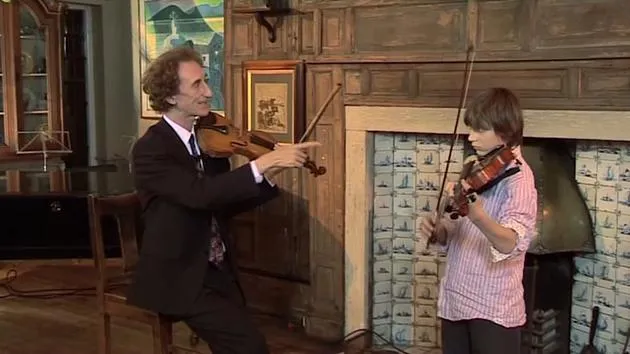
- Tim, are you touching the D string? Because I can hear it really ringing.
- Let's hear just the A string.
- That's good.
But, Tim, I'll tell you something else.
- There are two distinctly different sounds you can listen to:
- One is the principal note, the fundamental note, the string vibrating.
- There's all that sound of the actual beginning of the note.
- But there's another sound, which is the resonance, the echo.
- This is a resonating box. You need to make it really resonate.
- One is the principal note, the fundamental note, the string vibrating.
So this time, really focus on not the principal sound, the fundamental sound, but the background ring. See what happens.
Very good. Great. So interesting. You know, you do that, and although you weren't trying to, I can immediately see the string going so much wider in amplitude.
Excellent.
11 lecciones
0h 42m de lecciones en vídeo estructuradas
Funciones de vídeo avanzadas
Ralentiza, repite un pasaje, sigue la partitura
Móvil, tablet y ordenador
Practica donde quieras
Garantía de satisfacción 100%
30 días de garantía de devolución
Conoce a tu gurú
Conoce a tu gurú
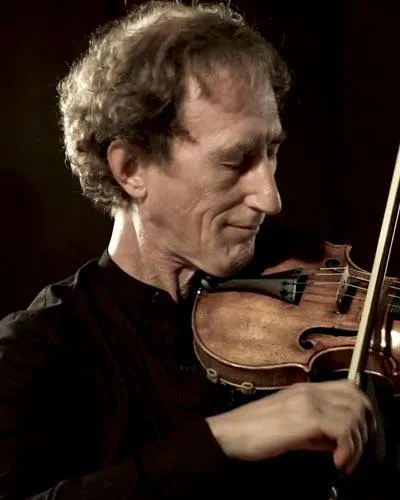
Simon Fischer disfruta de una distinguida y polifacética carrera como intérprete, pedagogo y artista de grabación.
Ha actuado por todo el mundo como recitalista y ha grabado tres Sonatas de Brahms, una grabación que recibió grandes elogios en la revista Gramophone.
Simon está reconocido como uno de los profesores de élite del mundo. Es profesor en la Guildhall School of Music y ha ocupado cargos en la Yehudi Menuhin School, la Wells Cathedral School y la Purcell School, y durante 15 años fue profesor visitante en la Royal Scottish Academy of Music. Tras estudiar en Londres con Yfrah Neaman y en Nueva York con Dorothy DeLay, el enfoque de Fischer une los mejores elementos de las tradiciones violinísticas francesa, rusa y estadounidense.
La obra publicada de Fischer ejerce una gran influencia en la enseñanza del violín. Autor de artículos para la revista The Strad desde 1991, sus columnas mensuales han atraído seguidores en todo el mundo. Publicados por Edition Peters, sus libros de técnica Basics and Practice (traducido al coreano, italiano y alemán), Scales y The Violin Lesson, así como el DVD The Secrets of Tone Production (ahora disponible en streaming a través de MusicGurus), se han convertido en referencias en muchos continentes. Su libro y DVD Warming Up fue descrito por la revista The Strad como "23 páginas de oro técnico puro".
En 2014, Simon Fischer recibió el premio de la European String Teachers Association "en reconocimiento a toda una vida de contribución a la enseñanza de instrumentos de cuerda".
En su curso de cuatro partes Secrets of Tone Production, Simon te guía para que conozcas tu instrumento y luego trabajes sus ejercicios fundamentales de sonido paso a paso, de modo que puedas producir un sonido más rico, más controlado y más hermoso con el violín.







