



Cinco puntos de sonido
Simon explica cómo Carl Flesch y Dorothy Delay dividieron la zona de ejecución en cinco puntos de sonido, lo que ofrece un contexto para trabajar en mejorar el tono.
Qué incluye el curso
11 lecciones (0h 42m) · 1 gratis
01. Introducción
0:49
02. Cuatro formas de abordar los ejercicios
2:14
03. Cinco puntos de sonido
Estás aquí4:39
04. El pelo del arco y la cuerda
5:18
05. Presión del arco y afinación
0:48
06. Presión del arco y longitud de la cuerda
2:13
07. La inclinación del arco
4:14
08. Sobre la resonancia
3:15
09. No seguir la línea de menor resistencia
2:24
10. Calidad del sonido: los armónicos superiores
2:14
11. Proporciones
14:04
Transcripción de la lección
Understanding the Playing Area
Carl Flesch and Dorothy Delay divided the playing area into five distinct sound points. Rather than being just a vague idea of where to place the bow on the string, they measured exactly where the bow can be. Flesch defined these points as:
- At the bridge
- In the neighborhood of the bridge
- At the center point
- In the neighborhood of the fingerboard
- At the fingerboard
Exploring Resistances
-
Press the String: Using your finger, press the string at different distances from the bridge to feel the resistances of the string.
- Soft near the fingerboard
- Hard near the bridge
-
Playing Simple Strokes: Play a few simple strokes at the same sound points, feeling the string with the hair of the bow instead of your finger.
Bow Technique
-
Bow Weight and Speed:
- The closer you play to the bridge, the less flexible the string becomes, necessitating more bow weight to engage the string.
- The bow must also move more slowly near the bridge. Otherwise, it may simply whistle over the surface of the string without catching it.
-
Summary:
- Near the bridge: The bow is slow and heavy.
- Near the fingerboard: The bow is light and fast.
The Five Sound Points
-
Sound Point designation:
- Sound Point 1
- Sound Point 2
- Sound Point 3
- Sound Point 4
- Sound Point 5
-
Feel the String: With your finger, press the string:
- Closer to the bridge: Very hard and tight.
- Near the fingerboard: Light and fast.
Practical Application
-
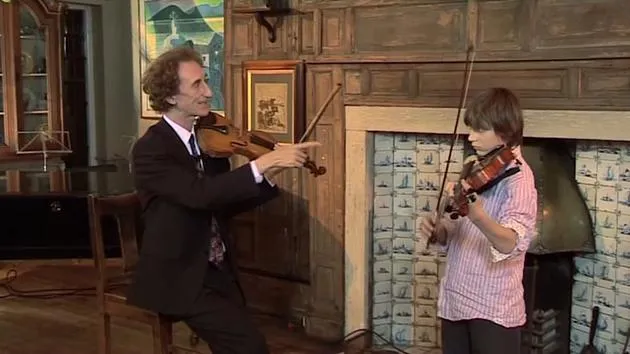
Play the Exercise: "Play this, Solomon. Just that. Light and fast you could play. Yes, very light and fast. That's right."
-
Steer Your Bow: When near the bridge, steer your bow as you would a car down the road in a straight line.
- "You went off track; that's it. You need a little more weight there to catch the string. Go deep into the string. That's it, and a little slower bow."
Sound Preferences for Open Strings
-
Open G String:
- Feels too stiff and hard to bow near the bridge.
- To make the open G vibrate the widest, use fast, long strokes around Sound Point 4.
-
Open E String:
- The opposite applies.
- For the widest vibration, play around Sound Point 2. It feels soft, fragile, and weak if bowed on Sound Points 4 or 5.
String Playing Positions
- When playing across the strings, you often start further from the bridge on the G string and end up closer to the bridge on the E string.
A Crucial Reminder
- Ensure you're not constantly playing the E and A strings too near to the fingerboard.
- You may observe many players doing the opposite, rather than engaging deeper into the string, closer to the bridge.
Chord Playing Technique
- In chord playing, you can adjust the sound point during the chord.
- Avoid:
- Playing too far from the bridge or too close to it.
- Best Approach:
- Start further away from the bridge and come in during the chord for optimal sound.
- Avoid:
11 lecciones
0h 42m de lecciones en vídeo estructuradas
Funciones de vídeo avanzadas
Ralentiza, repite un pasaje, sigue la partitura
Móvil, tablet y ordenador
Practica donde quieras
Garantía de satisfacción 100%
30 días de garantía de devolución
Conoce a tu gurú
Conoce a tu gurú
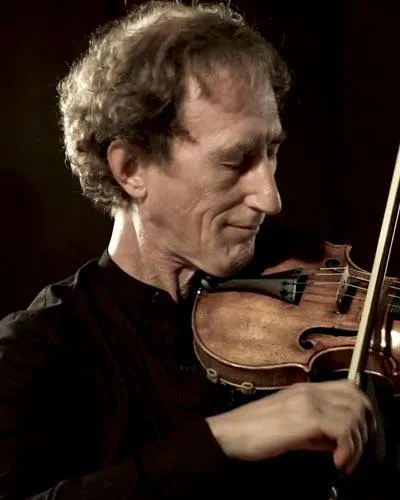
Simon Fischer disfruta de una distinguida y polifacética carrera como intérprete, pedagogo y artista de grabación.
Ha actuado por todo el mundo como recitalista y ha grabado tres Sonatas de Brahms, una grabación que recibió grandes elogios en la revista Gramophone.
Simon está reconocido como uno de los profesores de élite del mundo. Es profesor en la Guildhall School of Music y ha ocupado cargos en la Yehudi Menuhin School, la Wells Cathedral School y la Purcell School, y durante 15 años fue profesor visitante en la Royal Scottish Academy of Music. Tras estudiar en Londres con Yfrah Neaman y en Nueva York con Dorothy DeLay, el enfoque de Fischer une los mejores elementos de las tradiciones violinísticas francesa, rusa y estadounidense.
La obra publicada de Fischer ejerce una gran influencia en la enseñanza del violín. Autor de artículos para la revista The Strad desde 1991, sus columnas mensuales han atraído seguidores en todo el mundo. Publicados por Edition Peters, sus libros de técnica Basics and Practice (traducido al coreano, italiano y alemán), Scales y The Violin Lesson, así como el DVD The Secrets of Tone Production (ahora disponible en streaming a través de MusicGurus), se han convertido en referencias en muchos continentes. Su libro y DVD Warming Up fue descrito por la revista The Strad como "23 páginas de oro técnico puro".
En 2014, Simon Fischer recibió el premio de la European String Teachers Association "en reconocimiento a toda una vida de contribución a la enseñanza de instrumentos de cuerda".
En su curso de cuatro partes Secrets of Tone Production, Simon te guía para que conozcas tu instrumento y luego trabajes sus ejercicios fundamentales de sonido paso a paso, de modo que puedas producir un sonido más rico, más controlado y más hermoso con el violín.







