



Repaso de las notas del acorde
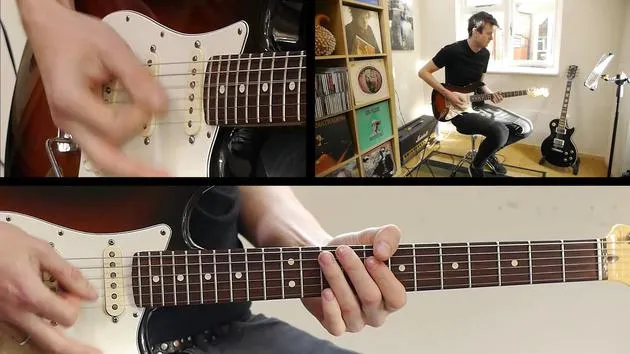
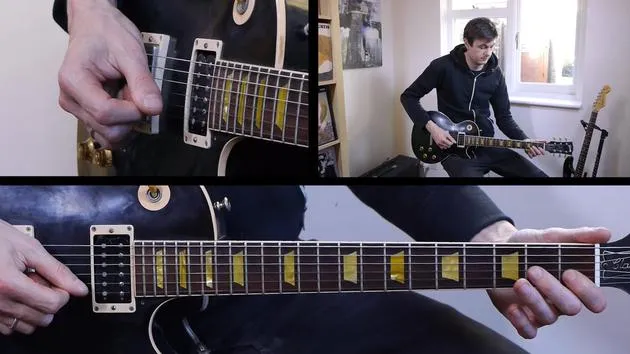
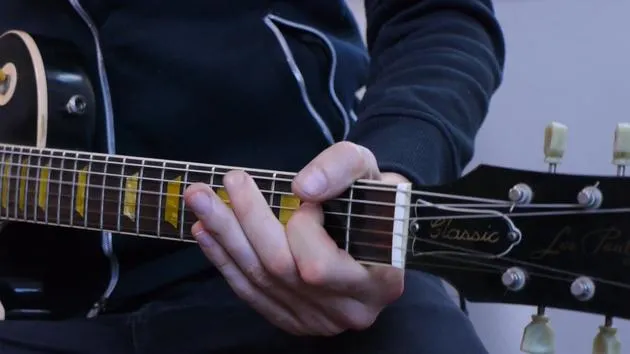
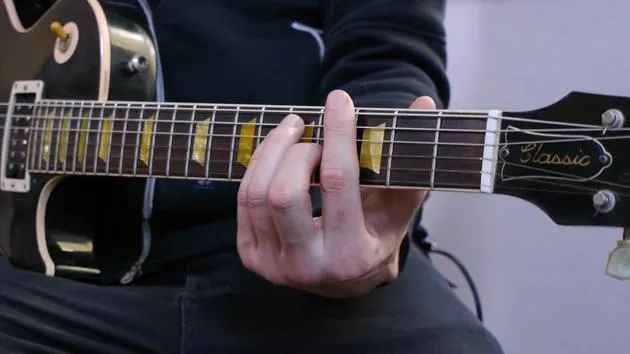
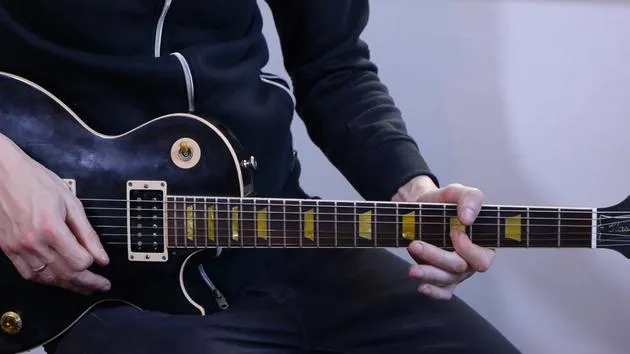
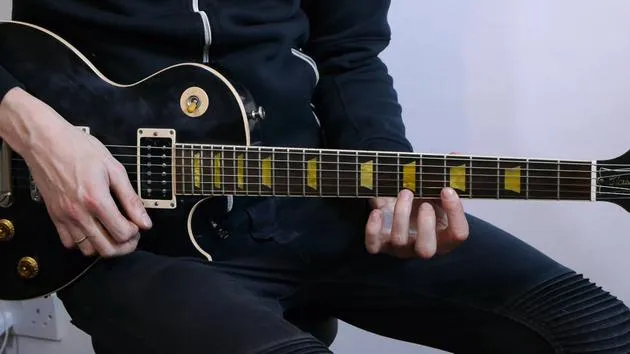
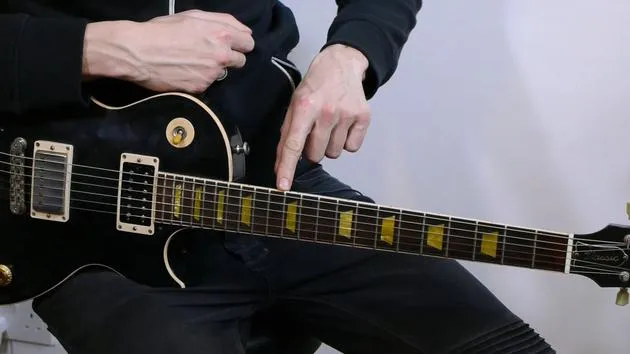
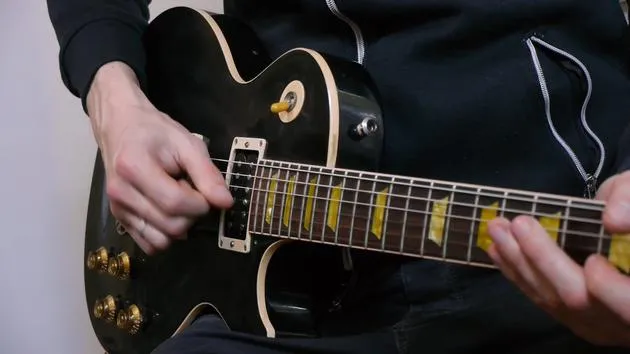
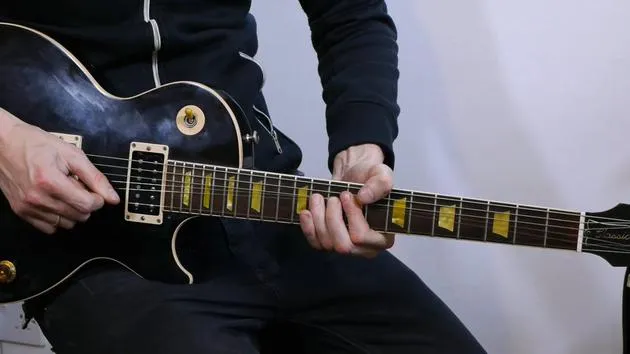
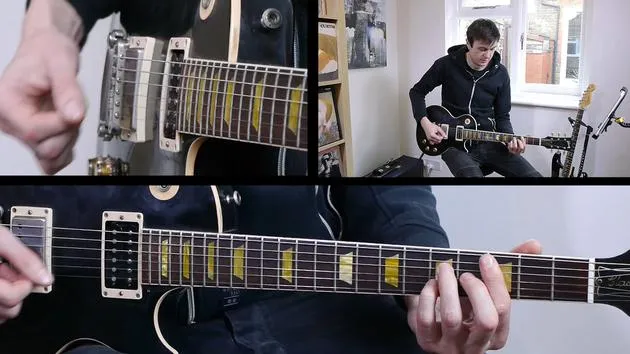
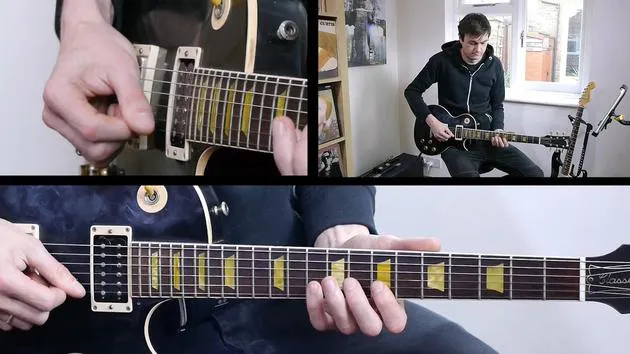
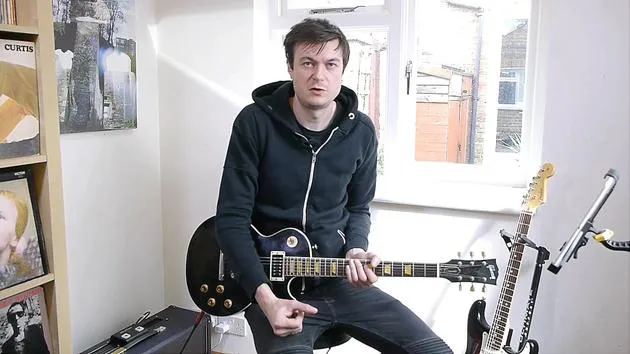
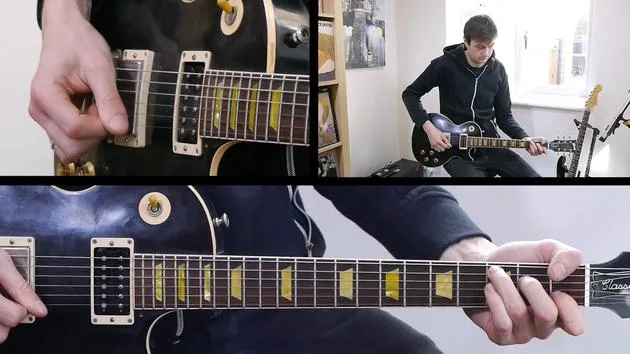
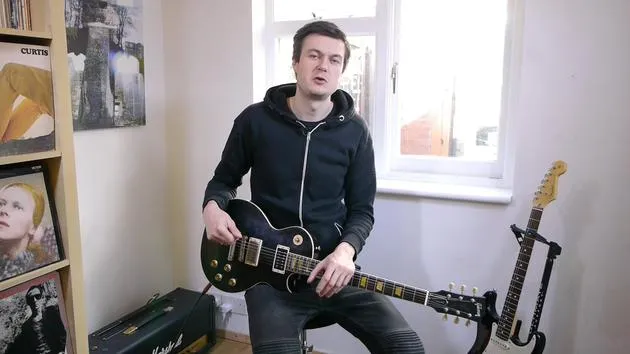
James Barratt repasa cómo construir las notas del acorde, tomando la primera, la tercera y la quinta notas de la escala mayor para formar los acordes de do y sol mayor por todo el diapasón.

Qué incluye el curso
42 lecciones (3h 27m) · 1 gratis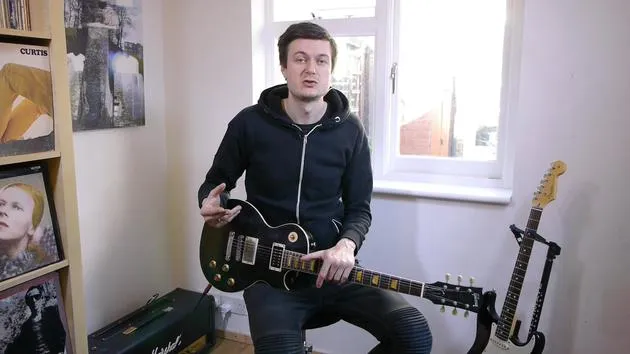

Transcripción de la lección
Recap on Finding Chord Tones
Okay, so let's have a little recap on finding chord tones.
C Major Chord
Let's demonstrate one more time how we found the chord tones of the C major chord.
-
C Major Scale:
- We will start with our C major scale because we're playing a C major chord.
- We'll play through that scale and count the numbers as we go until we get to the C again.
Counting the Notes:
- If we do it right, we should get seven different notes before we reach C.
- Count with me: 1, 2, 3, 4, 5, 6, 7.
- And there's our C again.
-
Creating the C Major Chord:
- To create a C major chord from that group of notes, we need to take:
- Note number one (C)
- Note number three (E)
- Note number five (G)
Let's walk through that scale again, making a mental note of notes number one, three, and five:
- 1: C
- 2:
- 3: E (that's an E note there)
- 4:
- 5: G
So we've got C, E, and G.
- To create a C major chord from that group of notes, we need to take:
-
Playing the C Major Chord:
-
That is the formula to play any C major chord on the guitar anywhere.
-
Play that combination of notes at the same time, and you're playing a C major chord.
-
A C major chord doesn't have to look like just one shape.
- I could play C, E, and G here,
- I could play C, E, and G here,
- I could play a C and a G up here.
There are loads of different places to play a C major chord, not just down here.
-
G Major Chord
Now, let's look at a different example for variety. We'll take a G major chord:
-
Strumming the G Major Chord:
-
We're strumming all six strings again, but that doesn't mean we're playing six different notes.
-
To find the chord tones in our G major chord, we'll play through the G major scale.
-
If you're unfamiliar with the shape of this, check out the technical exercises. There will be an example of a G major scale.
Counting the Notes:
- Let's count through our seven different notes: 1, 2, 3, 4, 5, 6, 7.
- And there's our G again.
-
-
Creating the G Major Chord:
- Again, to make our G major chord, we'll take:
- Note number one (G)
- Note number three (B)
- Note number five (D)
Let's do that now:
- 1: G (no surprises there)
- 2:
- 3: B (this is a B note here)
- 4:
- 5: D (and this is a D note here)
The three notes we need to construct a G major chord are G (number one), B (number three), and D (number five).
- Again, to make our G major chord, we'll take:
-
Playing the G Major Chord:
- Play those notes at the same time, and you're playing a G major chord.
- That combination of notes anywhere on the guitar will give you a G major chord.
Changing to Minor Chords
To make either of those chords minor, as we discussed, all you need to do is:
- Take the third note (the middle one) and flatten it by one semitone (one fret).
G Major to G Minor:
- From our G major chord, we had: G, B, and D (1, 3, 5).
- Now, from our G major scale, let's flatten the B by one semitone (move it back one fret).
This gives us G minor. You can hear how the tone of that chord has massively changed:
- G major vs. G minor.
Practice Exercise
Now, go and try that in a few different keys and see how you get on!
- Finding Chord Tones:
- Go to the scale of that root note on your chord.
- For example, if you've picked A, find the A major scale, count through the notes of that scale, and make a note of:
- Note number one
- Note number three
- Note number five
These will be your chord tones for that major chord.
- These are the good notes to target to start off your improvisation.
Good luck with that, and let's have a look at the next technique!
42 lecciones
3h 27m de lecciones en vídeo estructuradas
Funciones de vídeo avanzadas
Ralentiza, repite un pasaje, sigue la partitura
Móvil, tablet y ordenador
Practica donde quieras
Garantía de satisfacción 100%
30 días de garantía de devolución







