



Solos tradicionales con call and response
Lesson time: (2min 24sec)
Course preview
This lesson is part of the course Toca auténtica guitarra de blues de Texas
Watch a preview of the full course below.
Lesson transcript:
Soloing in the Traditional 12 Bar Blues
Okay. So I thought it'd be good to just talk about soloing and how to solo in a traditional way over a 12 bar blues like we were playing earlier with a kind of clean sound.
Key Concepts
One thing I'm kind of thinking of with this sort of thing, when playing a more traditional style, is what you're trying to say and having some references.
Perspective
I'm going to be thinking from a B.B. King perspective in my head. So, I'll be focusing on the key of E and staying in this position while rolling off a bit of the tone on the guitar.
The Call and Response Technique
BB was a master of the call and response sort of way of playing.
- He very much would sing a line and then play something.
- He'd pick up on what's going on and not play too much,
just being very aware of what you're saying.
Analogy of Conversation
I always think of it like a conversation:
- One person says, "Hi, how you doing?"
- The other one responds, "Yeah, I'm good, thanks! How are you?"
Just having that in your head, leaving a minute, leaving space, letting it build, is crucial.
Practicing the Basics
We'll just go a couple of times around, and I'm going to stay in this position here because there's so much you can get out of just these sort of four or five notes.
Exercise
- It's good to not bite off more than you can chew.
- It's always better to play a couple of simple things really well, without any hesitation,
and know exactly what you're going to play, rather than trying to play something really complicated.
You can always add to something simple, but it's much harder to take away from something complex.
The Sensation of Soloing
Sometimes, with a solo, you think, "I've got to fit everything in straight away." But a really good starting point is to:
- Reference a couple of melodies and stay in that area for a while.
- You don't have to be all up and down the neck.
The Old Blues Philosophy
A lot of the old blues stuff is intended to be less is more; it's more meaningful and soulful when there's space.
So, just pay attention to what you're not playing as well and just step back.
About the instructor
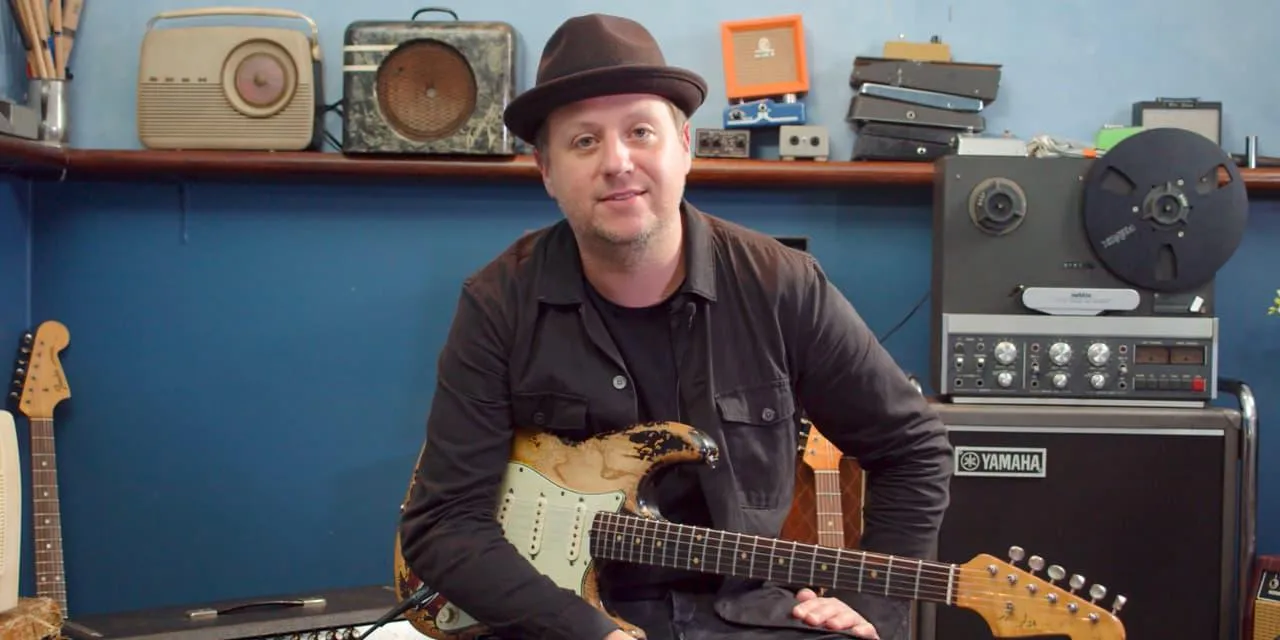
Scott McKeon ha dedicado toda una vida a su oficio como guitarrista. Inspirado inicialmente por el amor de su padre por el blues, el soul y el rock, cogió la guitarra a los cuatro años y se ha ganado la reputación de ser uno de los guitarristas más solicitados del Reino Unido, tanto en el estudio como en directo. En 2014, Scott recibió una llamada para tocar en la banda de Sir Tom Jones, junto a Robbie McIntosh y el batería de Pink Floyd Gary Wallis. El repertorio, orientado al blues, el rock 'n' roll y el gospel, permite a Scott recurrir a sus primeras influencias y recorrer el mundo. Las actuaciones hasta la fecha han incluido cinco giras europeas, tres giras por EE. UU. y Sudamérica y giras por Australia y el Lejano Oriente, así como apariciones en televisión como Later... with Jools Holland y TFI Friday, y tocar en el New Orleans Jazz Festival en 2019. El tercer álbum de Scott, 'New Morning', es un disco terroso, crudo y liderado por la guitarra que muestra su registro y su capacidad como guitarrista. El álbum se grabó en directo en el estudio de RAK en Londres, capturando la energía y la espontaneidad de las sesiones. Fue producido por Paul Stacey (Black Crowes/Oasis), y cuenta con Jeremy Stacey (Sheryl Crow/Tal Wilkenfeld) a la batería, Rocco Palladino (Tom Misch/D'Angelo) al bajo y Gavin Conder (Rufus Black/The Kondoors) como vocalista en varios temas. Scott también tiene un pedal de fuzz de firma y pastillas de firma, modeladas a partir de su Strat del 62. En su curso, Scott comparte el tono, el fraseo y el feel que hay detrás de la auténtica guitarra de blues de Texas, mostrándote cómo hincar el diente al estilo y hacer que cada nota cante. read more