



Acordes de tres notas ‚Äì Tríadas y juegos

Con
Talia GirtonAprende cómo funcionan las tríadas (acordes de tres notas), escucha la diferencia entre mayor y menor y afiánzalas con unos juegos para tocar.
Qué incluye el curso
21 lecciones (0h 42m) · 1 gratis

Transcripción de la lección
Understanding Triads
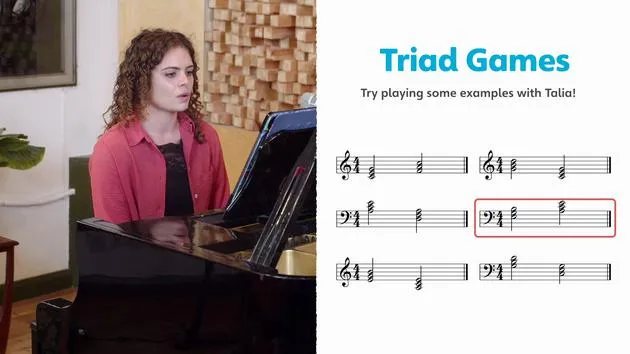
Triads are three-note chords. We had a look at this a little bit earlier with the C major chord and the A minor chord. As you might have guessed, it's called a triad because there are three notes.
Major and Minor Chords
You might recall that we have:
- Major chords which sound happy and uplifting
- Minor chords which sound a bit more melancholy
Now, we'll play some triad games to get this into your fingers.
Interactive Exercise
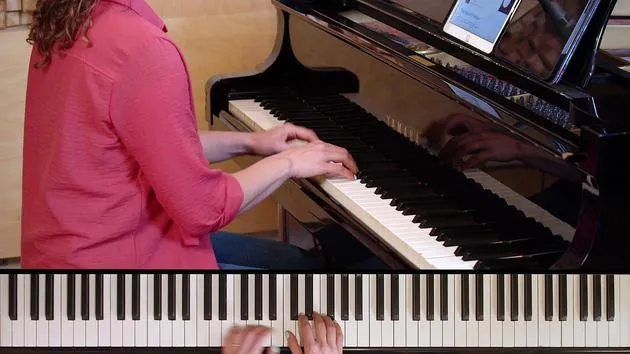
- I'll give you a chance to play, and then I'll show you the right answer, if you'd like to.
- As an added bonus, you can use your ear to see if you think it's a major triad or a minor chord.
(Note: I'll be using the words triad and chord interchangeably.)
Go ahead and hit pause, figure it out, and then come back and check the answer with me.
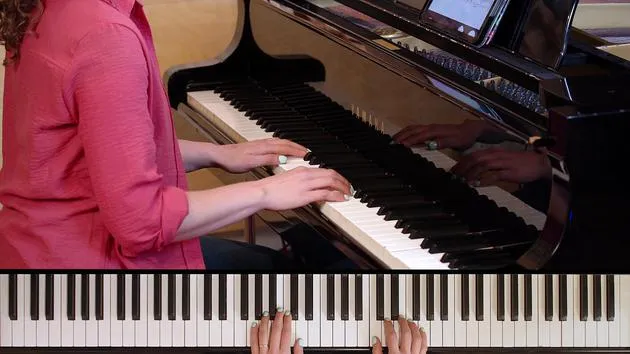
Example 1
Correct Answer: You might have realized that those were both major chords.
- The first one was C major with the C on the bottom.
- The second one was F major because there's an F on the bottom.
It'll be the same with the rest of the chords throughout this exercise.
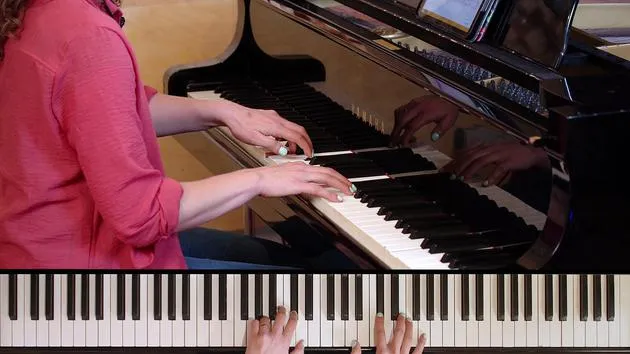
Example 2
Once again, pause the video, give it a try, and then you can come back to me to get the correct answer.
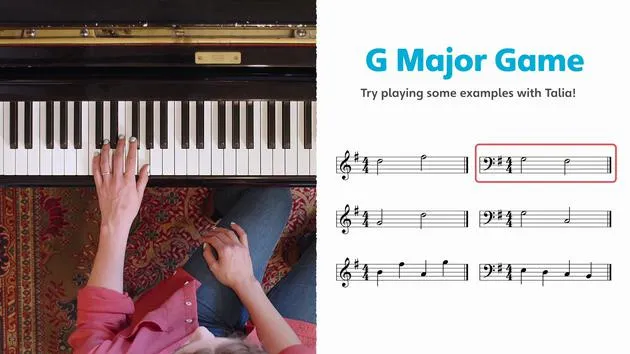
Correct Answer: You may have noticed that those were both major chords.
- We had a G major chord: G, B, and D.
- Then once again, we had our C major chord: C, E, and G.
Example 3
Let's try the next example. Pause the video, figure it out, and then come back when you're ready.
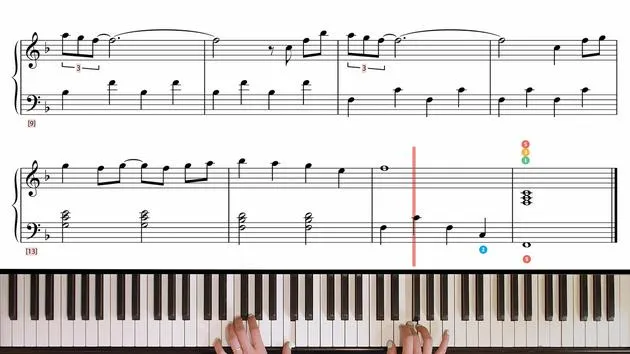
Correct Answer: Hopefully, you noticed that we've switched from the treble clef to the bass clef.
Did you notice that both of those chords were in a minor key? They had a darker, more melancholic sound to them.
- The first one was an A minor chord because it contains the notes A, C, and E.
- The second chord was a D minor chord because it contains the notes D, F, and A.
Example 4
Let's go on to the next example. Pause the video and come back when you're ready.
Correct Answer: You may have noticed that both of those chords were minor.
- The first chord was an E minor chord with the notes E, G, and B.
- The second chord was an A minor chord with the notes A, C, and E (the same one that we saw in the previous example).
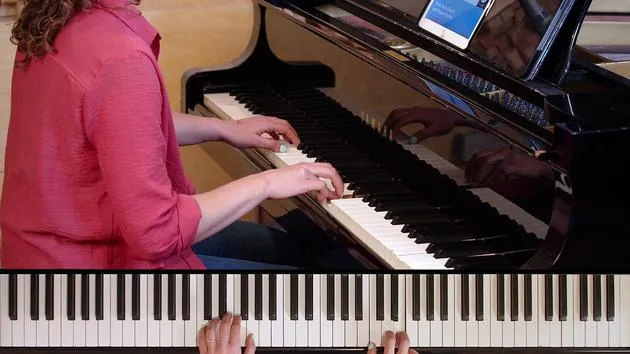
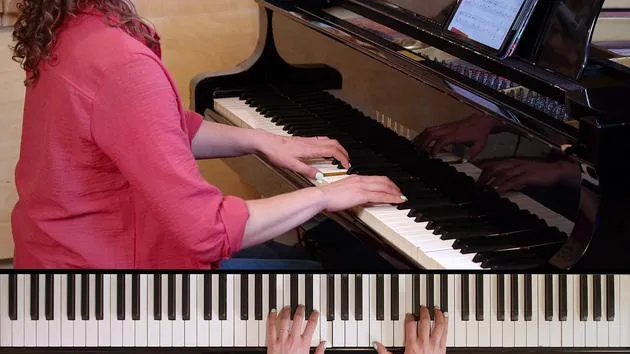
Feel free to experiment with triads going up and down the piano. You could even do them one after the other like this.
You can try with both hands or even with hands together to get a really nice, voluminous sound.
21 lecciones
0h 42m de lecciones en vídeo estructuradas
Funciones de vídeo avanzadas
Ralentiza, repite un pasaje, sigue la partitura
Móvil, tablet y ordenador
Practica donde quieras
Garantía de satisfacción 100%
30 días de garantía de devolución
Conoce a tu gurú
Conoce a tu gurú
Talia Girton es músico y musicoterapeuta registrada en el HCPC, y fundadora de The Cycling Music Teachers. Su trabajo une la musicoterapia, el asesoramiento y la educación, y da clases a nivel internacional en el curso de formación en musicoterapia de la UDELAS en Panamá, además de contribuir al desarrollo profesional con la European Piano Teachers Association (EPTA). En MusicGurus imparte los cursos Piano Method y Piano Foundations, guiando a principiantes absolutos desde los primeros pasos a través del ritmo, ambas manos, la teoría y la interpretación.







