



Nueva escala: do mayor
Con
Talia Girton
Qué incluye el curso
21 lecciones (0h 42m) · 1 gratis
Transcripción de la lección
Introduction to Diatonic Scales
Previously, we learned about pentatonic scales. Now we're going to try some diatonic scales.
Difference Between Scales
- Pentatonic scales have five notes.
- Diatonic scales have seven notes.
C Major Scale
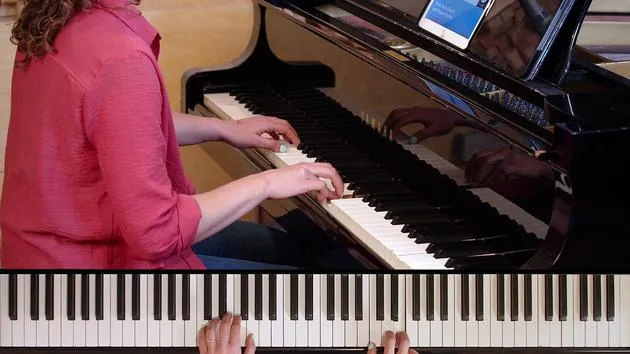
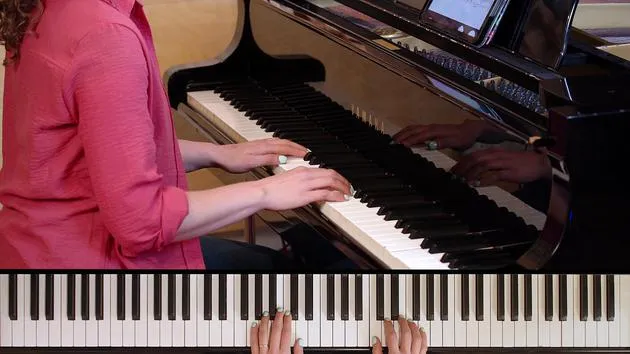
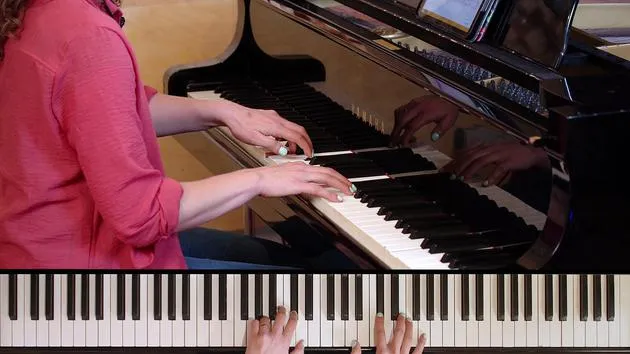
The first scale that we'll look at is the C major scale. I'll show you really slowly, and then I'll explain what I'm doing with my fingers.
Right Hand
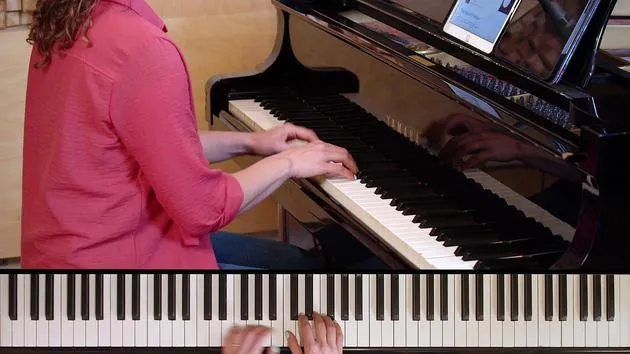
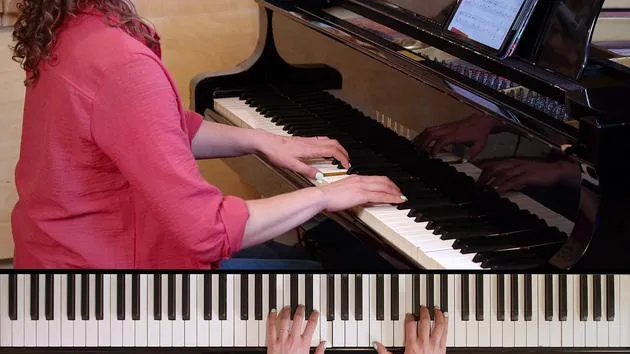
The right hand of the C major scale looks like this:
- Start with your one finger on middle C.
- We want it to sound really smooth and even, as if you've got eight fingers to make your way up the octave and back down.
Sequence:
- C, D, E.
- Thumb goes to F.
- Two goes to G.
- A, B, C.
Descending:
- Straight back down: B, A, G, F.
- 3 goes to E.
- 2 goes to D.
- Ending on C.
Let me show you that one more time.
Left Hand
The left hand of the C major scale uses the fingers in the opposite direction.
- First, we use all five fingers going up, and then on the way down, we switch.
- After the three finger, it looks like this.
Sequence:
- C, D, E, F, G.
- 3 goes to A.
- 2 goes to B.
- Ending on C.
Descending:
- Straight back down: B, A.
- Thumb goes to G.
- 2 goes to F.
- E, D.
- Ending on C.
Practicing Hands Separately
You'll probably need to practice both hands separately for several weeks until you're ready to try hands together.
Hands Together
It gets a bit tricky at this point because the fingers are switching at different moments of the scale.
It looks like this:
- Break it down slowly with both hands:
- C, D, E
- Right thumb to F.
- G, left 3 to A, B, C.
- B, A, left thumb to G.
- F, right 3 to E, D, C.
Final Tips
As always, make sure to go very slowly and take it at your own pace.
21 lecciones
0h 42m de lecciones en vídeo estructuradas
Funciones de vídeo avanzadas
Ralentiza, repite un pasaje, sigue la partitura
Móvil, tablet y ordenador
Practica donde quieras
Garantía de satisfacción 100%
30 días de garantía de devolución
Conoce a tu gurú
Conoce a tu gurú
Talia Girton es músico y musicoterapeuta registrada en el HCPC, y fundadora de The Cycling Music Teachers. Su trabajo une la musicoterapia, el asesoramiento y la educación, y da clases a nivel internacional en el curso de formación en musicoterapia de la UDELAS en Panamá, además de contribuir al desarrollo profesional con la European Piano Teachers Association (EPTA). En MusicGurus imparte los cursos Piano Method y Piano Foundations, guiando a principiantes absolutos desde los primeros pasos a través del ritmo, ambas manos, la teoría y la interpretación.







