



Digitación
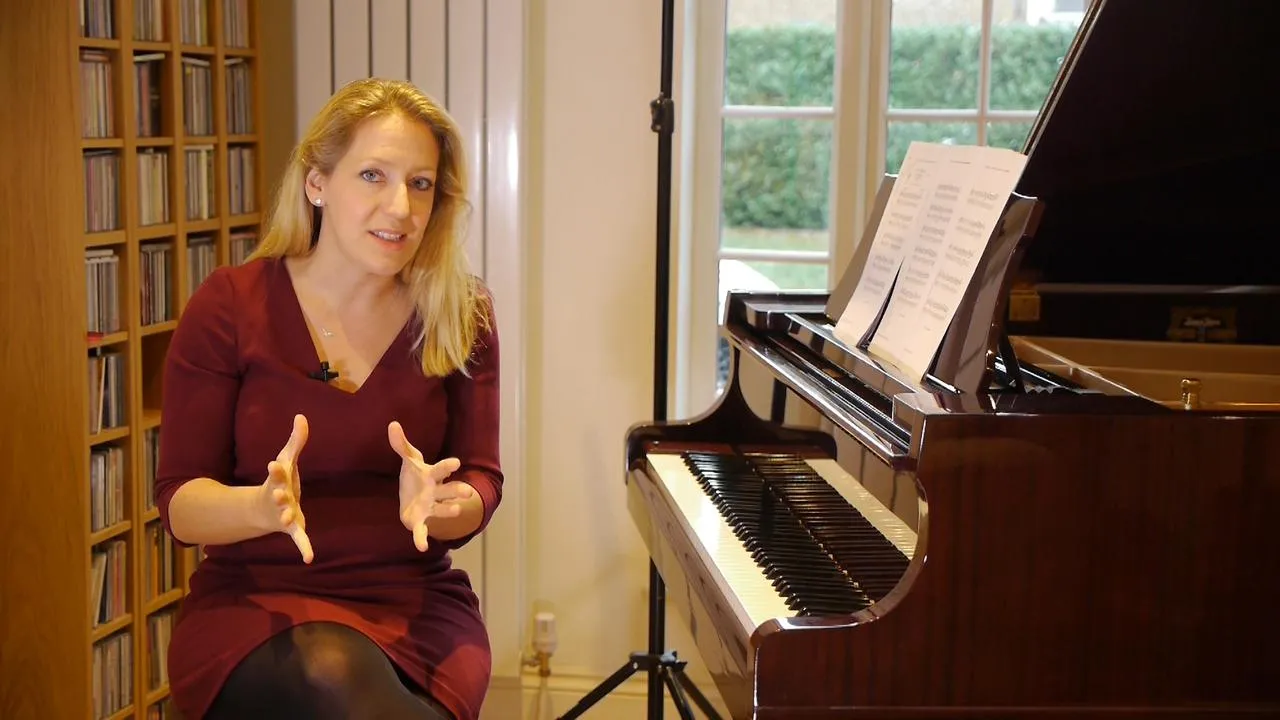
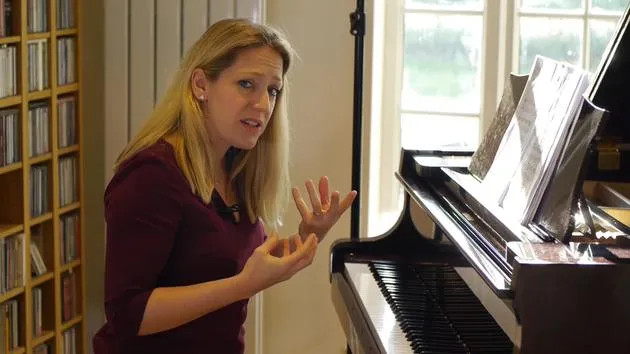
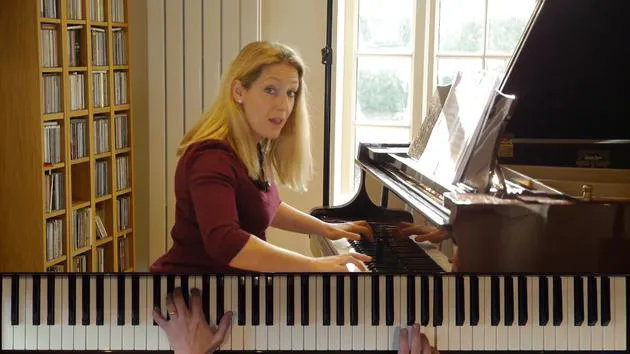
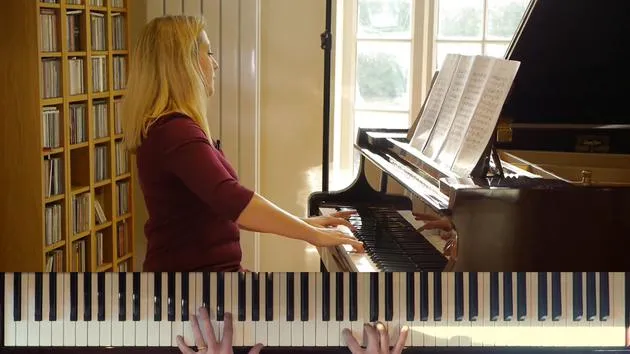
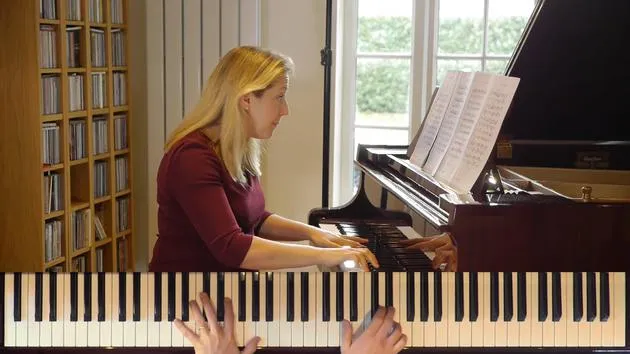
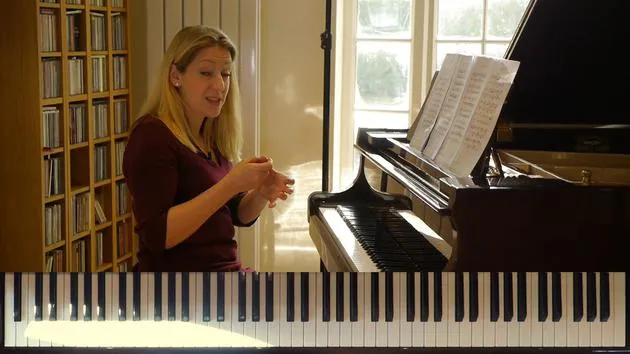
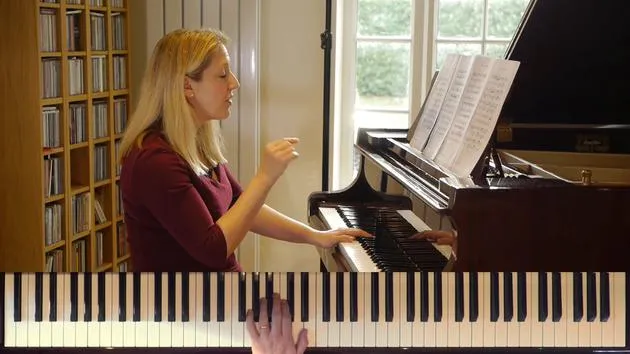
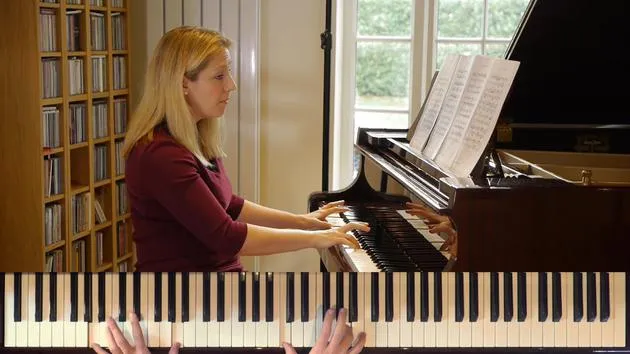
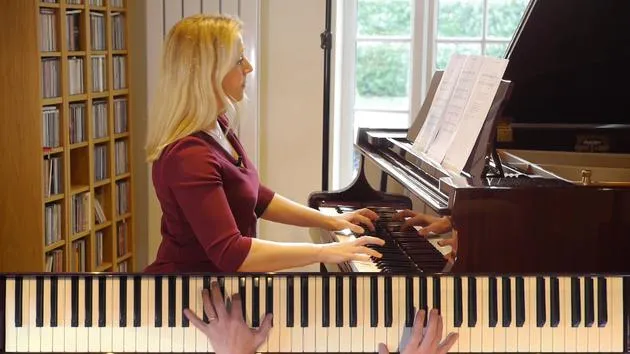
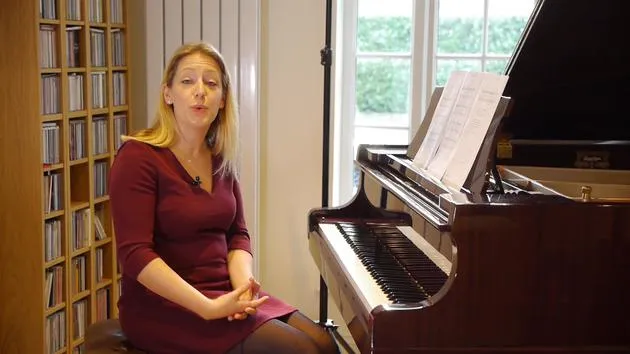
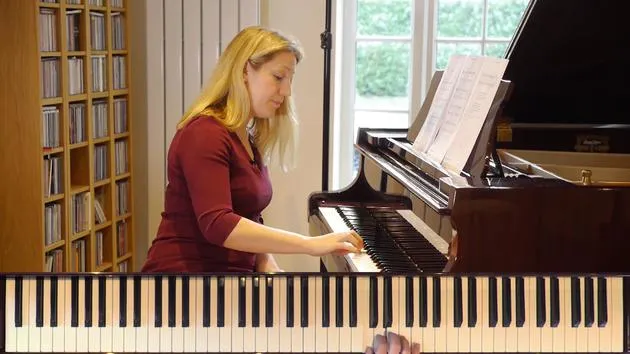
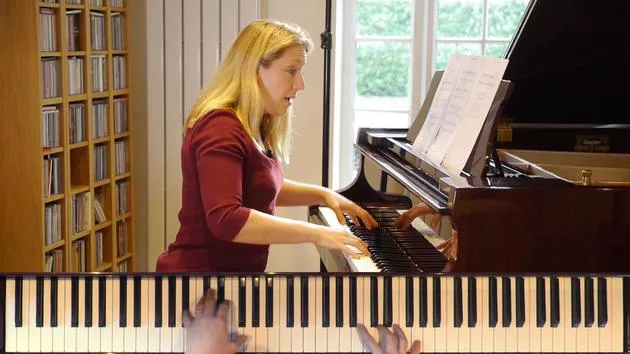
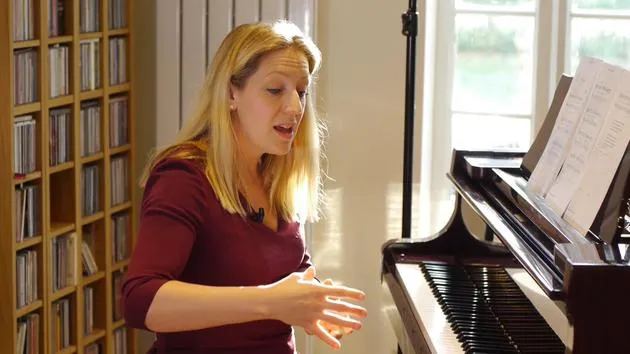
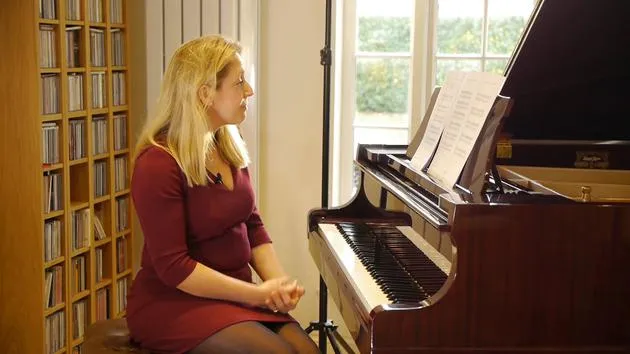
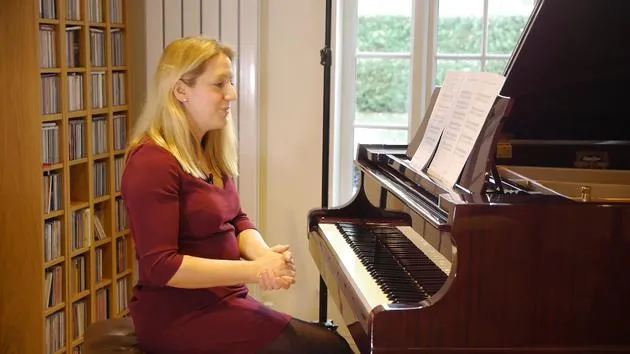
Annabel Thwaite comparte cómo elige la digitación, buscando la posición más natural de la mano y agrupaciones parejas, como tres, luego cuatro y luego cinco a lo largo de una escala de Sol mayor.
Qué incluye el curso
21 lecciones (0h 57m) · 1 gratis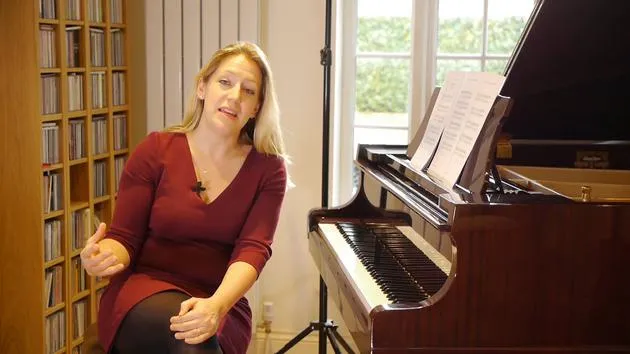
Transcripción de la lección
Understanding Fingering for Pianists
Let's talk briefly about fingering. As a pianist, I love to write on my score, and I often use fingering as a signpost of when my brain needs to sort of engage more about this turn or that turn. Thus, I use it with phrasing.
Purpose of Fingering
The reason we use fingering is to achieve the maximum effect with minimal effort. We are very lucky as pianists because we're quite symmetrical:
- Two thumbs
- Second finger
- Third finger
- Fourth finger
- Fifth finger
Natural Hand Position
We should be very free. There's a variety of schools of playing, but the most notable one emphasizes achieving the most natural hand position.
Example: C Major Chord
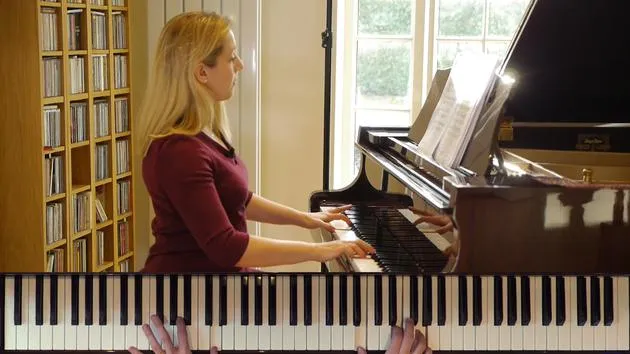
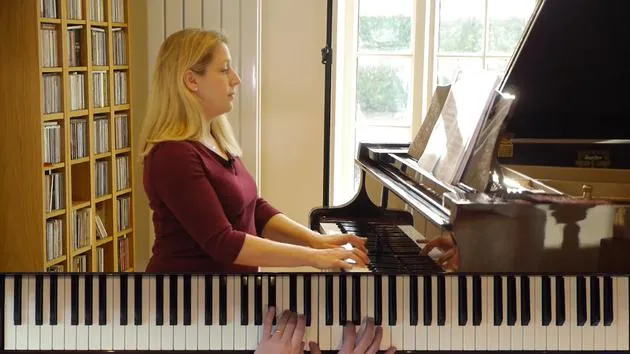
For example, a C major chord allows the fingers to fall naturally, and the hand rests comfortably on the chord.
Frederic Chopin's Favorite
Frederic Chopin's favorite scale was actually B major in the right hand. Look at the natural kind of hand placement:
- You have this bridge
- A relaxed elbow
- Fingers falling naturally over the sharps
Fingering Passages
When fingering a passage, try to find the most natural way for the hand to move.
Example: G Major Scale
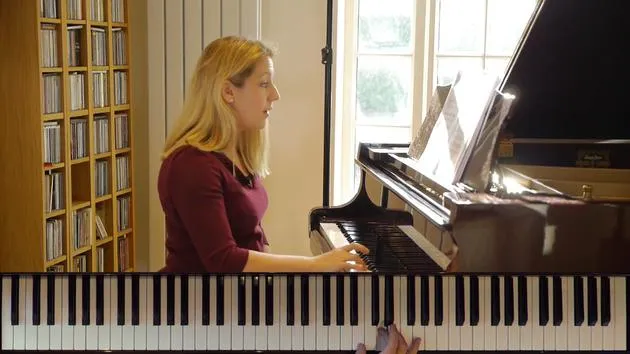
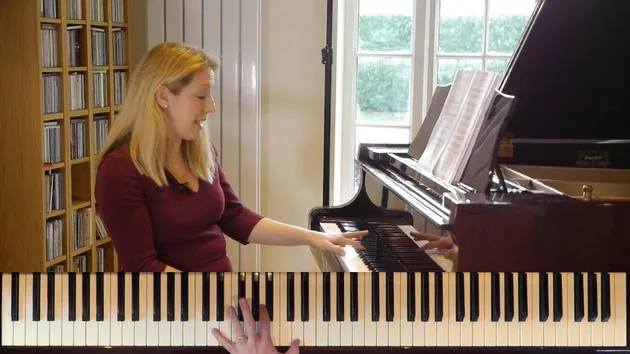
Let's take a G major scale. We want to transition from this position to another as evenly as possible.
- We could group four and three, but that would be odd since we'd end on a four, which is quite a weak finger at the top of the scale.
- The most natural approach is to do a group of three, then a group of four, and end with a five.
If working with another octave, note that the thumb has the flexibility to go underneath and move easily without creating any bumps.
Patterns for Scalier Passages
If you have a big scalic passage, aim for a simple pattern. For instance:
- Group of five
- Group of three
- Group of four
Avoid complicated sequences like 2, 2, 3, 4, 1, 3, 2. The fingering should be something your brain can easily grasp.
Fingering Arpeggios
For arpeggios, my hand loves the pattern 1, 2, 3, 5. I have quite small hands, so I avoid stretching too much between the fourth and fifth fingers, as it wouldn't be comfortable.
Comfort Check
When fingering, consider:
- How does it look?
- Does it feel comfortable?
The Cheater's Guide to Fingering
We all have our nemesis in fingering. For example, I tend to avoid using 5 and 4 or sometimes even 4 and 3 to utilize my stronger fingers.
- If you were trilling on 3 and 4, it might be easier for you to trill on 2 and 3, or even 1 and 3.
- Use your strengths to your advantage.
Committing to Your Fingering
Finally, once you've settled on fingering, stick to it, really stick to it.
- Practice and practice it.
- If it's still not working after about two weeks or after the 20th time, revisit it.
- However, avoid constantly changing between fingerings.
Stick with one, see if it works, practice it, solidify it, and then move on.
Comparison to Dance Routine
It's like learning a dance routine. You must learn the moves before you embark on improvisation.
21 lecciones
0h 57m de lecciones en vídeo estructuradas
Funciones de vídeo avanzadas
Ralentiza, repite un pasaje, sigue la partitura
Móvil, tablet y ordenador
Practica donde quieras
Garantía de satisfacción 100%
30 días de garantía de devolución
Conoce a tu gurú

Conoce a tu gurú
Reconocida como una de las pianistas más versátiles y carismáticas de Gran Bretaña, Annabel Thwaite disfruta de una carrera diversa como solista, música de cámara, artista de grabación, docente y examinadora, y ha ganado todos los principales premios de acompañamiento, incluidos los prestigiosos Kathleen Ferrier, Gold Medal y Richard Tauber Piano Prizes. Ha colaborado con artistas de renombre como Roberto Alagna, Bryn Terfel, David Kempster y "Only Men Aloud!"
Annabel ha grabado para Universal records con el "Scottish Tenor", cuyo álbum fue nominado a un Classical Brit Award y suena con regularidad en Classic FM. Dos veces acompañante del Festival of Welsh Male choirs, sus actuaciones en el Royal Albert Hall fueron grabadas por Sain y emitidas en S4C. También es pianista de sesión de cine, habiendo grabado en Abbey Road la música de la película "Awake", la serie de la BBC sobre Jane Austen "Emma", "The Secret Diaries of Miss Anne Lister" y, más recientemente, ha aparecido tanto en Blue Peter como en "The Rob Brydon Show".
"...sin duda ayudada por los acompañamientos de piano evidentemente brillantes de Annabel Thwaite... sumamente disfrutable."
En sus cursos de MusicGurus —Learn Christmas Classics on Piano, Learn Classical Favourites on Piano y Growing Chamber Groups and Small Ensembles— Annabel comparte la musicalidad que hay detrás de esa carrera versátil. Aprenderás a dar vida al piano a piezas navideñas y clásicas muy queridas, a desarrollar tu toque y tu fraseo y, apoyándote en su experiencia premiada como acompañante, a descubrir cómo escuchar, liderar y tocar en conjunto al hacer música con otros músicos en grupos de cámara y pequeños conjuntos.







