



Ambiente: tempo y dinámica

Lesson time: (2min 16sec)
Annabel Thwaite muestra cómo el tempo y la dinámica dan forma al ambiente del Aria en la cuerda de Sol de Bach, encontrando un tempo fluido justo por debajo de la velocidad de un paseo.
Course preview
This lesson is part of the course Aprende clásicos favoritos al piano
Watch a preview of the full course below.
Lesson transcript:
Tempo and Musical Direction
Let's start with tempo. If this piece was being played in an orchestra, it would probably be a bit slower because you can sustain the sound much more than on a piano.
The Nature of the Piano
- The piano is a percussive instrument, and the sound eventually dies away.
- We want to create a feeling that has direction, sustaining the harmony.
Flowing Bass Line
- The flowing bass line should be:
- Not a walking pace, but just a little bit slower than a walking pace.
- The editor suggests a tempo of crotchet equals 30, which is really slow.
- Focus on the left hand:
- The bass part can have more movement.
- Aim for an almost undulating left-hand accompaniment.
Schenkerian Analysis
- In many of Bach's works, you can reduce this:
- There was a very famous person, Schenker, Schenkerian analysis reduces the whole piece to its harmonic structure.
- For example, in the first two bars, we can see:
- Descending octaves in D major, which then rises slightly.
Musical Direction
- We want to maintain that musical direction always in the back of our mind.
- The tempo should flow, with each note of the left hand leading to the next note:
- It's like footsteps walking; you never really stop on each one.
- The only places you stop are at the second time bar and at the very end, as the left hand is always continuous.
Dynamics Awareness
- Because we are playing on a modern piano, we should be a little aware of dynamics, though just very stylistically:
- We don't want any great fortissimos here; it would sound horrible.
- The playing should always be very sweet.
- Aim for a little more warmth with a piano quality that edges towards mezzo-piano (MP) and then fades away.
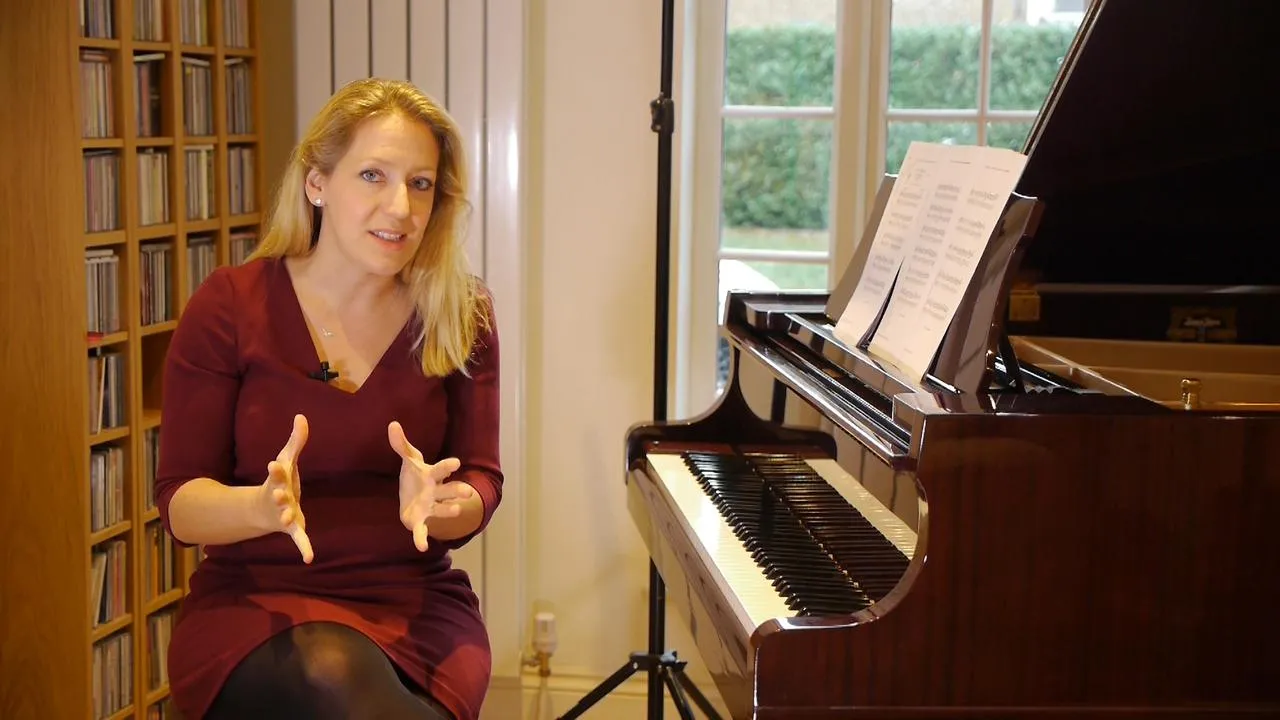
About the instructor
Reconocida como una de las pianistas más versátiles y carismáticas de Gran Bretaña, Annabel Thwaite disfruta de una carrera diversa como solista, música de cámara, artista de grabación, docente y examinadora, y ha ganado todos los principales premios de acompañamiento, incluidos los prestigiosos Kathleen Ferrier, Gold Medal y Richard Tauber Piano Prizes. Ha colaborado con artistas de renombre como Roberto Alagna, Bryn Terfel, David Kempster y "Only Men Aloud!" Annabel ha grabado para Universal records con el "Scottish Tenor", cuyo álbum fue nominado a un Classical Brit Award y suena con regularidad en Classic FM. Dos veces acompañante del Festival of Welsh Male choirs, sus actuaciones en el Royal Albert Hall fueron grabadas por Sain y emitidas en S4C. También es pianista de sesión de cine, habiendo grabado en Abbey Road la música de la película "Awake", la serie de la BBC sobre Jane Austen "Emma", "The Secret Diaries of Miss Anne Lister" y, más recientemente, ha aparecido tanto en Blue Peter como en "The Rob Brydon Show". "...sin duda ayudada por los acompañamientos de piano evidentemente brillantes de Annabel Thwaite... sumamente disfrutable." En sus cursos de MusicGurus —Learn Christmas Classics on Piano, Learn Classical Favourites on Piano y Growing Chamber Groups and Small Ensembles— Annabel comparte la musicalidad que hay detrás de esa carrera versátil. Aprenderás a dar vida al piano a piezas navideñas y clásicas muy queridas, a desarrollar tu toque y tu fraseo y, apoyándote en su experiencia premiada como acompañante, a descubrir cómo escuchar, liderar y tocar en conjunto al hacer música con otros músicos en grupos de cámara y pequeños conjuntos. read more