



Para empezar: el blues de 12 compases
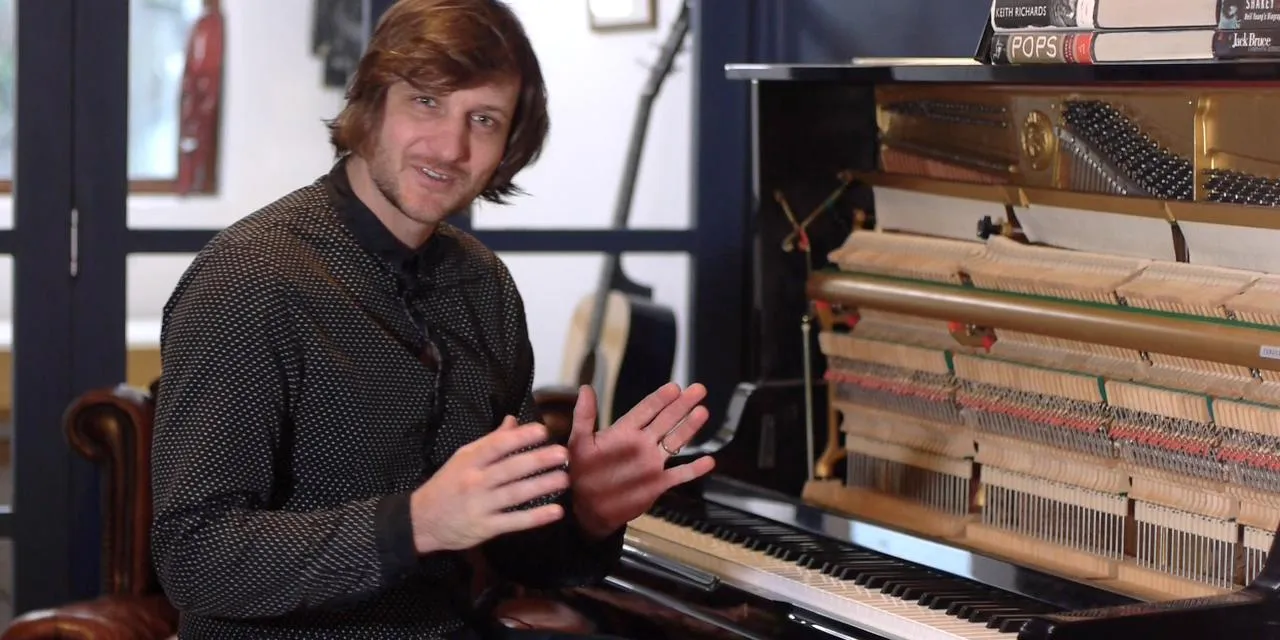
Paddy explica los fundamentos del blues. Descompone el 'ciclo de acordes' del 12-bar, explicando en detalle el número de compases y qué acordes usar.
Qué incluye el curso
10 lecciones (1h 49m) · 1 gratis
01. Para empezar: el blues de 12 compases
Estás aquí12:20
02. La sala de máquinas: bajo con la mano izquierda
9:31
03. Añadir la mano derecha/comping
Lección gratis11:47

04. Desarrollar la armonía: acordes de séptima e inversiones
15:27
05. Riff para la mano derecha n.º 1 y variaciones
13:20

06. Riff de mano derecha n.º 1: más variaciones
14:39
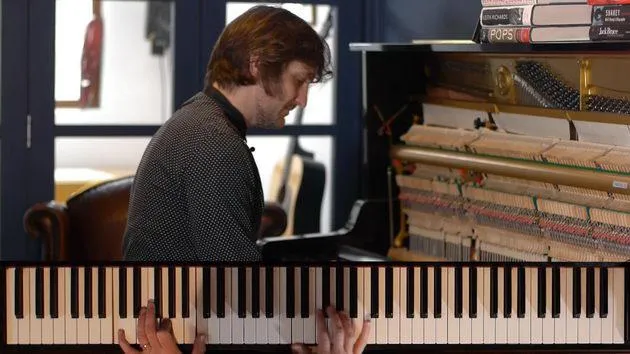
07. La 'escala de blues' y sus usos
10:41
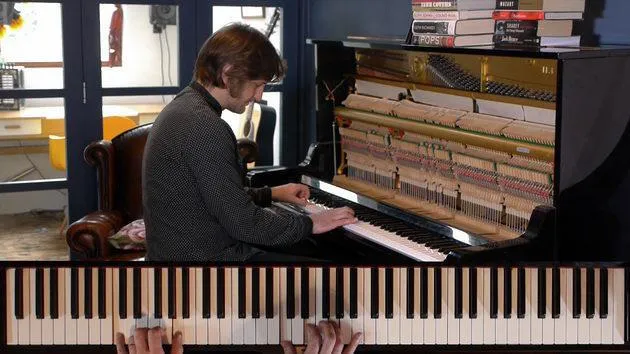
08. Final n.º 1 y variaciones
9:26
09. Juntándolo todo
10:34

10. La docena sucia - El reto del blues de doce compases
1:59
Transcripción de la lección
Introduction to Blues Piano
How you doing? I'm Paddy Milner. Welcome to MusicGurus.com, and thanks for checking out this introduction to the Blues piano course.
The Blues Sound World
In this course, I really want to open the door to the sound world of blues piano and get you playing some authentic blues piano. Not just kind of bluesy piano, but some truly authentic-sounding blues piano.
The blues is a big, beautiful, and varied genre with all kinds of different elements within it. We need to find a common point to start from, and I think a great entry point is by looking at the 12 Bar Blues musical form. At the end of the day, this is one of the most common forms used within the blues.
What is the 12 Bar Blues?
As the name suggests, the 12 Bar Blues consists of a repeated form that consists of 12 bars of four beats.
Chords in a 12 Bar Blues
What chords are in a 12 Bar Blues? There are three different chords:
-
I Chord: In the key of C, this is a C.
- A chord is defined as a triad, which is a three-note chord consisting of the first, third, and fifth of the scale.
- For C, these notes are:
- 1: C
- 3: E
- 5: G
-
IV Chord: This is the second chord in the 12 Bar Blues, which is an F.
- The F major scale has:
- 1: F
- 3: A
- 5: C
- The F major scale has:
-
V Chord: This is a G.
- The G major scale has:
- 1: G
- 3: B
- 5: D
- The G major scale has:
Chord Sequence in 12 Bar Blues
The sequence of chords in a 12 Bar Blues is as follows:
- 4 bars on the C chord
- 2 bars on the F chord
- 2 bars on the C chord
- 1 bar on the G chord
- 1 bar on the F chord
- 1 bar on the C chord
- 1 bar on the G chord
While there are different variations, this is the form we'll focus on as a great starting point.
Practicing the 12 Bar Blues
To get used to this 12 Bar form, we'll play it simply at first, using four beats to the bar in both hands.
Note: This won't sound remarkably bluesy initially, but we're focusing on the basics before we vary it to create a classic blues piano sound.
Playing Instructions
- Count off: "One, two, three, four."
- Start the sequence:
- C: 4 beats
- F: 2 beats
- C: 2 beats
- G: 1 beat
- F: 1 beat
- C: 1 beat
- G: 1 beat
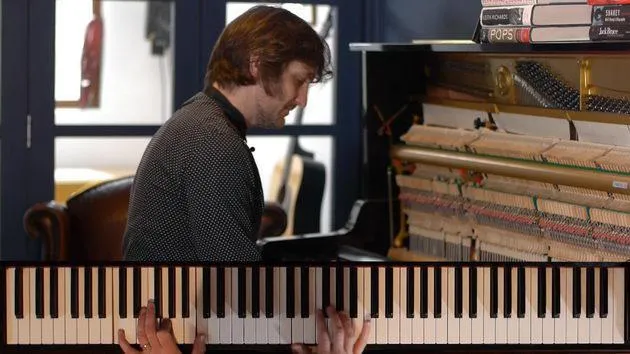
I've just demonstrated the 12 Bar Blues played as 4 beats per bar in both left and right hands. The left hand plays the root note of the chords:
- C for the C chord
- F for the F chord
- G for the G chord
Practice Tips
- Fluency: Aim to get these changes between chords as fluent as possible without any gaps.
- Metronome: Use a metronome to ensure a constant tempo.
- Hesitation: Think ahead to avoid any hesitation when changing chords. For example:
- Moving from C to F
- C to G
- G to F
To practice, try playing two beats on each chord to get comfortable with transitions.
Internalizing the 12 Bar Blues
One of the main aims of mastering the 12 Bar Blues is for it to become internalized. This allows you to add more complex elements naturally when improvising.
Demonstration
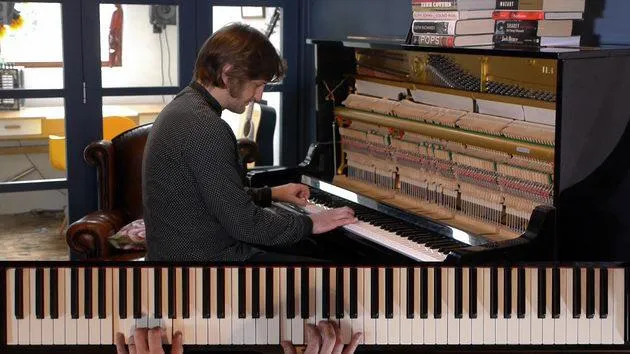
To demonstrate, I'll play a 12 Bar sequence with some more complex embellishments.
- Left Hand: Acts as the rhythm section.
- Right Hand: Focuses on melodic interest, embellishing the basic chords.
Conclusion
Don't forget, everything in this lesson is available on the downloadable PDF, which includes practice tips and extra resources.
See you in the next lesson!
10 lecciones
1h 49m de lecciones en vídeo estructuradas
Funciones de vídeo avanzadas
Ralentiza, repite un pasaje, sigue la partitura
Móvil, tablet y ordenador
Practica donde quieras
Garantía de satisfacción 100%
30 días de garantía de devolución
Conoce a tu gurú

Conoce a tu gurú
Paddy Milner está reconocido como uno de los mejores pianistas de blues del mundo: actualmente es el teclista de confianza de Sir Tom Jones, tras varios años con el gran y ya desaparecido Jack Bruce, pero también es un magnífico compositor original y un cantante con personalidad propia. ¡Basta con leer los elogios de figuras como Dave Brubeck que aparecen más abajo! Su forma de tocar apareció en la banda sonora de la exitosa película de 2019 'Rocketman'.
Ha ganado dos veces el premio al Mejor teclista en los British Blues Awards, y mantiene una residencia de larga trayectoria como miembro fundador de la Ronnie Scott's Blues Explosion en el mundialmente famoso club Ronnie Scott's.
Su grupo actual LONDONOLA toca música británica de cosecha propia con una buena dosis de espíritu de Nueva Orleans, y su grupo colaborativo JAWBONE va de fuerza en fuerza tras la publicación de su álbum de debut homónimo.
- "Me encanta... hay un tipo que sabe tocar de verdad el piano" - Dave Brubeck
- "Lo recomiendo encarecidamente. ¡De algún modo las cosas empiezan a sentirse mucho mejor!" - Jack Bruce
- "El mejor pianista de blues de Europa..." - Blues Access, EE. UU.
- "Impresionante y original" - The Times
- "Deslumbrante" - The Independent
A lo largo de sus cursos, Paddy desglosa el auténtico shuffle de blues, el slow blues, el boogie-woogie, el rock 'n' roll y el piano de Nueva Orleans -incluidas tres canciones clásicas de boogie-woogie- para que aprendas estos estilos de uno de los mejores del oficio.







