



Riff para la mano derecha n.º 1 y variaciones

Lesson time: (13min 15sec)
En esta lección aprenderás un riff sencillo basado en tríadas. Paddy te dará ideas de improvisación como balancear notas y usar la crush note. Un montón de consejos de práctica para cerrar la lección.
Course preview
This lesson is part of the course Toca piano blues auténtico
Watch a preview of the full course below.
Lesson transcript:
Lesson: Exploring Right Hand Patterns and Riffs
In this lesson, let's start looking at some more interesting right-hand patterns and riffs. As I said earlier, a lot of the riffs and melodic elements you hear in the right hand are embellishments of the basic chords, either a C or a C7, or when you're on the F, the F7, and the same for the G, of course.
Basic Variations
So, let's take a closer look at a basic variation of that and how we can develop it into something that sounds a lot cooler.
-
Start with the Basic C Chords:
- If we rock between those two notes, it gives us all sorts of scope to create something interesting.
- The left hand is doing this while we fill out the chords.
-
Playing Along with the Left Hand:
- You can literally play the same rhythm with that little variation.
- When playing the F, notice that it has a B flat, which is a slightly different shape from the C.
- The sequence goes: F back to C, and up to G (using the same pattern as C), all the white notes, and then the F with that B flat in.
-
Recognizing Patterns of Intervals:
- All these chords have the same pattern of intervals.
- This is crucial to understanding how to play in different keys.
Practicing the 12-Bar Sequence
To practice, try to get that whole 12-bar sequence sounding fluent like this:
- C → F → G → F → C → G
Once you've achieved fluency with the practice tips I've provided (such as starting at a slow tempo), we can look at how to make it sound really cool.
Fingering Tips
A quick word on fingering before we proceed:
- There's no need to play different notes with the same finger because it all fits under the fingers.
- Use one finger for each note.
For practice, you might find the independence between fingers, particularly the fourth finger, a little difficult. Try practicing going between these two:
- C and G
You could also try doing it while holding the C down to strengthen those fingers, especially the fourth.
Do this exercise loudly and quietly, as you will find playing quietly often reveals weaknesses in finger control.
Making It More Interesting
Let's explore some simple ways to vary our sound and make things a bit more bluesy.
-
Adding a Crushed Note:
- This instantly makes it sound more bluesy.
- On the C, notice the crushed note is a semitone lower than the third note of the chord, and on the F, it follows the same principle.
-
Crushed Note Practice:
- The crushed note should not be thought of as a separate note but as part of the same movement when hitting that note.
- Experiment by doing this crush note:
- Perhaps do it only on the first instance, alternate it, or vary it.
Variating the Rhythm
At this point, we can also think about varying the rhythm a bit.
-
Simple Variations:
- For example, instead of playing all the notes together, rock between them. This can create an exciting sound.
-
Incorporate the Crush Note:
- Let's have a listen to how that sounds paired with the rhythm variations.
- Practicing with Energy:
- As always, keep a steady rhythm and tempo.
- There's nothing worse than playing with a drummer who speeds up all the time; consistency is key for these practice sessions.
Final Thoughts
Please explore this riff on your own and have fun with it. See what you can come up with! There are more suggestions provided in the PDF that you can download for this lesson, and in the next lesson, we'll look at even more ways to enhance this riff.
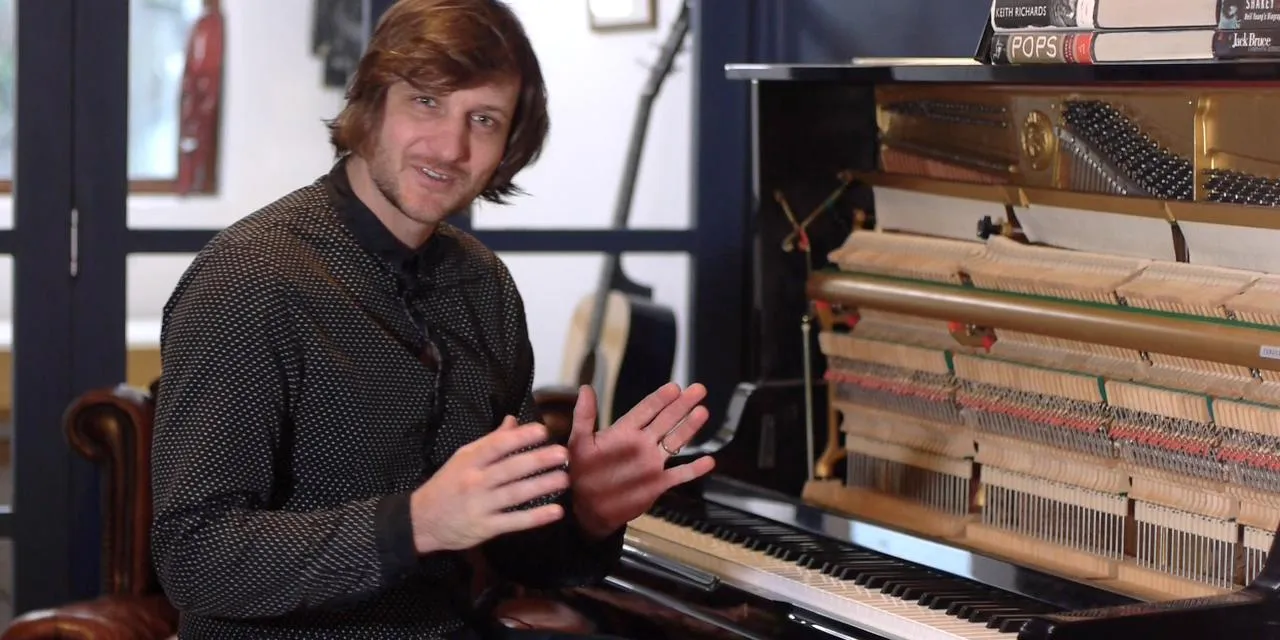
About the instructor
Paddy Milner está reconocido como uno de los mejores pianistas de blues del mundo: actualmente es el teclista de confianza de Sir Tom Jones, tras varios años con el gran y ya desaparecido Jack Bruce, pero también es un magnífico compositor original y un cantante con personalidad propia. ¡Basta con leer los elogios de figuras como Dave Brubeck que aparecen más abajo! Su forma de tocar apareció en la banda sonora de la exitosa película de 2019 'Rocketman'. Ha ganado dos veces el premio al Mejor teclista en los British Blues Awards, y mantiene una residencia de larga trayectoria como miembro fundador de la Ronnie Scott's Blues Explosion en el mundialmente famoso club Ronnie Scott's. Su grupo actual LONDONOLA toca música británica de cosecha propia con una buena dosis de espíritu de Nueva Orleans, y su grupo colaborativo JAWBONE va de fuerza en fuerza tras la publicación de su álbum de debut homónimo. "Me encanta... hay un tipo que sabe tocar de verdad el piano" - Dave Brubeck "Lo recomiendo encarecidamente. ¡De algún modo las cosas empiezan a sentirse mucho mejor!" - Jack Bruce "El mejor pianista de blues de Europa..." - Blues Access, EE. UU. "Impresionante y original" - The Times "Deslumbrante" - The Independent A lo largo de sus cursos, Paddy desglosa el auténtico shuffle de blues, el slow blues, el boogie-woogie, el rock 'n' roll y el piano de Nueva Orleans -incluidas tres canciones clásicas de boogie-woogie- para que aprendas estos estilos de uno de los mejores del oficio. read more