



Juntándolo todo
Lesson time: (10min 34sec)
En esta lección, Paddy te mostrará cómo los riffs se pueden intercambiar y enlazar para crear algo más espontáneo e improvisado.
Course preview
This lesson is part of the course Toca piano blues auténtico
Watch a preview of the full course below.
Lesson transcript:
Conclusion of the Course
Right, here we are at the end of the course. Last video. Well done for getting this far! We've actually covered quite a lot of ground.
Putting It All Together
In this lesson, we're going to look at putting it all together, everything we've learned.
Key Topics
- The 12 Bar Blues
- Left-hand variations
- Right-hand chord movements
- Dominant sevenths
- Different inversions
- Riffs and variations
We'll also explore some blues scale concepts, mixing everything into the 12 bar form, and finish with a nice little ending.
Question and Answer Concept
One very simple idea we can use to start off is the question and answer technique.
- For example, I could pose a musical question with something based on this riff and answer it with a phrase based on the blues scale.
In this context, I'll do two-bar phrases around the entire 12 bar sequence. See if you can hear the transition from the question to the answer in the blues scale.
Here we go:
1, 2, 3, 4...
Notice how the first half posed the question, and the second half responded with something in the blues scale.
Variations in Phrase Lengths
We can experiment with two-bar phrases and then gradually reduce it to one-bar phrases. For example:
- Two-bar phrase followed by a two-bar answer.
- Then a one-bar phrase followed by two bars to finish.
Changing your phrase lengths can really add variety and is essential since we're diving into the realms of improvisation.
The Importance of Structure in Improvisation
Improvisation doesn't just mean playing any notes you want; there must be some structure and form. This includes:
- The notes you are using
- The actual pitches (whether it's a riff or the blues scale)
- Musical phrasing to give direction and momentum
Starting with two-bar phrases and then transitioning to one-bar phrases can provide direction and pace to the music.
Expanding Techniques
We've discussed the question and answer phrases, and I've demonstrated some examples.
But there are other techniques we can explore, such as:
- Octave Changes: Experiment with changing the octave in your question and answer phrasing.
For instance:
"So that's clearly two different phrases going on, one based on this riff and the other one up the octave doing something else."
Gradually Elongating or Shortening Phrases
One effective approach is to gradually elongate or shorten your phrases. For example:
- Start with one bar each, then move to two bars, back to one bar, and then two bars, and eventually to four bars.
It can be quite effective to stay on the same riff before releasing the tension at the ending.
Using Dynamics in Phrasing
Dynamics are also important for generating direction in phrasing.
For example:
"Within the 12 bar blues form, there's a sort of urgency towards the bar and the F chord in bar five."
You'll hear this kind of movement throughout classic records, often with a drum fill building up toward that chord.
Final Demonstration
To finish, I'll play through a 12 bar sequence two or three times, giving you some ideas.
- Listen for:
- Dynamics
- Question and answer phrasing
- Phrase lengths
- The musical material in use (is it a riff, comping, or a blues scale riff?)
Here we go:
1, 2, 3, 4...
Conclusion
This should give you some food for thought. Don't forget, you can download the PDF for this lesson, just like for all the other lessons from the website.
Most importantly, well done for making it this far! I hope you've learned a lot. Remember to keep practicing hard, and hopefully, I'll see you again in some more courses!
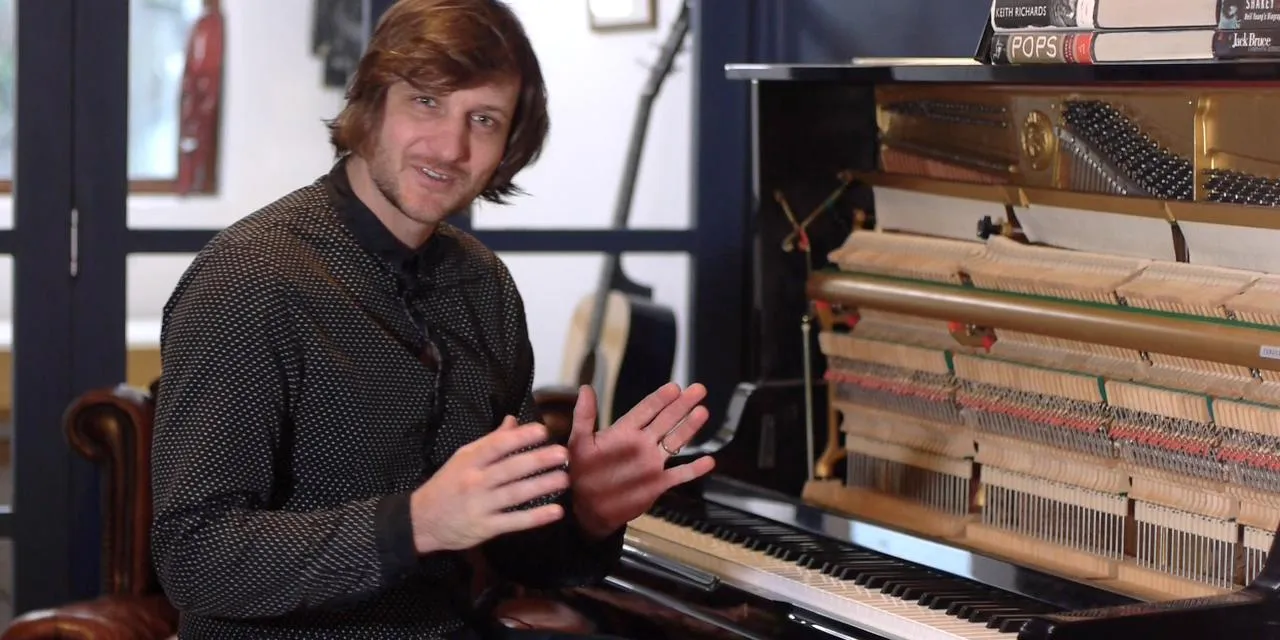
About the instructor
Paddy Milner está reconocido como uno de los mejores pianistas de blues del mundo: actualmente es el teclista de confianza de Sir Tom Jones, tras varios años con el gran y ya desaparecido Jack Bruce, pero también es un magnífico compositor original y un cantante con personalidad propia. ¡Basta con leer los elogios de figuras como Dave Brubeck que aparecen más abajo! Su forma de tocar apareció en la banda sonora de la exitosa película de 2019 'Rocketman'. Ha ganado dos veces el premio al Mejor teclista en los British Blues Awards, y mantiene una residencia de larga trayectoria como miembro fundador de la Ronnie Scott's Blues Explosion en el mundialmente famoso club Ronnie Scott's. Su grupo actual LONDONOLA toca música británica de cosecha propia con una buena dosis de espíritu de Nueva Orleans, y su grupo colaborativo JAWBONE va de fuerza en fuerza tras la publicación de su álbum de debut homónimo. "Me encanta... hay un tipo que sabe tocar de verdad el piano" - Dave Brubeck "Lo recomiendo encarecidamente. ¡De algún modo las cosas empiezan a sentirse mucho mejor!" - Jack Bruce "El mejor pianista de blues de Europa..." - Blues Access, EE. UU. "Impresionante y original" - The Times "Deslumbrante" - The Independent A lo largo de sus cursos, Paddy desglosa el auténtico shuffle de blues, el slow blues, el boogie-woogie, el rock 'n' roll y el piano de Nueva Orleans -incluidas tres canciones clásicas de boogie-woogie- para que aprendas estos estilos de uno de los mejores del oficio. read more