



Licks de Charlie Parker
Lesson time: (3min 54sec)
Course preview
This lesson is part of the course Enfoque interno para tocar la trompeta
Watch a preview of the full course below.
Lesson transcript:
Music Lesson
Thank You!
Thank you very much for joining me over the course of lessons. You are now ready. If you've worked carefully and considered the exercises, they're often very simple but have very specific instructions.
Moving Forward
Now, we will move forward into my book with a modern approach to playing.
Preview: Bebop Head by Charlie Parker
I want to show you a bebop head by Charlie Parker called Au Privave. The goal is for you to listen and think about all the different things I'm incorporating. Not too carefully, but certainly in a way where you get an idea of the potential for everything that we've worked on and how it translates into my approach to playing, particularly in bebop and this great composition by Charlie Parker.
Playing Process
I'm going to turn on Philly Jo Jones.
- To get that really good sound, I will do this in phrases.
- This time, I played through the whole melody to save time.
- However, what I should do is take each phrase and:
- Work on legato
- Breathe it
- Make sure I'm really breathing it
- Then move on into articulation, again out of tempo, and finally play it in tempo.
Maintaining Legato
What happens once you go into tempo is crucial. If you start to change your physical approach, you may get tense or stop flowing air, making it become much punchier. You may find yourself stopping and starting the air because you're using articulation. That means you're doing it wrong.
Key Point:
You need to maintain this legato approach throughout your whole body when you're playing the trumpet. It's not just about your lips; it's really about the larger air support we need to think about.
Another Tune: Donnelly
Another tune that I enjoy is Donnelly, also by Charlie Parker. This piece is somewhat easier because it doesn't have so many short stopping notes.
Focus on Last Eight Bars
I like to play the last eight bars because it consists of a line of eighth notes. It's also essential to talk about using the descent where you're crescendoing into the descent. This is where the notes can tend to break up, causing the line to falter and forcing things to come out.
Let's play the finale:
The last eight bars of Donnelly.
Final Thoughts
What I feel there is I need to do more of a crescendo on the descent.
Great! And goodbye.
About the instructor
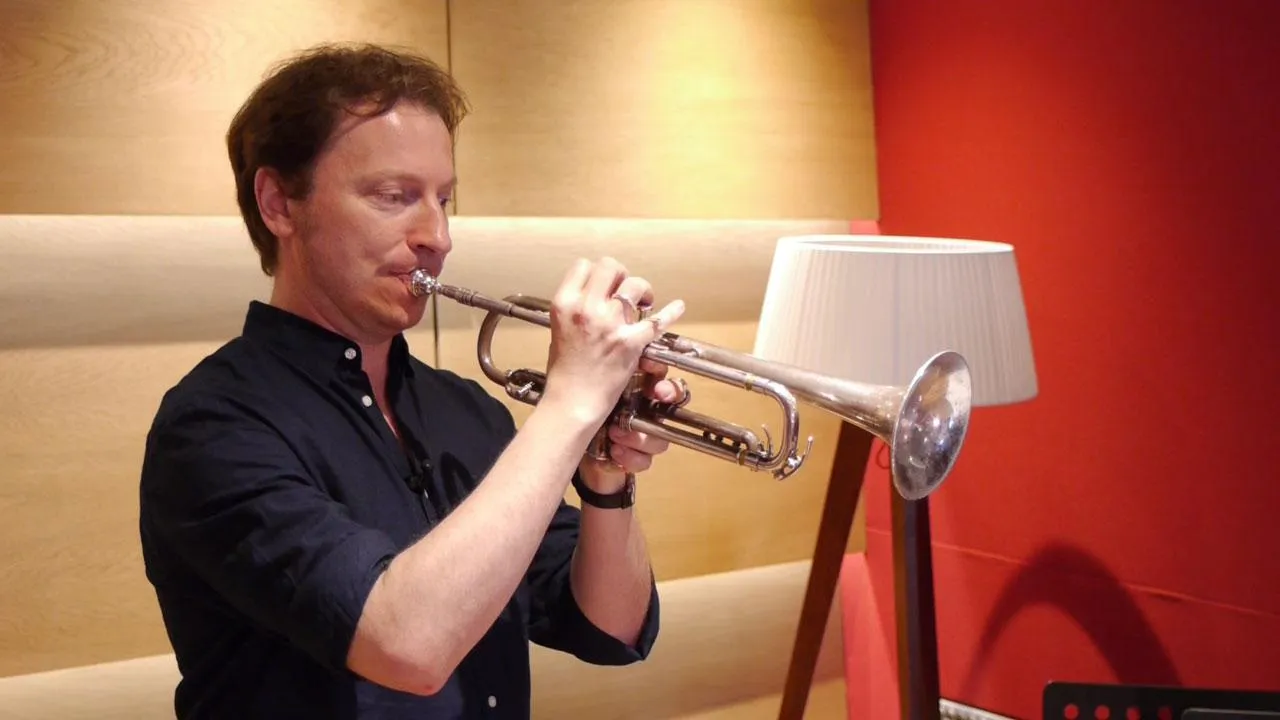
A lo largo de los últimos 25 años, Gerard Presencer se ha labrado una formidable reputación como uno de los trompetistas más respetados de la escena europea. Irrumpió en la escena internacional a los 18 años, cuando US3 le pidió que tocara la parte solista en Cantaloupe Island de Blue Note (reimaginada como Cantaloop Flip-Fantasia), que se convirtió en uno de los discos de jazz más vendidos de los años 90. Desde entonces ha actuado con un quién es quién de los artistas de jazz internacionales, y sigue exigiéndose a sí mismo y a su instrumento, saliendo de su zona de confort para desarrollarse como intérprete y compositor. En otros géneros, Gerard ha grabado como músico de sesión con artistas como Sting, Jamiroquai, Zero 7, James Brown, Ray Charles, Joni Mitchell y Jonny Greenwood. Gerard también ha sido un miembro esencial de los diversos grupos de jazz de Charlie Watts durante los últimos 25 años, girando por todo el mundo y publicando varios álbumes con el amante del jazz de los Stones. Como educador, Gerard fue jefe de Estudios de Jazz en la Royal Academy of Music de Londres de 1999 a 2010, y actualmente es jefe del Departamento de Metales en el Jazz Institut de Berlín. En este curso comparte su enfoque interno para tocar la trompeta -los hábitos mentales y físicos que hay detrás de un gran sonido- para que puedas desarrollar el sonido, el control y la musicalidad desde dentro hacia fuera. read more