



Ejercicio de 5tas y 4tas
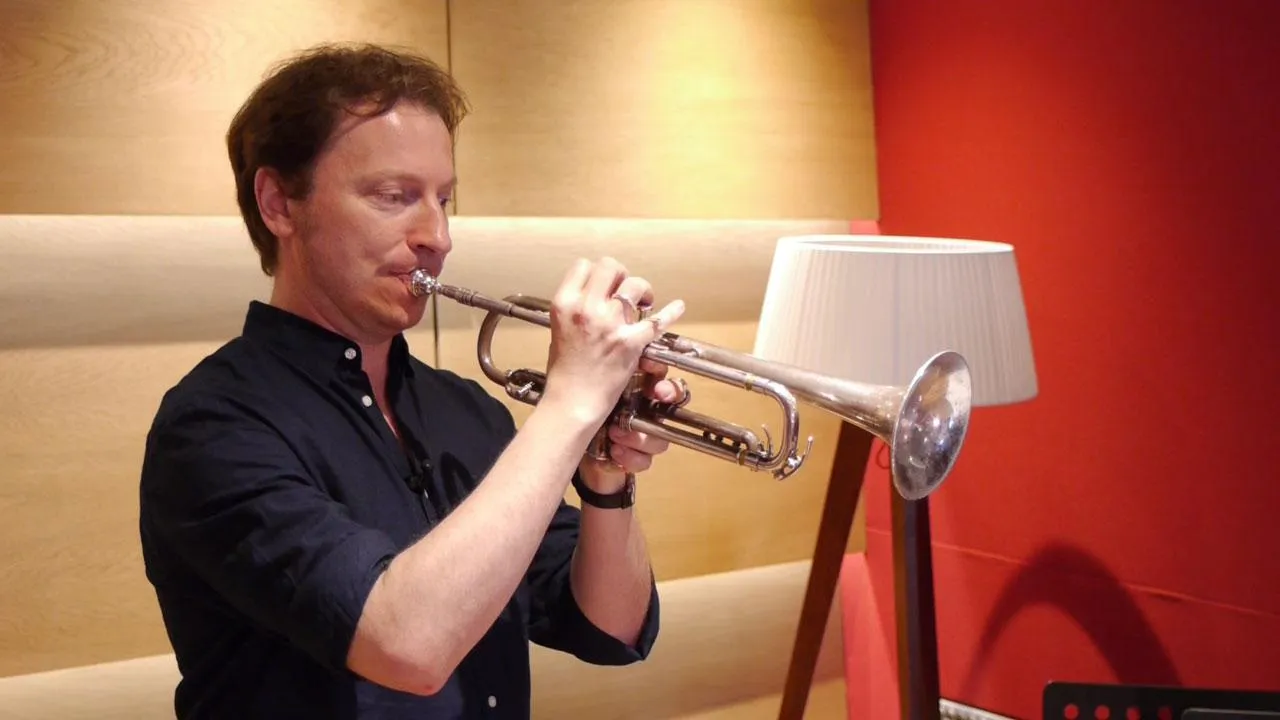
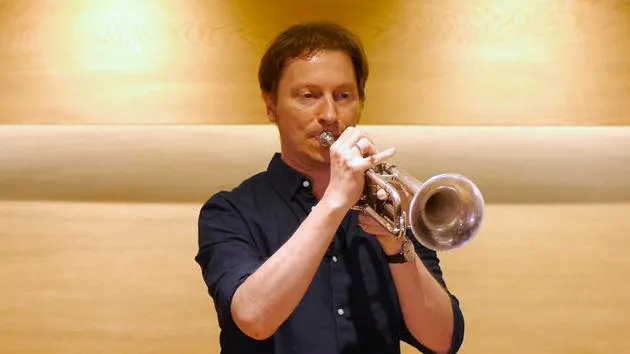
Un ejercicio de trompeta de Gerard Presencer que usa 5tas justas ascendentes y 4tas justas descendentes para desarrollar tu control interválico.
Qué incluye el curso
12 lecciones (1h 49m) · 1 gratis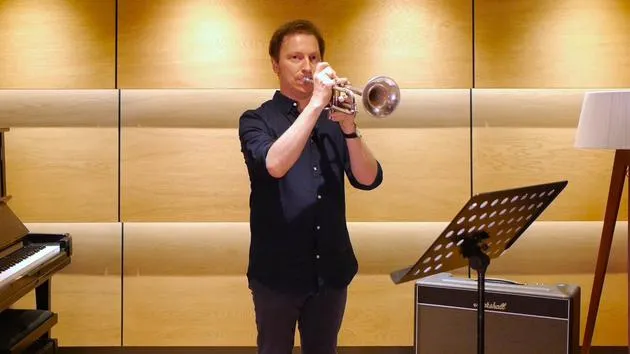
Transcripción de la lección
Music Lesson: Intervallic Exercises
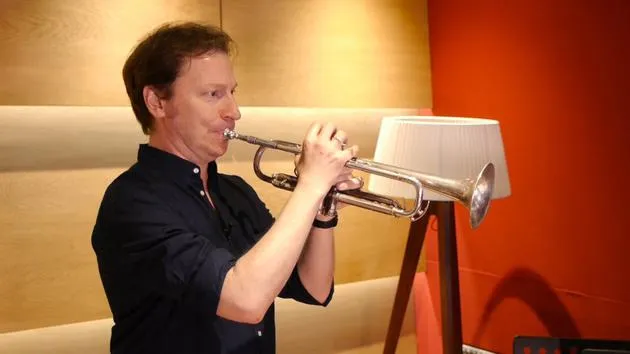
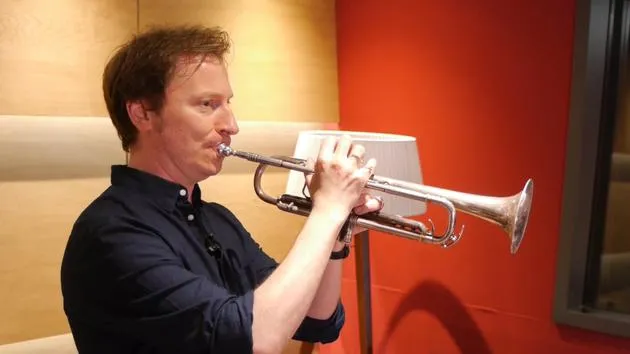
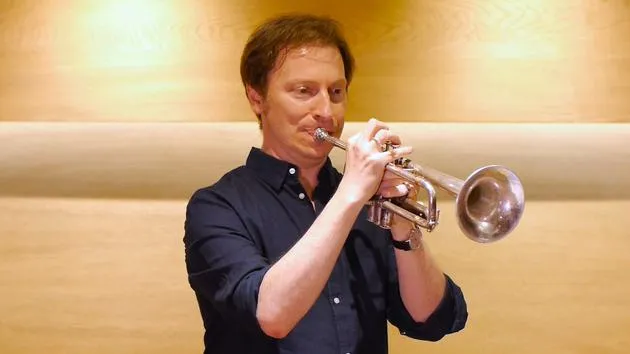
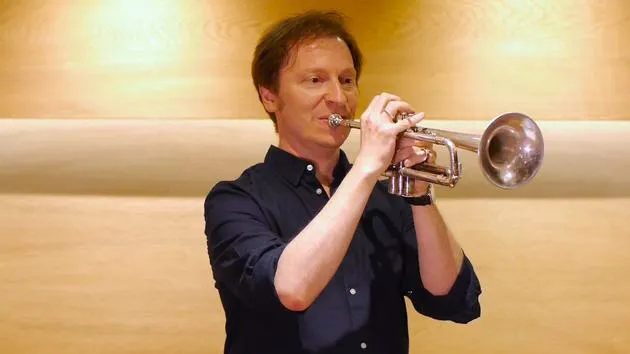
In this next exercise, we're going to use the technical and physical approaches that we've been developing in previous lessons on something which is perhaps a little bit more intervallically interesting. This is something maybe I've taken and used in composition or in improvisation.
The Pattern
- We will use:
- Perfect fifths to ascend
- Perfect fourths to descend
What I'm going to do is put a series of Fermatas over notes at the bottom. (That's pauses for people in the UK, but fermatas for everyone else.)
Airspeed Warm-Up
What I'm doing here is crescendoing to speed up the air:
- My tongue position goes forward.
- As I ascend, the intervals will be different. They will be part of the same finger pattern as in the flexibility exercises we've done.
As I descend, I'm going to try to:
- Crescendo down my perfect fourths.
- Maintain the airstream.
- Pitch the notes accurately, rather than just hoping for the best, which is the normal way that jazz trumpet players seem to descend (sorry to say).
Rubato and Breathing
This is rubato. Anytime I need to:
- It's legato and rubato.
- Take a breath through your nose, not too quickly.
Important:
- Not so that anyone else can hear you breathe.
- Carry on as if you were starting the exercise from that point.
Tongue Position and Articulation
What hopefully I've done are a few little splits there.
- I've breathed the exercise and got my tongue position working for me.
- My tongue position will be in the right place when I start to use any kind of articulation, whether it be my jazz articulation or just a staccato.
Now let's use a short staccato that we worked on earlier. Let's say it, then play it like this:
- Remember to look at the center part of your bell and sing it (without pitch) to keep the air flowing.
Optimistic Development
In a way, I tongue faster when I play it on the trumpet, which is quite an optimistic development!
- I will keep going at that.
- I really feel saying it before playing helps get the flow.
Since we did it legato with labored fermatas to ensure proper breathing:
- By the time I play staccato and light, it should actually feel liberating and easier to play the trumpet.
Practicing Staccato
Let's do that one more time because it felt nice.
- It's almost so short that I'm not taking it seriously enough.
- And that's how short it needs to be.
Application in Music
Later, we'll look at how short staccato can be placed in music, which is very useful in:
- Pop music
- Jazz
Short Notes Example
The short eighth notes we practiced were those short notes.
Generally, what happens is when people play those short notes, they sound more like this:
- So I don't know: Which one do you prefer?
- I know which one hurts less, and that's probably the one I want to do.
Okay, good luck!
12 lecciones
1h 49m de lecciones en vídeo estructuradas
Funciones de vídeo avanzadas
Ralentiza, repite un pasaje, sigue la partitura
Móvil, tablet y ordenador
Practica donde quieras
Garantía de satisfacción 100%
30 días de garantía de devolución
Conoce a tu gurú
Conoce a tu gurú
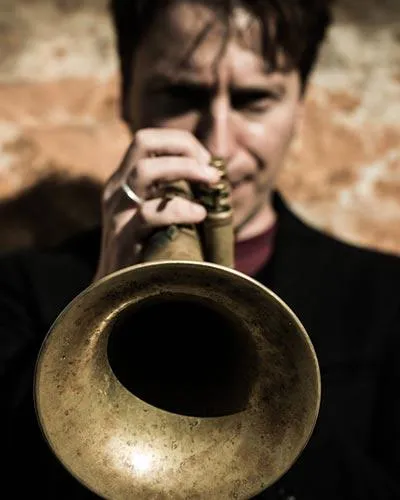
A lo largo de los últimos 25 años, Gerard Presencer se ha labrado una formidable reputación como uno de los trompetistas más respetados de la escena europea. Irrumpió en la escena internacional a los 18 años, cuando US3 le pidió que tocara la parte solista en Cantaloupe Island de Blue Note (reimaginada como Cantaloop Flip-Fantasia), que se convirtió en uno de los discos de jazz más vendidos de los años 90. Desde entonces ha actuado con un quién es quién de los artistas de jazz internacionales, y sigue exigiéndose a sí mismo y a su instrumento, saliendo de su zona de confort para desarrollarse como intérprete y compositor.
En otros géneros, Gerard ha grabado como músico de sesión con artistas como Sting, Jamiroquai, Zero 7, James Brown, Ray Charles, Joni Mitchell y Jonny Greenwood.
Gerard también ha sido un miembro esencial de los diversos grupos de jazz de Charlie Watts durante los últimos 25 años, girando por todo el mundo y publicando varios álbumes con el amante del jazz de los Stones.
Como educador, Gerard fue jefe de Estudios de Jazz en la Royal Academy of Music de Londres de 1999 a 2010, y actualmente es jefe del Departamento de Metales en el Jazz Institut de Berlín. En este curso comparte su enfoque interno para tocar la trompeta -los hábitos mentales y físicos que hay detrás de un gran sonido- para que puedas desarrollar el sonido, el control y la musicalidad desde dentro hacia fuera.







