



Vibrato

Con
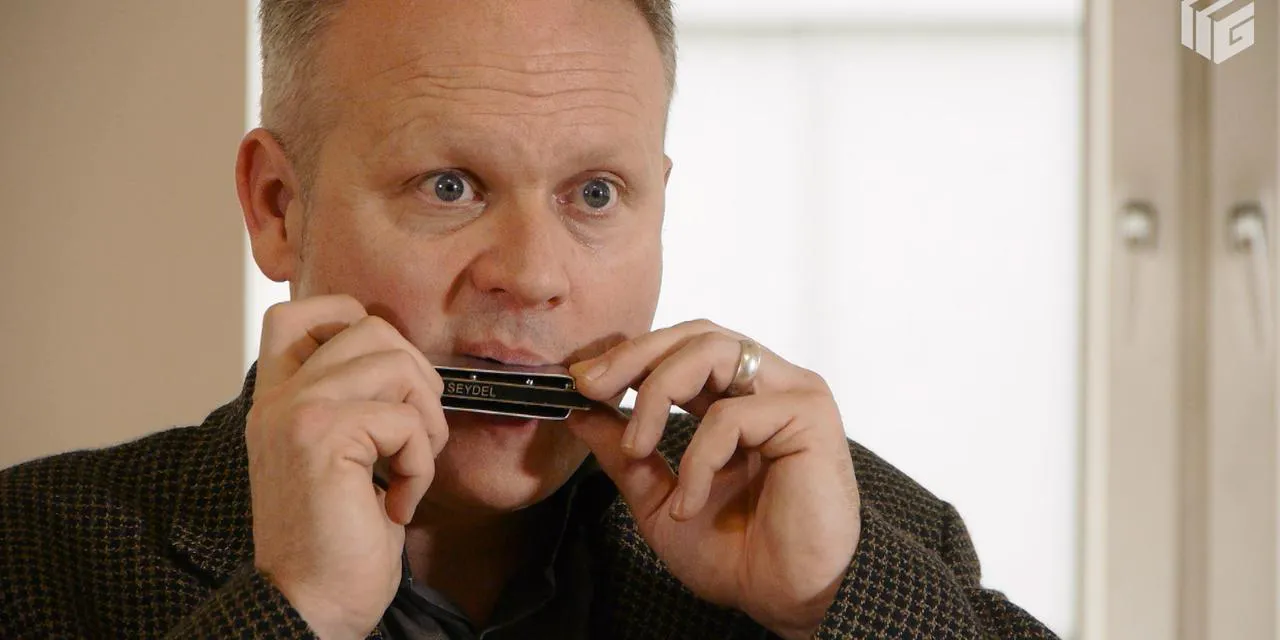
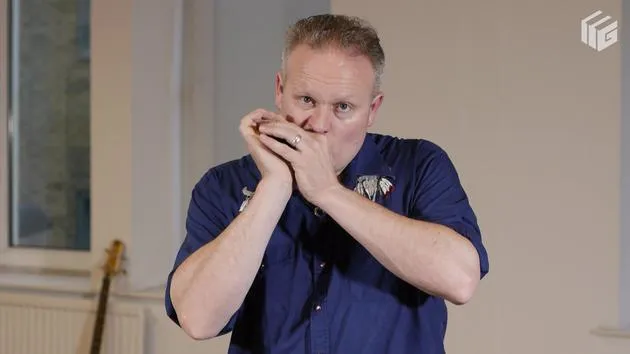
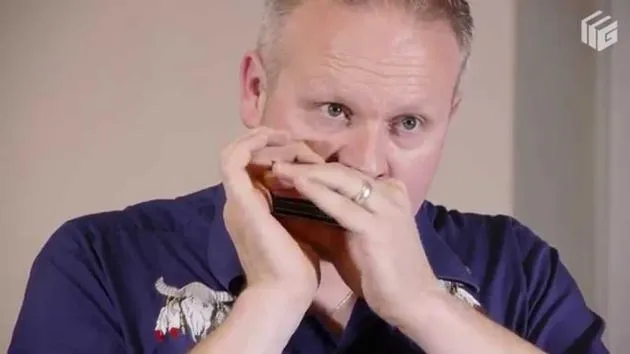
Mat WalklateMat Walklate enseña el vibrato de mano en la armónica: cómo ahuecar las manos y abrir y cerrar la derecha, pivotando sobre el pulgar, para dar forma a la nota.
Qué incluye el curso
11 lecciones (1h 4m) · 2 gratis
01. Tocar el blues, una demostración
Lección gratis2:14
02. Repaso de la escala de blues de G
2:31
03. Bending de notas para conseguir notas adicionales
9:12
04. Solo sencillo de 12 compases
3:50
05. Improvisar usando la tónica de los acordes de la progresión de blues
5:57
06. Vibrato
Estás aquí6:37
07. Desarrollar solos más interesantes
7:43
08. Bloqueo de lengua avanzado
10:22
09. Escalas de blues en primera posición
5:48
10. Escalas de blues en tercera posición
6:22
11. BONUS: Aprende a tocar "Sex & Drugs & Rock & Roll" de Ian Dury en la armónica blues
Lección gratis3:36
Transcripción de la lección
Vibrato on the Harmonica
Hello, my name is Matt. In this lesson, we're going to look at making vibrato on the harmonica. The most straightforward technique involves using your hands.
Hand Positioning
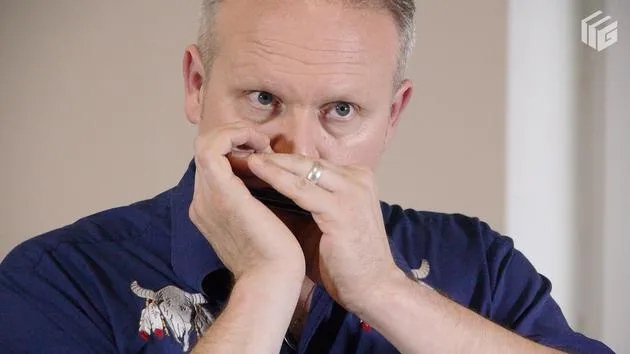
If you are right-handed like me:
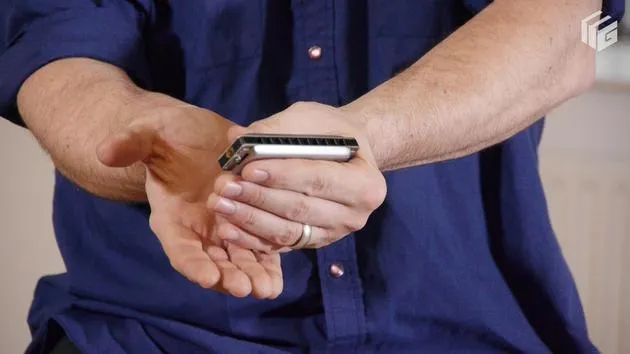
- Hold the harmonica in your left hand.
- Put little finger to little finger.
- Bring your left hand's little finger across to the bottom of your right hand fingers.
- Place your right thumb either on the end of the harmonica or on the tips of your left hand fingers, whichever is comfortable.
Then, bring the whole thing up to meet you like this, keeping your right arm fairly vertical.
To recap:
- Little finger to little finger.
- Left hand's little finger across.
- Right thumb on the harmonica or on the tips of your left fingers.
Now you can bring the whole setup up to meet you like this while keeping your right arm fairly vertical.
Creating Vibrato
To create the vibrato:
- Open and close your right hand, pivoting on your thumb.
- Keep your fingers together at all times.
A key aspect is making good contact between:
- Your right hand
- Your left hand
Demonstration
Let's demonstrate this on the four blow note.
Tip: Unlike any other technique, start slowly and build up your speed gradually. This will help you master the technique and perform it at different speeds.
You can also shape the notes by:
- Pushing your hands together
- Opening your right hand
Think of it as a plunger mute in a trumpet, or like this kind of business. But more often, this technique is used for vibrato.
Caution: If you want to go crazy fast with your vibrato, you'll need to detach your right hand, but be careful not to detach your teeth as well!
Alternative Technique
Another method is more favored by players of the Chromatic Harmonicas (the one with the push button). Here's how it works:
- The left hand does the same thing, but the right hand goes underneath, as if you were carrying a tray of drinks.
- Perform the vibrato with your left hand's fingers and shape the notes by moving both hands.
Different Types of Vibrato
- In Front of the Harmonica: The techniques we've discussed so far.
- Behind the Harmonica: This type of vibrato is harder to do and demonstrate because it occurs internally but sounds like this: [sound demonstration].
This is achieved by a combination of the throat and the diaphragm.
Demonstration Without the Harmonica
Let's see what happens if I take the harmonica out while still doing the vibrato:
- [Sound illustration]
That's what's happening now. It's like breathing in, almost resembling a backward cough. It also works when you blow out.
If I demonstrate it without the harmonica, it sounds inaudible. That's why I'm showing you the breathing-in method. But it works both ways. If you can immediately switch without any trouble, that's great! But most people cannot do that.
A Gradual Approach to Vibrato
If you find it challenging, here's another approach:
- Start off by saying "K" on the four draw.
- As you breathe in, say "K, K, K, K" nice and slow.
- Once you can maintain that steady pace, move it further down in your throat until it becomes "Coo."
So it will sound like this: [demonstration of K to Coo transition]
Then, try to force it even further down toward the top of your rib cage, transitioning to a stronger sound: [demonstration of further downward sound].
Steps to Achieve Vibrato
- Start with "K"
- Move to "Coo"
- Push it further down
Here are the three sounds:
- K
- Ku
- [Vibrato sound]
This is about the best I can do to help you achieve that vibrato. While this technique has its place and sounds well, you can be much more subtle with the diaphragm vibrato.
Understanding Your Diaphragm
If you're unsure where your diaphragm is or you want to exercise it, simply:
- Take a deep breath and exhale while feeling: [demonstration of diaphragm]
At least you'll know where it is. Best of luck with your practice!
Closing Performance
To finish, here's a little bit of a tune featuring some vibrato. This piece was made famous by a great harmonica player of the 50s, 60s, and 70s called Big Walter Horton, and it's called Easy.
11 lecciones
1h 4m de lecciones en vídeo estructuradas
Funciones de vídeo avanzadas
Ralentiza, repite un pasaje, sigue la partitura
Móvil, tablet y ordenador
Practica donde quieras
Garantía de satisfacción 100%
30 días de garantía de devolución
Conoce a tu gurú
Conoce a tu gurú
Mat Walklate es un armonicista y profesor afincado en Mánchester que trabaja en el blues y el folk, y que también toca la flauta, el whistle y la gaita uilleann y canta. Ganó el British Blues Harmonica Championship en 1992 y el All-Britain Fleadh Cheoil de armónica en 1993, y es artista avalado por Seydel.
A lo largo de una trayectoria de treinta años ha girado por Europa con bandas como The Moochers y el grupo de música irlandesa The House Devils, ha grabado y mezclado unos catorce álbumes entre 2001 y 2021 —entre ellos Sea of Blues y Traditional Harmonica— y ahora actúa en dúo con el cantante y guitarrista Alex Haynes y junto al estudioso del blues Dr Tom Attah. Enseña armónica en el Leeds Conservatoire y de forma privada.
En MusicGurus sus cursos te llevan desde tus primeras notas con una armónica en Do —embocadura, la posición de cross-harp, los bendings y tu primera improvisación— hasta un blues fluido, con vibrato, posiciones alternativas y el fraseo que hace cantar a un solo.







