



Bending de notas para conseguir notas adicionales

Con
Mat WalklateMat Walklate muestra cómo hacer bending en las notas de aspiración y soplado de una armónica para alcanzar los semitonos extra escondidos entre los agujeros.
Qué incluye el curso
11 lecciones (1h 4m) · 2 gratis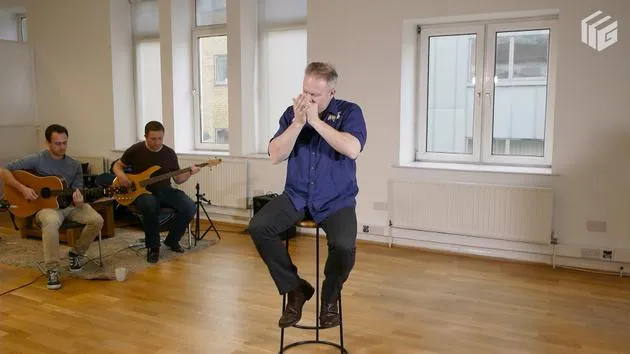
01. Tocar el blues, una demostración
Lección gratis2:14
02. Repaso de la escala de blues de G
2:31
03. Bending de notas para conseguir notas adicionales
Estás aquí9:12
04. Solo sencillo de 12 compases
3:50
05. Improvisar usando la tónica de los acordes de la progresión de blues
5:57
06. Vibrato
6:37
07. Desarrollar solos más interesantes
7:43
08. Bloqueo de lengua avanzado
10:22
09. Escalas de blues en primera posición
5:48
10. Escalas de blues en tercera posición
6:22
11. BONUS: Aprende a tocar "Sex & Drugs & Rock & Roll" de Ian Dury en la armónica blues
Lección gratis3:36
Transcripción de la lección
Lesson on Bending Notes
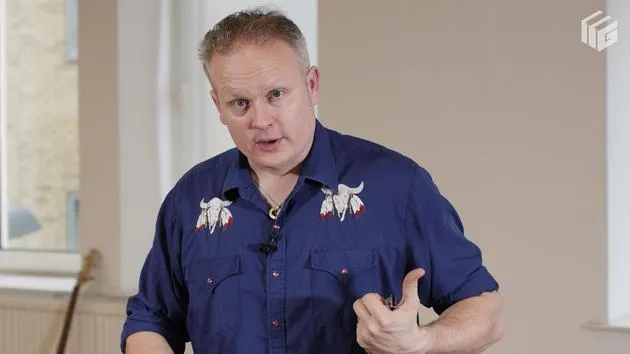
In this lesson, we're going to look at bending the notes, and we'll start off with the draw notes in holes one to six.
Draw Notes and Bending
All the draw notes in these holes will bend down in pitch, but they bend down differently:
- Hole Number One: One extra note (one semitone)
- Hole Number Two: Two extra semitones
- Hole Number Three: Three extra semitones
- Hole Number Four: One extra note again
- Hole Number Five: Quarter tone bend (not a full bend)
- Blowing into hole five gives you a note of E.
- Drawing produces a note of F.
- There is no E sharp or F flat here; if you look at a piano, there are just two white notes next to each other.
- This is what the Americans call a dip bend; it only goes down a little bit.
- Hole Number Six: One bend, and that's it for your draw bends.
Blow Notes
From hole seven to ten, you can't bend the draw notes down in pitch, but you can bend the blow notes down in pitch. However, on a C harmonica, it's quite fierce, so your computer speakers might explode at this point!
Achieving Out Bends
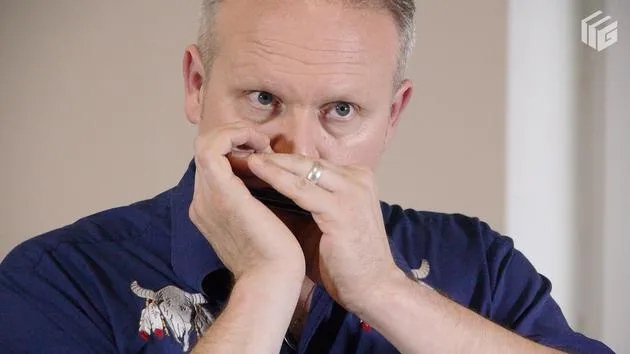
The bends we use the most are in the first six holes. Achieving an out bend is quite daunting at first; it's quite difficult. The best way to describe this is it's a bit like saying "E O" but breathing in.
-
Starting Point:
- Four draws are probably the best note to start on.
- Breathe in as gently as possible, quiet and gentle, like this: (demonstrate).
- This should be your starting point because then you know you're getting the true note.
-
Voice Technique:
- Say "oo" in your deepest possible voice.
- It goes from this to that: (demonstrate).
- Like whistling backwards, if you can do that.
This change in the way you breathe in makes the reed vibrate more slowly and gives you that lower pitched note. Your initial goal is to go to four draw and try to hold the bend for a second or two, then let it go again.
Once you're comfortable with that, move on to other holes: 1, 2, 3, 5, and 6. Some are trickier than others. Most people find if they can do number four, they can do number one. However, two and three can prove difficult at first, as can five and six.
Practice Techniques
Start on number four and try to perform "E, U." If you can sing, that'll help. If not, just focus on singing the different notes. This process is the same as bending the note down in pitch.
Tip: If you can, try bending holes four and five together, which produces a nice bluesy sound.
Contextualizing Bends
Once you can get the notes to bend, you need to put them in context, which can be tricky. Instead of practicing with a tuner or piano, pick a tune you know and try to incorporate one bend into that tune.
Example:
- A great option is "When the Saints Go Marching In."
- Starting from one blow, you need to incorporate one bend, which is the second bend in hole two.
It sounds like this: (demonstrate).
Articulating the Bend
It's best to articulate the bend. Instead of just going "oo" and breathing in, try saying "coo" or "goo," whichever suits you best, to help make the bend more defined.
Note Separation
To separate the bends in hole two and the three bends in hole three, articulation can help. Instead of attempting them legato, try saying "ki ku" to separate the bends.
You can also practice the major scale. While it's not strictly a blues practice, it helps you recognize the sound.
Adding Bluesy Flavor
Returning to the blues, a trick to making harmonica playing sound more bluesy is to slightly flatten the three draw whenever we play it.
Example Riff:
- If we have a riff that goes: 2 draw, 3 draw, 4 blow, 4 draw. It follows the rules and works with the 12 Bar Blues, but it's a bit too jolly.
- By flattening the 3 draw slightly, the overall sound becomes more bluesy.
This subtlety can be challenging to master at first, but it's something worth considering.
Final Notes
Whenever you play, if the tune doesn't require you to bend to one of the notes in hole three, it should still be slightly flattened.
That's note bending. Best of luck!
Exercise
Now, we're going to do a simple note bend exercise following a 12-bar blues, involving these guys at great expense.
After a count of four:
1, 2, 3, 4... (demonstrate)
Thank you!
11 lecciones
1h 4m de lecciones en vídeo estructuradas
Funciones de vídeo avanzadas
Ralentiza, repite un pasaje, sigue la partitura
Móvil, tablet y ordenador
Practica donde quieras
Garantía de satisfacción 100%
30 días de garantía de devolución
Conoce a tu gurú
Conoce a tu gurú
Mat Walklate es un armonicista y profesor afincado en Mánchester que trabaja en el blues y el folk, y que también toca la flauta, el whistle y la gaita uilleann y canta. Ganó el British Blues Harmonica Championship en 1992 y el All-Britain Fleadh Cheoil de armónica en 1993, y es artista avalado por Seydel.
A lo largo de una trayectoria de treinta años ha girado por Europa con bandas como The Moochers y el grupo de música irlandesa The House Devils, ha grabado y mezclado unos catorce álbumes entre 2001 y 2021 —entre ellos Sea of Blues y Traditional Harmonica— y ahora actúa en dúo con el cantante y guitarrista Alex Haynes y junto al estudioso del blues Dr Tom Attah. Enseña armónica en el Leeds Conservatoire y de forma privada.
En MusicGurus sus cursos te llevan desde tus primeras notas con una armónica en Do —embocadura, la posición de cross-harp, los bendings y tu primera improvisación— hasta un blues fluido, con vibrato, posiciones alternativas y el fraseo que hace cantar a un solo.







