



Escalas de blues en primera posición

Lesson time: (5min 48sec)
Mat Walklate muestra cómo tocar blues en primera posición con una armónica diatónica, incluyendo qué notas de aspiración evitar a lo largo del compás de doce.
Course preview
This lesson is part of the course Ganar fluidez en la armónica de blues
Watch a preview of the full course below.
Lesson transcript:
First and Third Position Playing
Hello, my name is Matt. In this lesson, we're going to look at a little bit of first and third position playing.
Introduction to Positions
The vast majority of the time, given a choice, most people play blues in second position using the blues scale that's readily available on a diatonic harmonica. However, you can, in theory, play blues in 12 positions because there are 12 keys in music. Most people don't tend to stray above third position.
So far, we've done a fair bit in second position. Let's have a look at first position.
Understanding First Position
First position involves playing a C harmonica over a blues in C. It's trickier than second position because we're fighting against the major scale. We don't have a blues scale in C; we have a major scale, so there are certain notes we need to avoid at certain times.
Key Points to Remember
- For the vast majority of the 12 bar blues in first position:
- Avoid 1 draw and 4 draw.
- These notes sound weak except in bar number nine, where they sound fantastic.
To master first position, it's crucial to understand the structure of the 12 bar, or at least anticipate when these sections come up.
Recommended Notes for the First Eight Bars
- Best to stick to:
- 1 blow
- 3 draw
- 3 blow
- 2 draw (which is the same note)
- 2 blow
- 1 blow
Working with Riffs and Tongue Blocking
There are certain little riffs and licks that work quite well in first position. Tongue blocking can help a lot here because we rely on more blow notes than in second position.
If you can tongue block on full blow, you can give it a bit more oomph.
Example Riffs
- Riffs based around 4 blow.
- A tried and tested one starting on 2 draw:
- It sounds like this: 2 draw (bend in hole number two) ➔ 2 blow ➔ 1 blow.
If you have the time and inclination, you can explore using the two bends in hole number two and all three bends in hole number three. In second position, we don't tend to use the third bend in hole number three because it sounds a bit rough, but in first position, we sometimes do.
Limitations of First Position
First position is more limiting than second position but has a different flavor. It doesn't have to be played slowly; you can play it fairly rapidly as well. However, if you're not careful, you can soon run out of road. There's only so much you can do in first position, so it's best to keep it fairly sparse; otherwise, you run out of ideas fairly quickly.
High-End Play
At the top end of the harmonica, you tend to play mainly blow notes and use the blow bends.
Note: I won't demonstrate this on a C harmonica because it's quite shrill. It's usually better done on a lower-pitched harmonica, like one in A or one in the key of G, where it's a bit more mellow.
Conclusion
For this lesson, when I assemble the band in a moment, we'll record a little 12 bar in the key of C so you can hear how this sounds using just the first four holes on the harmonica.
So now, let's play a couple of 12 bars in the key of C, and I'll play a C harmonica that puts me in first position.
Take it away, gents!
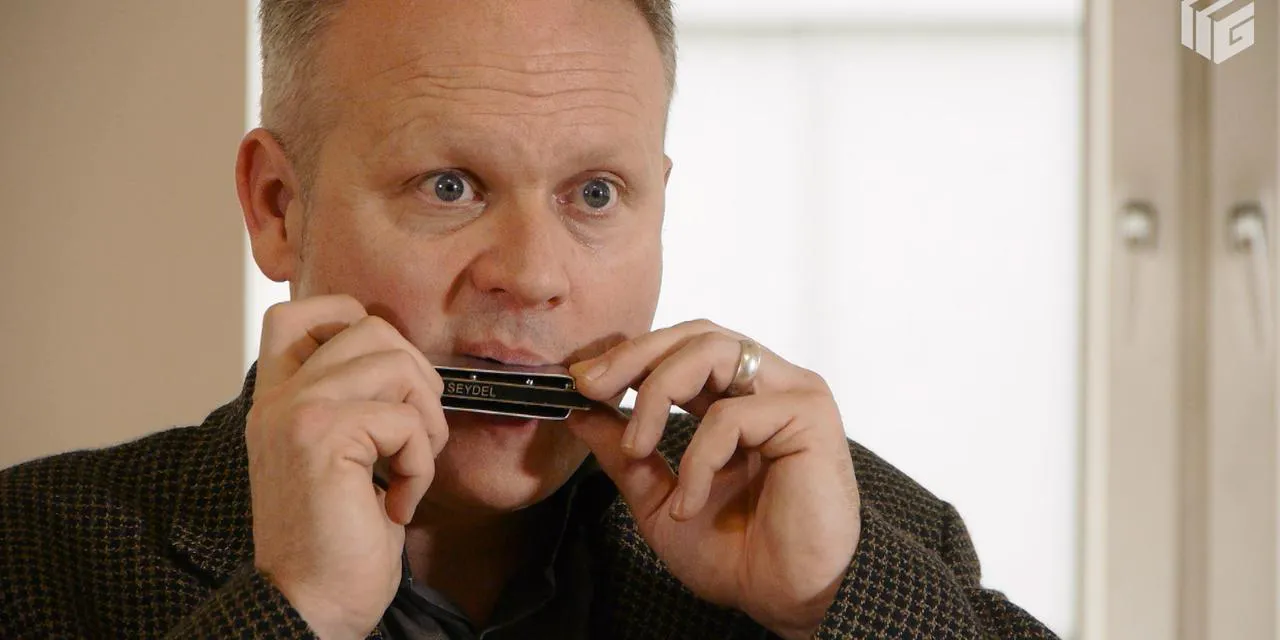
About the instructor
Mat Walklate es un armonicista y profesor afincado en Mánchester que trabaja en el blues y el folk, y que también toca la flauta, el whistle y la gaita uilleann y canta. Ganó el British Blues Harmonica Championship en 1992 y el All-Britain Fleadh Cheoil de armónica en 1993, y es artista avalado por Seydel.A lo largo de una trayectoria de treinta años ha girado por Europa con bandas como The Moochers y el grupo de música irlandesa The House Devils, ha grabado y mezclado unos catorce álbumes entre 2001 y 2021 —entre ellos Sea of Blues y Traditional Harmonica— y ahora actúa en dúo con el cantante y guitarrista Alex Haynes y junto al estudioso del blues Dr Tom Attah. Enseña armónica en el Leeds Conservatoire y de forma privada.En MusicGurus sus cursos te llevan desde tus primeras notas con una armónica en Do —embocadura, la posición de cross-harp, los bendings y tu primera improvisación— hasta un blues fluido, con vibrato, posiciones alternativas y el fraseo que hace cantar a un solo. read more