



Escalas de blues en tercera posición

Con
Mat Walklate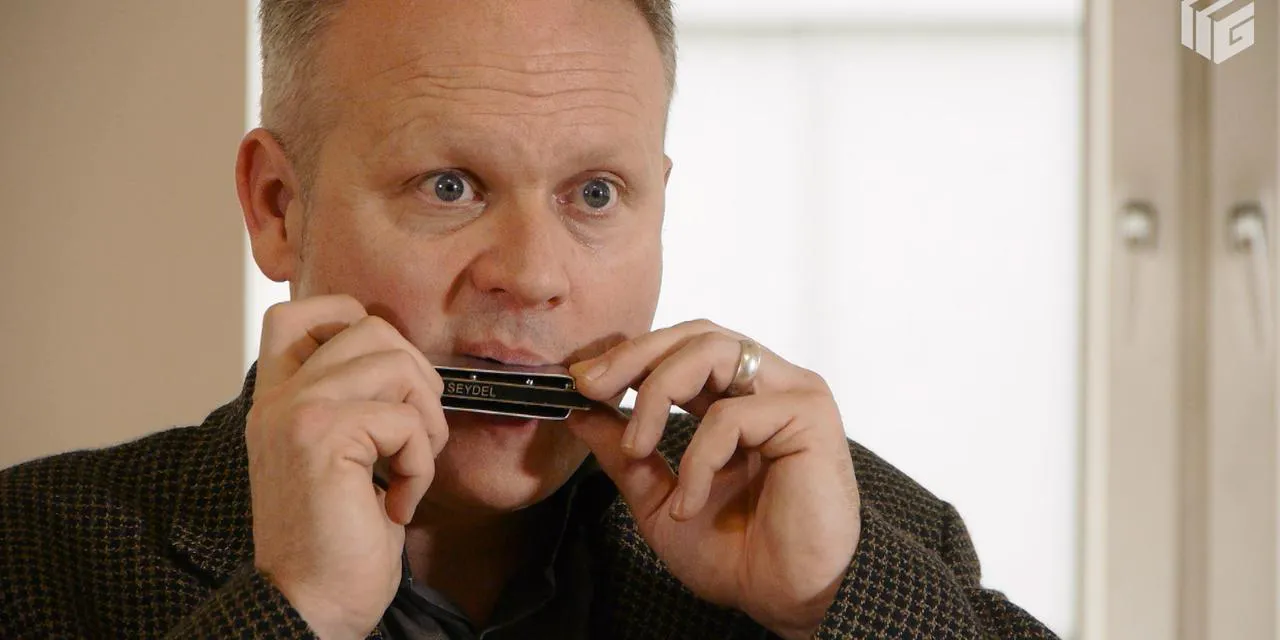
Qué incluye el curso
11 lecciones (1h 4m) · 2 gratis
01. Tocar el blues, una demostración
Lección gratis2:14
02. Repaso de la escala de blues de G
2:31
03. Bending de notas para conseguir notas adicionales
9:12
04. Solo sencillo de 12 compases
3:50
05. Improvisar usando la tónica de los acordes de la progresión de blues
5:57
06. Vibrato
6:37
07. Desarrollar solos más interesantes
7:43
08. Bloqueo de lengua avanzado
10:22
09. Escalas de blues en primera posición
5:48
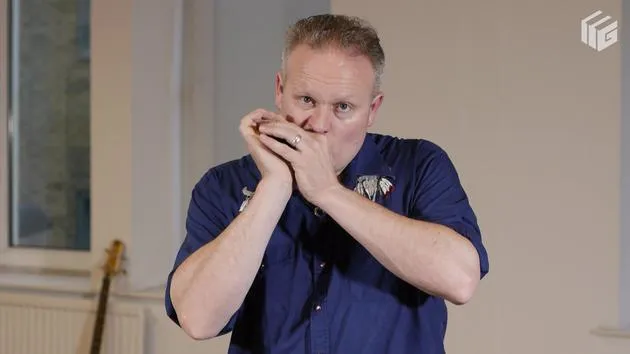
10. Escalas de blues en tercera posición
Estás aquí6:22
11. BONUS: Aprende a tocar "Sex & Drugs & Rock & Roll" de Ian Dury en la armónica blues
Lección gratis3:36
Transcripción de la lección
Understanding Third Position on the Harmonica
So now we'll look at the other position that's widely used, which is third position. This involves using a minor scale that exists in the harmonica without having to bend or do any difficult techniques.
The Basics
- Starting Hole: It starts on hole number four draw, allowing you to play a minor pentatonic scale.
- Comparison with Second Position: When we play in second position, we're using a major pentatonic scale. In this case, it's a minor one.
"If you check out the site, there'll be a PDF with this scale written out for your reference."
Easy Entry into Third Position
If you want an easy way into third position:
- Stay away from the first three holes.
- Play from hole four upwards.
Key Compatibility
Play over:
- D minor
- D major
This is one of the key aspects of third position: it works over both the minor and the major key. It sounds best, if I'm honest, over the minor key, but it will still work over the major.
"The scale that we're using there is a scale in the key of D."
Hole Number Three Considerations
- The reason for staying away from the first three holes is primarily to avoid hole number three.
- This hole cannot be played in its normal state in third position; you have to bend it.
"If you're going to venture down to the first three holes, or if you're going to venture down to hole number three, you have to be able to bend it. Otherwise, it sounds off."
Freedom Beyond Hole Four
Above hole number four, you can:
- Play great big draw chords.
- Experiment with glissando (glissandi) to your heart's content.
- If you can play octaves, you can make great use of them in third position.
"It's what people who play blues on the chromatic harmonica tend to use, the one with the push button. Because if you play those in third position, you don't have to use the button, which makes life a lot easier."
Hole Number Three Demonstration
The problem with hole number three is that you always have to bend it:
- You can jump over it if you want to use one and two, that kind of thing.
- If you've never done third position before, then obviously stay away from holes one, two, and three. Focus on hole four upwards.
Characteristics of Third Position
- It allows for a looser, freer playing style.
- It sounds quite bluesy due to the use of a minor scale.
Bending in Third Position
You can use the bend in hole number six quite freely. The bend in six draw is a powerful tool if we're using it in second position.
"If we use it too much, it's a bit like putting too much chili in food. It's a little overpowering and becomes a little bit irritating if you use it too much."
However, in third position, you can use it as often as you like because it serves a different role.
Recording Session
In a moment, we'll record a couple of 12 bars in D minor and possibly also a couple in D major to show you how you can use third position effectively over these keys.
Let's Play!
-
D Minor (third position): Here we go!
1, 2, 3, 4. -
Blues in D Major (still third position for the C harmonica):
Oh.
1, 2, 3, 4.
11 lecciones
1h 4m de lecciones en vídeo estructuradas
Funciones de vídeo avanzadas
Ralentiza, repite un pasaje, sigue la partitura
Móvil, tablet y ordenador
Practica donde quieras
Garantía de satisfacción 100%
30 días de garantía de devolución
Conoce a tu gurú
Conoce a tu gurú
Mat Walklate es un armonicista y profesor afincado en Mánchester que trabaja en el blues y el folk, y que también toca la flauta, el whistle y la gaita uilleann y canta. Ganó el British Blues Harmonica Championship en 1992 y el All-Britain Fleadh Cheoil de armónica en 1993, y es artista avalado por Seydel.
A lo largo de una trayectoria de treinta años ha girado por Europa con bandas como The Moochers y el grupo de música irlandesa The House Devils, ha grabado y mezclado unos catorce álbumes entre 2001 y 2021 —entre ellos Sea of Blues y Traditional Harmonica— y ahora actúa en dúo con el cantante y guitarrista Alex Haynes y junto al estudioso del blues Dr Tom Attah. Enseña armónica en el Leeds Conservatoire y de forma privada.
En MusicGurus sus cursos te llevan desde tus primeras notas con una armónica en Do —embocadura, la posición de cross-harp, los bendings y tu primera improvisación— hasta un blues fluido, con vibrato, posiciones alternativas y el fraseo que hace cantar a un solo.







