



The Way It Is, Bruce Hornsby (Lektion)
Andrew Johnson geht Bruce Hornsbys 'The Way It Is' durch, eine Note-für-Note-Transkription mit ihrem Intro in freiem Tempo, dem synkopierten Chorus und zwei großen Klaviersoli.

Das steckt im Kurs
28 Lektionen (2h 28m) · 1 gratis
01. Peel Me A Grape, Diana Krall (Aufführung)
Gratis-Lektion6:26
02. Defying Gravity, Wicked (Performance)
2:30
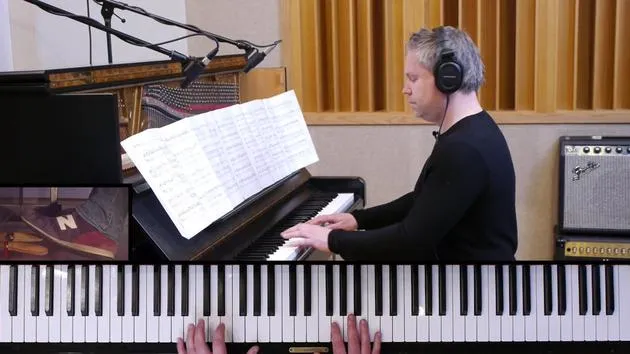
03. The Way It Is, Bruce Hornsby (Darbietung)
5:12
04. Favela, Noam Lederman (Aufführung)
2:45
05. Mohair Mountain, Joe Bennett & Kung Fu Drummer (Interpretation)
3:03
06. Blue Espresso, Deirdre Cartwright (Performance)
2:38
01. Peel Me A Grape, Diana Krall (Lektion)
10:30
02. Defying Gravity, Wicked (Lektion)
11:48
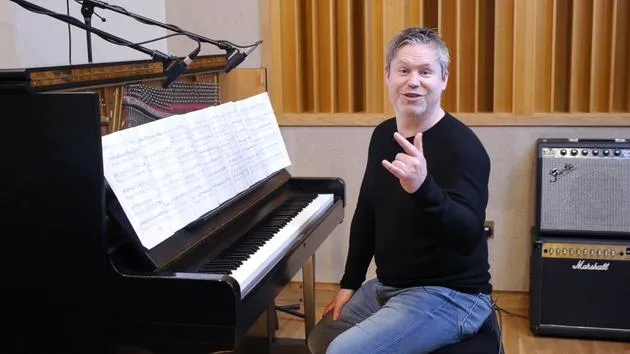
03. The Way It Is, Bruce Hornsby (Lektion)
Du bist hier9:48
04. Favela, Noam Lederman (Lektion)
13:23
05. Mohair Mountain, Joe Bennett & Kung Fu Drummer (Lektion)
13:04
06. Blue Espresso, Deirdre Cartwright (Lektion)
11:43
Transkript der Lektion
Music Lesson on "The Way It Is" by Bruce Hornsby
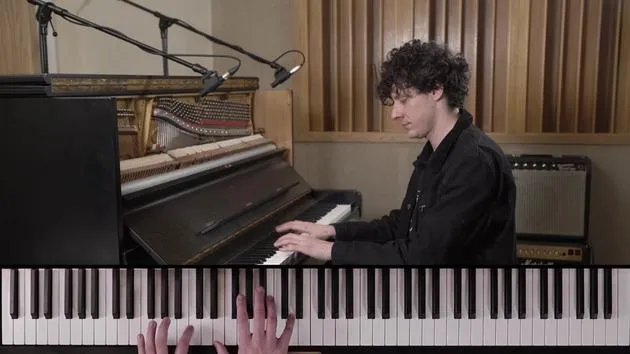
Hey, everyone, how's it going? Welcome to this lesson on a fantastic song. One of my favorites is called "The Way It Is" by Bruce Hornsby. If you don't know this song, I encourage you to go have a listen to this track in its original format.
About Bruce Hornsby
Bruce Hornsby is a fantastic musician. He was kind of a big deal in the mid-80s when this song came out. He's an amazing piano player, a great songwriter, and a wonderful singer as well.
Overview of the Lesson
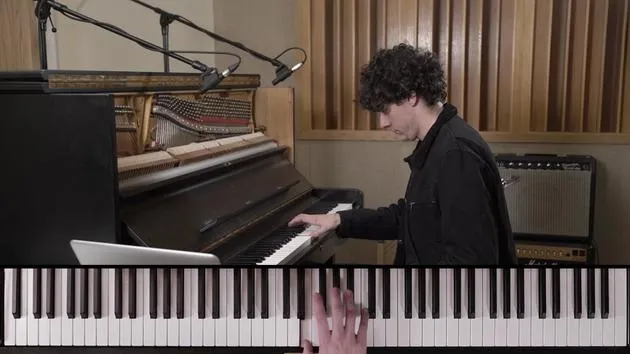
What I can tell you about this particular piece for the grade six syllabus is that this is almost a direct transcription of everything that he played on the record. So if you want to know what Bruce did, this is the score that will show you note for note everything that he did.
Structure of the Piece
- Introduction: Slow, free time.
- Take your time and enjoy the richness of those chords.
- Verse:
- In this arrangement, you've got a bit of time, but don't be deceived, it's going to get much more difficult very soon.
- Piano Solos:
- The song is dominated by two big piano solos.
- The first solo comes after the second verse, followed by a third verse and then the final solo.
Key Elements to Note
Stretch and Reach
One of the difficulties in the first bar is a stretch in the left hand.
- Try to reach that 10th interval there.
- If you can't do that, an octave will suffice, and people will barely notice.
Finger Technique
- In Bar 13, the left hand is quite tricky.
- Experiment with different finger markings, starting on a 3 or 4 can help achieve that funky bass line from the original track.
- Focus on getting that main riff tight under your fingers.
The Chorus
The chorus has a very syncopated rhythm that is completely off the beat.
- I recommend slowing this down and using a metronome:
- 1, 2, 3, 4, 1, 2, 3, 4, 5, 6, 7, 8.
- Practice tapping your foot in crotchets.
Working on Solos
First Solo
Starting from bars 42 into 43, it begins nice and gently and is again completely off the beat.
- Practice it slowly to get the syncopated rhythm down.
- Listening to the track is crucial to get a feel for what Bruce is doing, groove is everything in this song.
Finger Markings and Technique
I've included finger markings for every single note of the right hand because it's very scalic.
- Practice your repeated notes and ensure you're maintaining the groove.
Second Part of the Solo
For this part:
- Slow down and get the notes under your fingers before trying to play at speed (120 bpm).
- Pay attention to the dotted quavers; they will be off the beat.
Summary
To summarize the main points:
- The piece features syncopated rhythms that are ultra-jazzy and off the beat.
- Finding a foundational metronome rhythm will help you feel grounded in the piece.
- Playing freestyle without a beat can lead to a muddy sound.
Final Thoughts
Just have fun with this piece! Enjoy the jazzy nature of the song. It will definitely test your technical ability, so practice those scales.
- Key Scales: A minor, C major, Mixolydian C, etc.
- Make sure your left hand serves as the solid foundation throughout.
Best of luck, and really enjoy it! Many thanks.
28 Lektionen
2 Std. 28 Min. strukturierte Videolektionen
Erweiterte Videofunktionen
Verlangsamen, Passagen loopen, mitlesen
Handy, Tablet & Desktop
Üben, wo du willst
100 % Zufriedenheitsgarantie
30 Tage Geld-zurück-Garantie







