



Blue Espresso, Deirdre Cartwright (Lektion)

Das steckt im Kurs
28 Lektionen (2h 28m) · 1 gratis
01. Peel Me A Grape, Diana Krall (Aufführung)
Gratis-Lektion6:26
02. Defying Gravity, Wicked (Performance)
2:30
03. The Way It Is, Bruce Hornsby (Darbietung)
5:12
04. Favela, Noam Lederman (Aufführung)
2:45
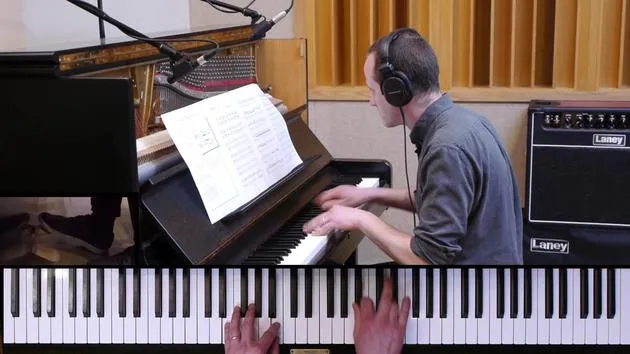
05. Mohair Mountain, Joe Bennett & Kung Fu Drummer (Interpretation)
3:03
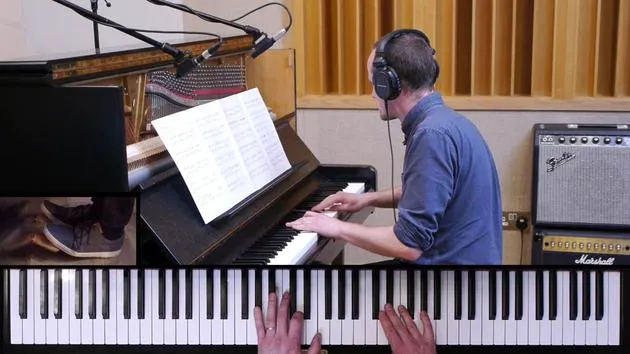
06. Blue Espresso, Deirdre Cartwright (Performance)
2:38
01. Peel Me A Grape, Diana Krall (Lektion)
10:30
02. Defying Gravity, Wicked (Lektion)
11:48
03. The Way It Is, Bruce Hornsby (Lektion)
9:48
04. Favela, Noam Lederman (Lektion)
13:23
05. Mohair Mountain, Joe Bennett & Kung Fu Drummer (Lektion)
13:04
06. Blue Espresso, Deirdre Cartwright (Lektion)
Du bist hier11:43
Transkript der Lektion
Blue Espresso Music Lesson
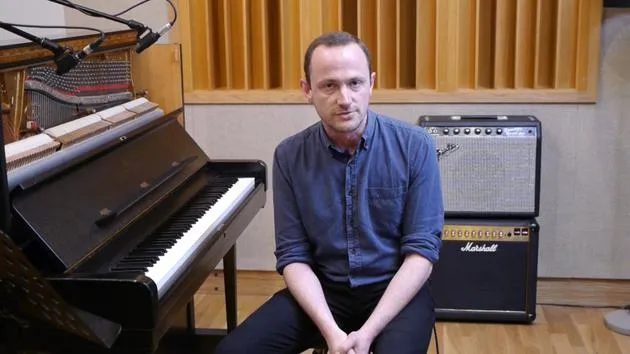
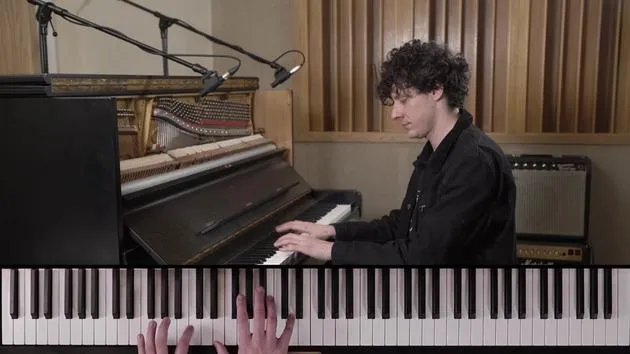
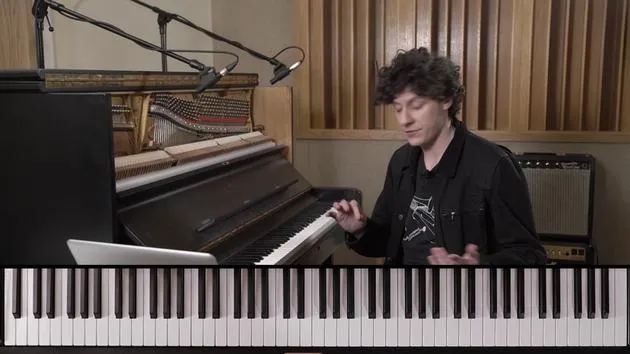
Okay, so this is Blue Espresso. This composition is kind of in the style of the blues guitar and vocal legend B.B. King. Stylistically, this is a really traditional sort of blues. That is, you're using chords one, four, and five, and it's over a 12-bar form.
If someone asked me to think of a blues or play a blues, this is probably the sound that would first come into my mind.
Introduction to the Piece
So to the piece, this first A section is very much the intro to the whole composition. We're establishing a groove and setting up the mood. In fact, from my experience as a gigging musician, it's very common for a band leader to ask the rhythm section for 12 bars, or maybe 24 bars up front.
With this in mind, you then have to make sure you set the right mood right from the very first note. This includes being prepared with the count-in as well, so that you're not just jumping in at the start of the piece and then expecting the groove to settle once you've started. You might get away with that in a rehearsal, but not in a live performance.
The Groove
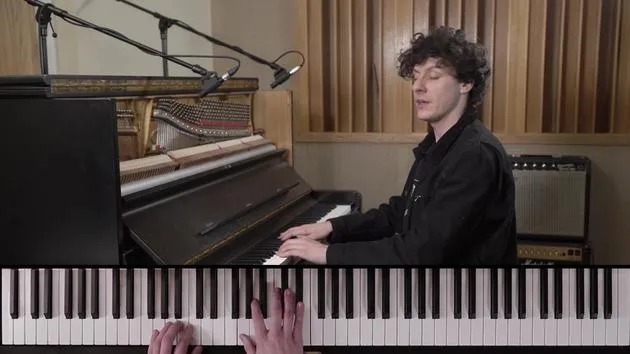
So, yeah, the first 12 bars have no melody involved; it's just you and the rhythm section comping. This is a great opportunity to make sure it's feeling right. As I've said before, you can dig in here; it's fine.
The aim is to:
- Lock in with the band
- Create a good vibe
This A section is a great one to practice going round and round. You don't have anything else to think about; there's no melody to play. You just want to be getting the feel right. You'll instantly be able to tell if it's not. For example, 3/4 is a great rhythm to latch onto and lock in with.
Chord Voicings
I was playing some slightly different voicings there because I don't have a backing band to demonstrate things with. But in context, you might think, "Why am I not playing a B-flat in the root of the chord?"
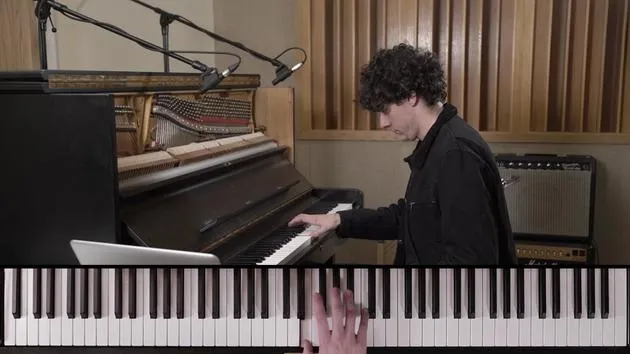
In this particular case, a bit of technical speak for a second: these chord voicings are in the third position, like a third inversion. This is a stylistic choice from the composer. But in most cases, you wouldn't be playing the root note, particularly when you're playing with the rhythm section, because the bass player is going to be taking care of those duties. It just sounds slightly hipper if you're focusing on other notes in the chords.
Chord Demonstration
To demonstrate:
- First inversion
- Second inversion
- Third inversion of our B-flat 7 chord
This theme continues throughout the piece; it's a nice little touch.
Melody and Accompaniment
One thing I'd maybe note when the melody comes in at B is to drop down the volume of the left hand a little bit. It's more in an accompanying or comping role when the melody comes in, as that's what you really want to be able to hear.
The B-flat Blues Scale
The melody uses almost exclusively notes from the B-flat blues scale. And if you're not familiar with that, this is how it sounds.
With the first phrase, that's straight out of the blues scale, and similarly, that theme continues with the melody throughout. In your own time, you might want to look at or mess around with this scale, it's what a lot of this music is based upon. It's a great scale to start developing your own ideas for improvisation, if that's what you're into.
Swing Feel
Other things to look at would be your swing feel. If that's something you've not particularly worked on before, it's a good idea to make sure it's sounding as it should.
Practicing Swing Rhythm
A way to practice that is to go to the other end of the extreme, play a dotted quaver and then a semiquaver. In classical music, sometimes that's how a swing rhythm is notated. If a classical musician wants to get the feeling of swing, they might write that out.
In this case, you're not going to see any notation; you're just expected to know how a swing rhythm sounds. For example:
- Straight: 1 and 2 and 3 and 4 and
- Swing: Should feel more relaxed and fluid.
So there's a big difference, and it's worth spending some time on that, as that's kind of the basis for a lot of this music, having a swing feel together.
The C Section
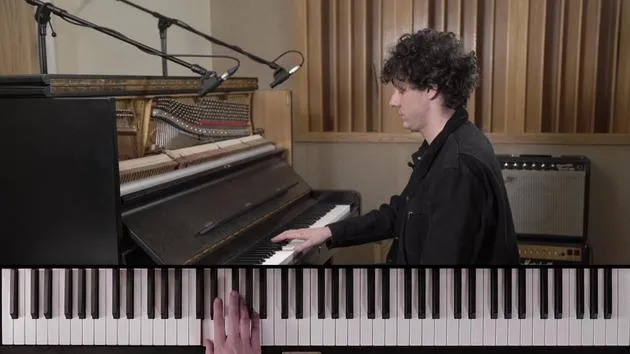
Moving on to the C section, the piano solo starts. It's worth noting here that we're starting with what's called stop time. We've got some hits in the left hand, firstly on beat one and then beat four of each of the bars.
Again, it's just you playing the melody in the right hand here, so you want to be mindful of that and keep counting, at least to start off with. You can easily get out of sync with a backing track if you're not careful.
Practicing Internal Pulse
This is quite a good test of your internal pulse and how good your timing is. These few bars might show that up, so it's a corner to have a look at.
Crotchet Triplets
The next technique that I wanted to touch upon happens towards the end of bar 57. This is the idea of crotchet triplets. This is something that hasn't occurred yet in the piece.
In this case, it would be called three over two because we're fitting three crotchets into the space where there's normally two. If you think of the pulse in the bar as this, we're going to play three in the space where I'm clapping two in my left hand here.
This is a great way to internalize this kind of sound. I wouldn't expect you to get that immediately, but it's a good thing to practice, even without a piano.
Practicing Octaves
Another thing I wanted to touch on quickly is that it's slightly hard to feel the swing rhythm when you're playing octaves. You might want to look at that; the first time it happens is in bar 30.
Similarly, a slightly fiddly bar is bar 61, where we have a similar idea, but now the rhythm is quaver triplets and can catch you out if you're not careful.
Conclusion
One final thing: the left hand in the last bar tripped me up the first time I played it. I just assumed it would be the same notes as in the right hand. But actually, it's a sort of harmony part. Just wanted to point that out for you to avoid any mistakes.
Other than that, this is a feel-good piece; it's light-hearted and fun to play. It is fun to play once you cover a few of those little technical details. As soon as you're confident with that groove and the swing feel, I'm sure you'll enjoy playing it.
Good luck and see you for the next one!
28 Lektionen
2 Std. 28 Min. strukturierte Videolektionen
Erweiterte Videofunktionen
Verlangsamen, Passagen loopen, mitlesen
Handy, Tablet & Desktop
Üben, wo du willst
100 % Zufriedenheitsgarantie
30 Tage Geld-zurück-Garantie







