



Mohair Mountain, Joe Bennett & Kung Fu Drummer (Lektion)

Das steckt im Kurs
28 Lektionen (2h 28m) · 1 gratis
01. Peel Me A Grape, Diana Krall (Aufführung)
Gratis-Lektion6:26
02. Defying Gravity, Wicked (Performance)
2:30
03. The Way It Is, Bruce Hornsby (Darbietung)
5:12
04. Favela, Noam Lederman (Aufführung)
2:45
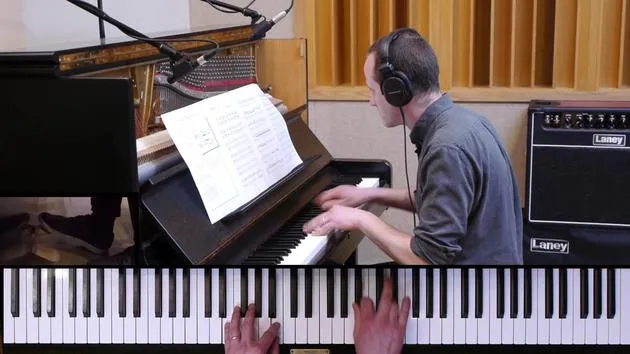
05. Mohair Mountain, Joe Bennett & Kung Fu Drummer (Interpretation)
3:03
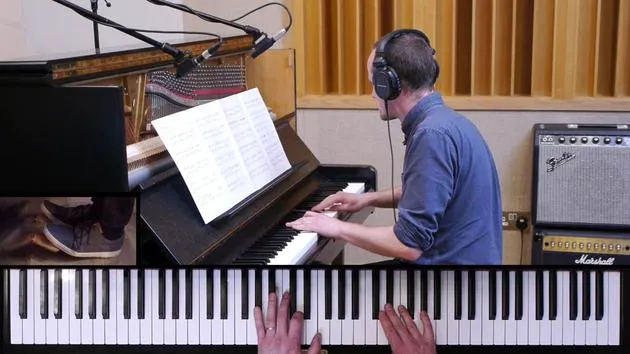
06. Blue Espresso, Deirdre Cartwright (Performance)
2:38
01. Peel Me A Grape, Diana Krall (Lektion)
10:30
02. Defying Gravity, Wicked (Lektion)
11:48
03. The Way It Is, Bruce Hornsby (Lektion)
9:48
04. Favela, Noam Lederman (Lektion)
13:23
05. Mohair Mountain, Joe Bennett & Kung Fu Drummer (Lektion)
Du bist hier13:04
06. Blue Espresso, Deirdre Cartwright (Lektion)
11:43
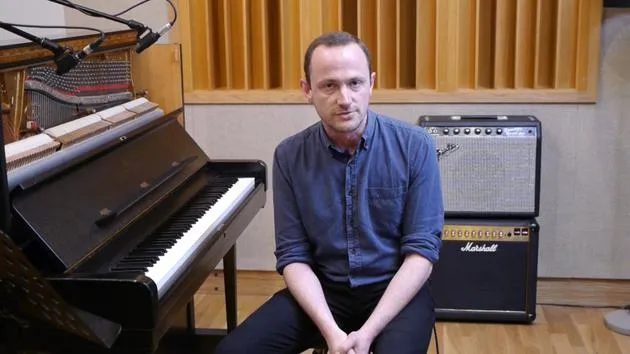
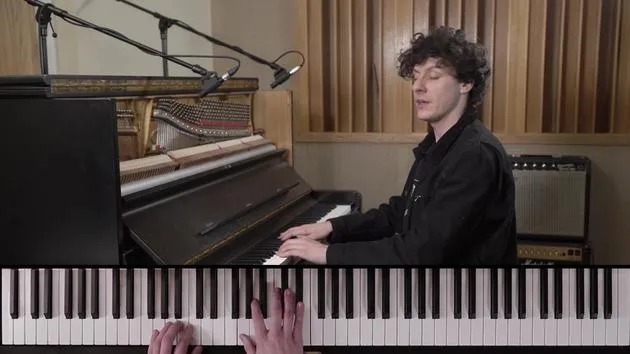
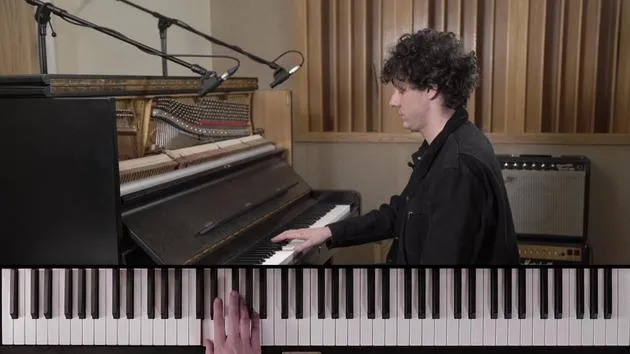
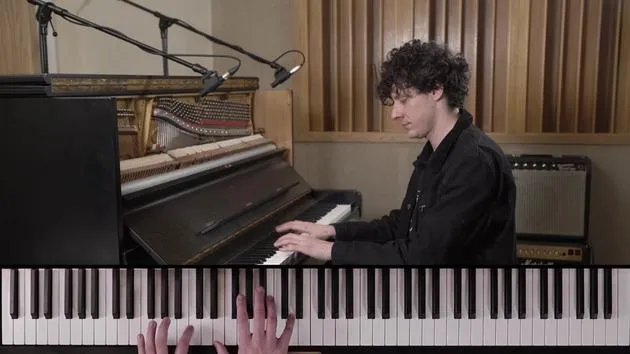
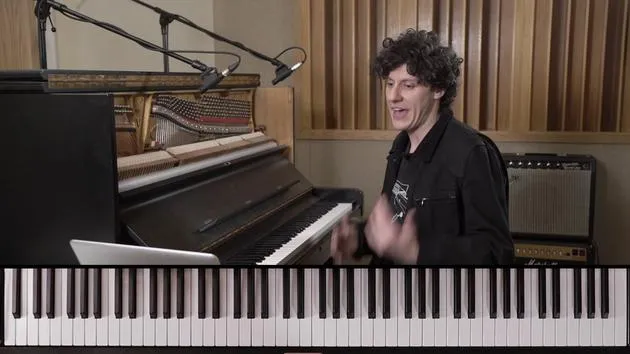
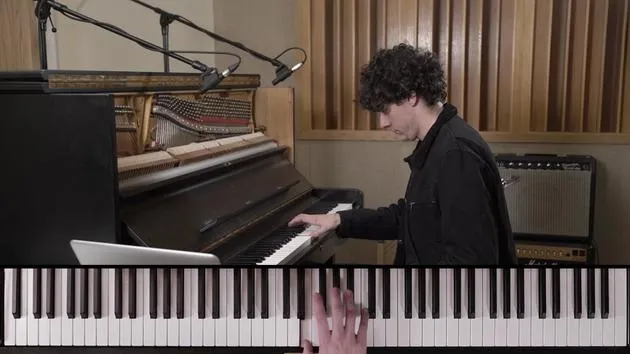
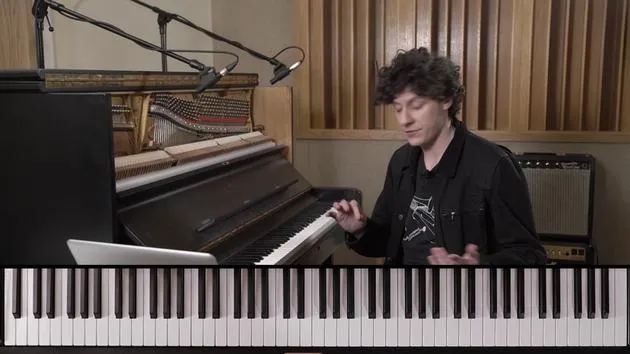
Transkript der Lektion
Mohair Mountain Lesson Overview
Okay, so this is Mohair Mountain. This is an absolutely classic rock tune. It's kind of similar in style to some of the more pioneering bands of this genre, such as Cream, Led Zeppelin, and Aerosmith.
One of the main riffs in the body of this piece is based around the pentatonic scale. The composer is using that to good effect, which is stylistically something you might hear a lot in a classic rock piece like this.
Introduction to the Music
Jumping straight into the music itself, right at the very top here, we can see two things going on:
- A bar of 4/4, which I'm sure you're very used to seeing by now.
- The second bar is a bar of 7/8, and these two are alternating.
Understanding 7/8
One way to get your head around 7/8 is to break it up into two chunks. Rather than counting 1, 2, 3, 4, 5, 6, 7 (the mistake here is that the word "seven" has two syllables), you should think of it as:
- Group of four: 1, 2, 3, 4
- Group of three: 1, 2, 3
This is one of the main technical difficulties of the first opening section.
Demonstration:
- Count: 1, 2, 3, 4, 5, 6
- Count: 1, 2, 3, 4
- Count: 1, 2, 3
It's useful to loop those first couple of bars to really internalize the feel of swapping from 4/4 to 7/8.
B Section
Moving on to the B section, note that we are now in a key signature of A major with three sharps. Keep in mind that when you're playing some of these chords, you always need to remember the three sharps.
-
Bar 7: Pay attention to the little push at the end.
Demonstration: 1, 2, 3, 4.
-
Similarly, in Bar 10, loop from Bar 7 to Bar 10 to get the push and ensure you're not rushing.
C Section
Now, the C section is more about a vibe change. In the first four bars of the C section (from Bar 15), think in terms of how a rock guitarist would play it:
Demonstration:
- Count: 1, 2, 3, 4.
I'm really putting some weight behind these notes now, which stylistically fits well here.
Rhythmic Considerations
From Bar 18, be careful of the rhythms for the next four bars. This could trip you up if you're not careful.
Demonstration:
- Count: 1, 2, 3, 4.
In the next bar, be mindful of the fingering for the run, especially in the left hand. You can ask your teacher for suggestions about the best fingering.
D Section: Piano Solo
The next section, the D section, is where the piano solo starts.
Technical Difficulties
There are a couple of technical difficulties happening simultaneously here:
-
In Bar 22, we've got a grace note that needs to be played a little before the B natural. Practice making that nice and short.
-
A tremolo is also included; practice this in isolation by slowing it down and then gradually speeding up until it reaches the intended tempo. Make sure to add the grace note on each downbeat.
Semiquaver Runs
The next technical difficulty involves semiquaver runs. The first one isn't too bad, as it oscillates off the B in the thumb. There's another grace note here, so again, play it slower to get your fingering right.
Continuing, be aware of many grace notes and blues ad libbing styles.
Hemi Demi Semiquavers
In Bar 28, you'll see Hemi Demi semiquavers, which can look intimidating, but they derive from the pentatonic scale and fit under the hand nicely.
Just watch out for moving your little finger at the top of the line, as it doesn't always stay in the same place.
Triplet Feel
At Bar 32, change your mindset to a more triplet feel:
Count: 3, 4.
Get comfortable with that sound world for a bit before returning to grace notes and semiquavers.
In Bar 36, be careful with the run, as it may not go where you expect.
Reprise and Ending
From E, there's a reprise of the beginning, but with some drum solos underneath.
- Here, be careful of counting as we swing between 4/4 and 7/8.
Metric Change
A significant change occurs with a metric change setting us up for a shuffle feel towards the end of the tune. You'll have two bars to prepare, so get in the zone before coming in at Bar 48.
Fingering Techniques
Throughout to the end, fingering is crucial. You'll encounter tricky quaver triplet runs, which you may want to go over with your teacher.
It's important to play the runs correctly and position your hands on the keyboard appropriately, especially when jumping down an octave at the end of the second time bar.
Conclusion
Slow this one down initially before practicing at tempo.
There's a lot to get to grips with in this piece, but I've found it enjoyable to play.
Best of luck, and see you on the next one!
28 Lektionen
2 Std. 28 Min. strukturierte Videolektionen
Erweiterte Videofunktionen
Verlangsamen, Passagen loopen, mitlesen
Handy, Tablet & Desktop
Üben, wo du willst
100 % Zufriedenheitsgarantie
30 Tage Geld-zurück-Garantie







