



Akkord-Voicings - Grade 6
Jazz-Akkord-Voicings für Rockschool Piano Grade 6: der lydisch-dominante Klang (Dominant 7 ♯11) und der alterierte Klang (♯5 ♯9) am Keyboard.

Das steckt im Kurs
28 Lektionen (2h 28m) · 1 gratis
01. Peel Me A Grape, Diana Krall (Aufführung)
Gratis-Lektion6:26
02. Defying Gravity, Wicked (Performance)
2:30
03. The Way It Is, Bruce Hornsby (Darbietung)
5:12
04. Favela, Noam Lederman (Aufführung)
2:45
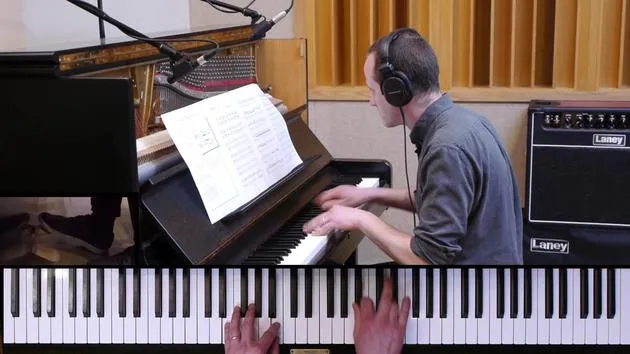
05. Mohair Mountain, Joe Bennett & Kung Fu Drummer (Interpretation)
3:03
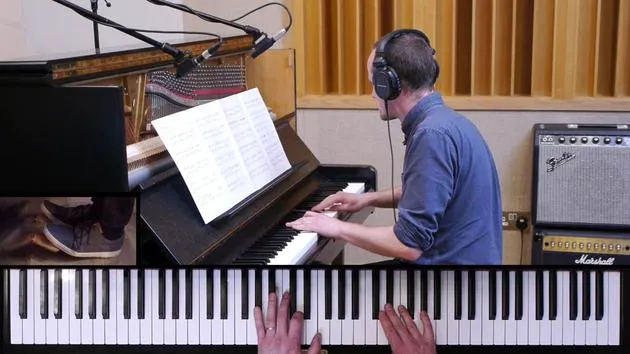
06. Blue Espresso, Deirdre Cartwright (Performance)
2:38
Transkript der Lektion
Chord Voicings in Jazz Harmony
So that leads on to chord voicings. Now, like the arpeggios and scales we've been working through, we have:
- C Dominant 7, Sharp 11
- C Altered
C Dominant 7, Sharp 11
The C dominant 7, sharp 11 is also known as the Lydian dominant.
C Altered
The C altered is also referred to as the sharp five, sharp nine.
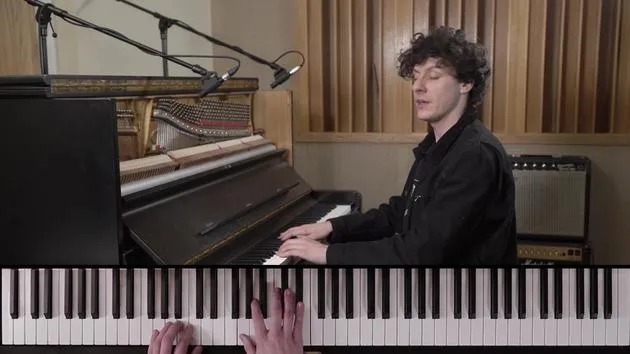
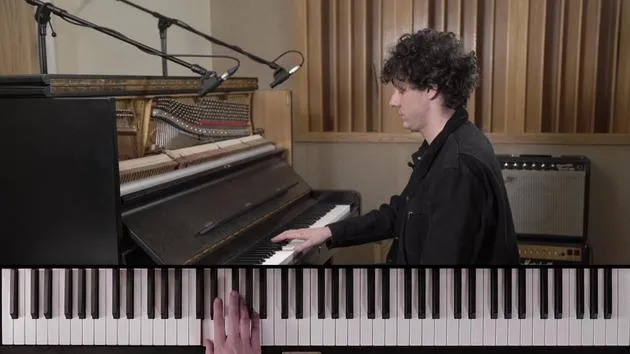
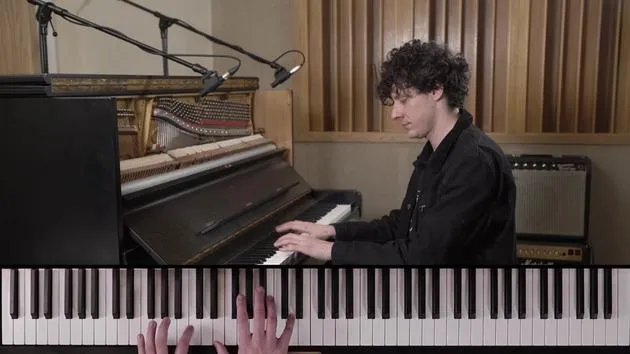
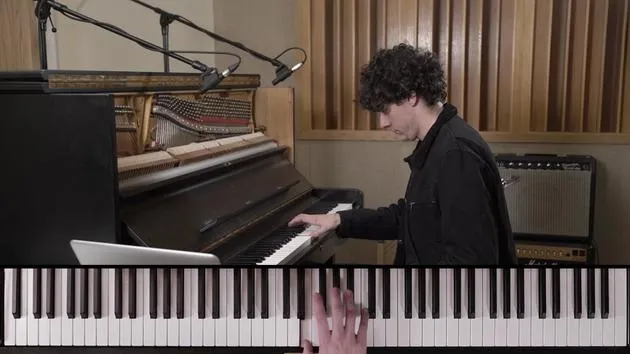
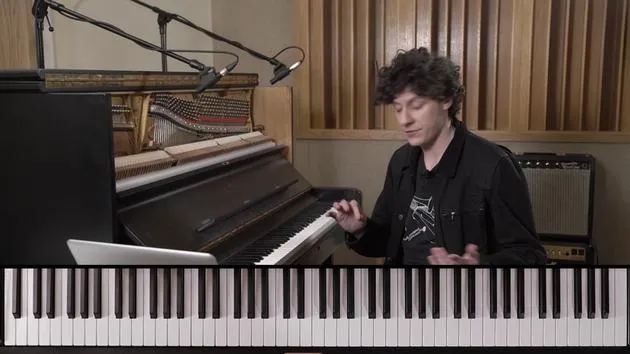
Now, I'll play the first one, which is the C dominant sharp 11 finger. And now we have the C altered.
Key Sounds in Voicings
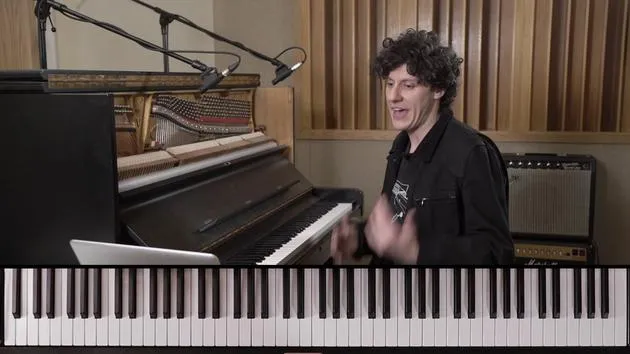
There are some great aspects in these voicings, particularly that second one of the C altered in the left hand. This is a really common sound used all the time in jazz harmony.
- This voicing is a way of resolving a dominant back to the tonic.
- It's a great voicing that can be used in all 12 keys, as long as you don't go too low, which can make it sound muddy.
It's a wonderful sound, but there's also some great stuff in the C dominant 7, sharp 11. That first voicing is so clustery, but it works so well.
- It's basically two tones crushed together, and they sound very murky and muddy on their own.
- But when we have the final product, it sounds great.
Importance of Transposing
With these voicings, and like many other voicings in different rock school grades, I really recommend transposing these into all 12 keys, despite them only being given in C.
- These are great voicings!
- Being a good piano player is about having great shapes that you can play under others, as well as being able to solo.
Having these wonderful shapes in all keys is a huge bonus and will really enhance your playing.
Conclusion
So that's about it for this grade. With the technical exercises, we've covered a lot, particularly:
- Enharmonics
- Altered scales
- Lydian dominant scales
All this might sound a little overwhelming, but don't worry, it's all just one step away from material you've already worked on.
If you're having a hard time with it, just go through it again:
- Rewatch the videos.
- Take it nice and slow, some of the scales hands separately, arpeggios with nice, slow tempos.
And then when you're ready, bring it up and you'll ace the exam. Nice one!
28 Lektionen
2 Std. 28 Min. strukturierte Videolektionen
Erweiterte Videofunktionen
Verlangsamen, Passagen loopen, mitlesen
Handy, Tablet & Desktop
Üben, wo du willst
100 % Zufriedenheitsgarantie
30 Tage Geld-zurück-Garantie







