



Akkorde – Dreiklänge und Septakkorde
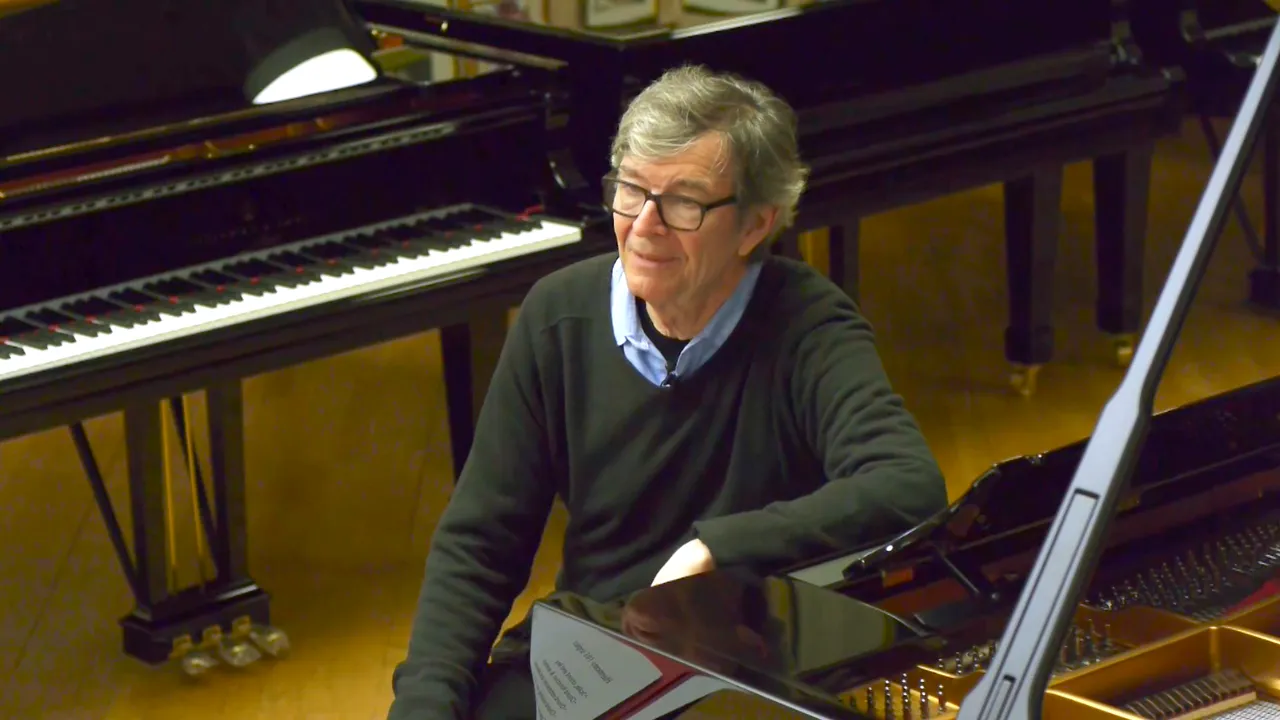
Darius Brubeck erklärt, wie Dreiklänge und Septakkorde aufgebaut sind, und erweckt das Ganze mit ‘Summer Song’, dem Stück seiner Eltern in F-Dur, zum Leben.
Das steckt im Kurs
11 Lektionen (1h 48m) · 1 gratis
Transkript der Lektion
Music Lesson: Understanding Chords in F Major
In this lesson, I'll be using a song that my parents, Dave and Iola Brubeck, wrote together called Summer Song. This song will illustrate some of the concepts we'll be discussing throughout the course.
Key Signature
- Key: F major (1 flat)
I chose this particular song not only because I like it, but also because it is very diatonic. It primarily uses notes from the F major scale.
Harmony and Melody
As we move through this piece, you may find it surprising how many ways the melody can be harmonized while maintaining the integrity of the scale.
Chords Built on Scale Degrees
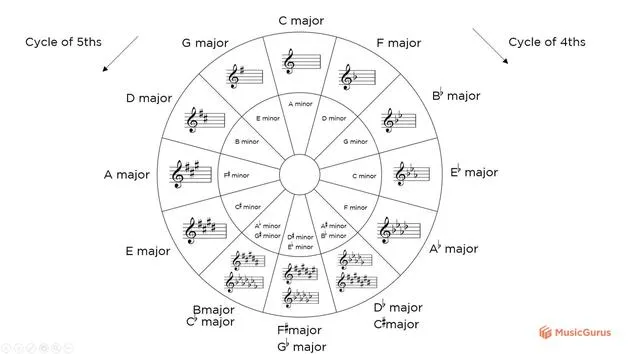
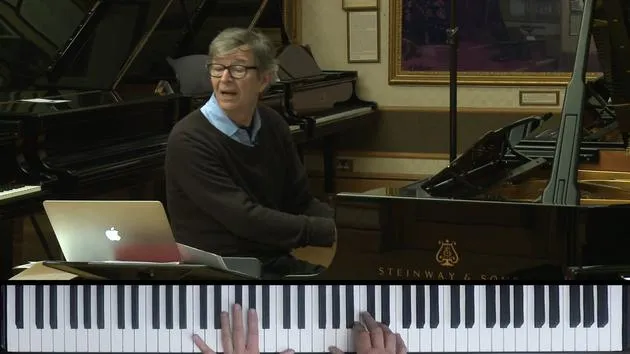
Starting from scales, we can derive chords built on each degree of the scale. For visual clarity, I will switch back to the key of C to demonstrate all of the triads.
- Notation: These chords will be denoted as Roman numerals, which refer to scale degrees and, later on, chord functions.
Triads:
- 1: Tonic chord (I) - 1, 3, 5
- When I say 1, 3, 5, I'm referring to intervals.
For example:
- If my thumb's on F:
- F is 1
- A is 3
- C is 5
This describes the distance between the root and the top note of the chord.
Four Note Chords
To further enrich our harmony, we can make four-note chords:
- 1, 3, 5, 7
By adding an additional interval, we step into the realm of richer contemporary harmony.
Different Qualities of Chords
- I (1): Major seventh
- II (2): Minor seventh (minor triad + flat seventh)
- III (3): Minor seventh
- IV (4): Major seventh
You'll notice that the sounds of these chords are quite similar.
The V Chord
The V chord is distinct:
- It has an interval that is referred to as an augmented fourth or diminished fifth.
The important thing about the V chord is its strong tendency to resolve. Historically, it was referred to in medieval times as the diabolus in musica, or the devil's interval, due to its inherent instability.
Additional Chords
- VI (6): Minor seventh
- VII (7): Diminished fifth and sometimes called a half-diminished chord (minor 7 flat 5).
Lastly, the augmented chord is the only one I've left out. In the major scale, the fifth is extended by a half step.
Summary of Chords in Major Scale
- Primary Triads (I, IV, V):
- I and IV are major.
- V has a flat seventh, referred to as a dominant seventh. This chord has a unique function.
Final Thoughts
This concludes our discussion on chords, scales, and keys. Don't be fooled; we will soon delve into much more advanced harmony. However, mastering these foundational concepts is essential.
Challenge
I encourage you to challenge yourself by playing all of the seventh chords based on scale tones across 12 keys on a keyboard. You may find it quite difficult, but it's a worthwhile exercise that will help you gain mastery over how chords function in every key.
11 Lektionen
1 Std. 48 Min. strukturierte Videolektionen
Erweiterte Videofunktionen
Verlangsamen, Passagen loopen, mitlesen
Handy, Tablet & Desktop
Üben, wo du willst
100 % Zufriedenheitsgarantie
30 Tage Geld-zurück-Garantie
Lern deinen Guru kennen
Lern deinen Guru kennen
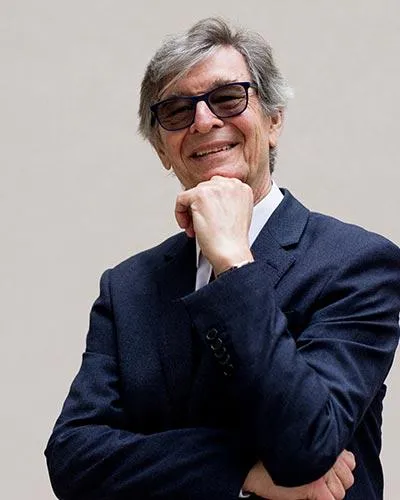
Darius Brubeck ist ein renommierter Jazzpianist und Musikpädagoge. Er hat zahlreiche Alben als Bandleader veröffentlicht, ist international mit seinen eigenen Gruppen getourt und hat mit seinen Brüdern an Brubecks Play Brubeck zusammengearbeitet.
Darius war als Fulbright-Gastprofessor in Rumänien und der Türkei tätig. Er rief den ersten Jazz-Studiengang an einer afrikanischen Universität ins Leben, an der University of KwaZulu-Natal in Südafrika, wo er bis 2005 unterrichtete.
Darius arbeitet häufig mit Mike Rossi zusammen, Saxofonist und Musikprofessor an der University of Cape Town. Zu Mikes Verdiensten zählen zahlreiche Aufnahmen und internationale Bühnenauftritte als Leader, Solist und Sideman unter anderem mit Tony Bennett, Dave Liebman, Winston Mankunku Ngozi, George Russell, Clark Terry und Alessio Menconi.
Mit Darius als Mentor kommst du direkt zum Wesentlichen. In Harmony 101 entmystifiziert er die Jazzharmonik, damit du sie schnell anwenden kannst, und in Mastering Odd Times zeigt er dir, wie du in ungewöhnlichen Taktarten souverän spielst und improvisierst.







