



Akkord-Voicing & Umkehrungen

Lesson time: (13min 36sec)
Darius Brubeck stellt Akkord-Voicings jenseits der engen Lage vor und zeigt, wie Umkehrungen den Klang eines Akkords durch das Umordnen seiner Noten verändern.
Course preview
This lesson is part of the course Harmony 101 - schnell zum 'guten Stoff'
Watch a preview of the full course below.
Lesson transcript:
Chord Voicing and Inversion
This lesson will cover chord voicing and inversion at an introductory level. The subject is vast and ever-expanding, but this will provide you with a solid starting point.
Understanding Chord Voicings
Chord voicing refers to the arrangement of the tones. We can voice chords not just in what's called close position, but also by spreading the voicings around so they sound good.
What is an Inversion?
Before diving deeper, let's define inversion:
- An inversion occurs when you take a triad or a seventh chord and move the root note to the top.
- If you repeat this process:
- Move the third to the top.
- Move the fifth to the top.
Even though the actual pitches remain the same, the order from bottom to top varies.
Importance of Inversions
Most harmonic situations cannot be fully addressed using only close position chords. Once you understand inversions, you can manipulate the spacing in chords, creating a more open and sonorous sound.
- In ensemble playing, the root is frequently supplied by another instrument, like a bass guitar.
- The concept of open position chords is based on this: rather than playing the root, you can arrange the chord with wider intervals.
Open Position Chords
Here's how you can get to open position chords effectively:
- Instead of a chord in the order of 1, 3, 5, 7, you rearrange it to 1, 5, 7.
This creates a richer sound because of the wider intervals:
- Spacing matters.
- A bigger gap between the bottom note and the top note contributes to a mellow sound.
Spacing and Voicing
The distinction between spacing and voicing is subtle but significant:
- Voicing refers to where you choose to place notes, which may include extensions or basic notes.
- For example, a voicing may consist entirely of fourths rather than thirds.
Some jazz voicings may even omit the root entirely; however, the root is typically implied and might be played by the bass or inferred from previous chords.
Common Voicings
Here's an example of a common voicing:
- Shell Chord: For a root of C, the notes could be B flat, E, and A (which represent the 7th, 3rd, and 13th).
You could also expand this into a four-note chord by adding the ninth, or modify it with a flat nine for a unique sound.
Experimenting with Inversions
Inversions offer a plethora of options. Here's a common voicing used for comping:
- Root:
- Third
- Seventh
- Ninth
As you build from there, you'll find numerous possibilities.
Blues Progression Example
Let's explore a quick bluesy progression using seventh chords. The sound largely comes from:
- The spacing of the chords.
- When intervals are spaced well, they provide richness and openness.
Conversely, higher stacked notes can sound a bit muddled or indecent when pushed down into lower octaves.
Learning from The Summer Song Example
In the summer song example, observe the distance between the melody and the lowest note (the bass note). This will help develop inversions more organically, especially in the B section.
The bass line often shifts from root to root, so:
- Observe how to fill in tones between the melody and bass to maintain spacing.
- Voicing encompasses everything between the top note and the bass note, ensuring you avoid clashing with the melody.
Feel free to explore altered intervals (such as flat thirteenths) to make your chords sound more interesting!
Remember, spacing and inversion are essential tools for creating pleasing harmonies and enhancing your musical expression. Happy practicing!
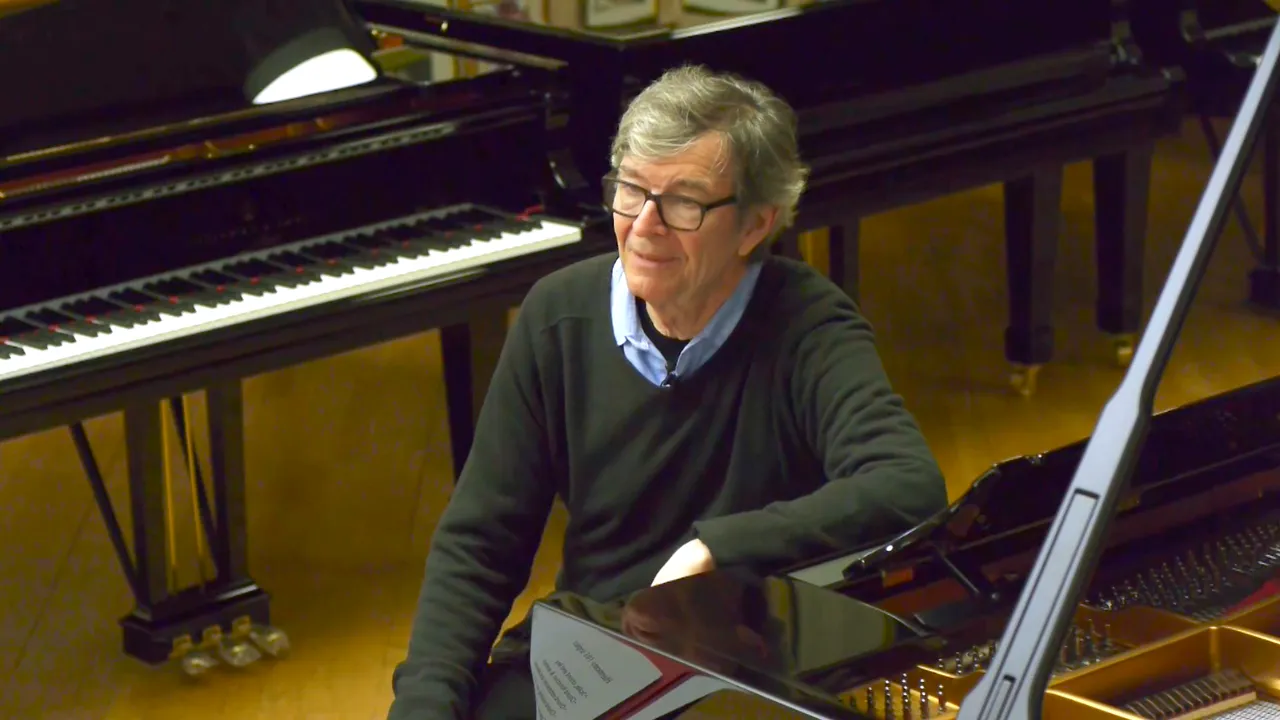
About the instructor
Darius Brubeck ist ein renommierter Jazzpianist und Musikpädagoge. Er hat zahlreiche Alben als Bandleader veröffentlicht, ist international mit seinen eigenen Gruppen getourt und hat mit seinen Brüdern an Brubecks Play Brubeck zusammengearbeitet. Darius war als Fulbright-Gastprofessor in Rumänien und der Türkei tätig. Er rief den ersten Jazz-Studiengang an einer afrikanischen Universität ins Leben, an der University of KwaZulu-Natal in Südafrika, wo er bis 2005 unterrichtete. Darius arbeitet häufig mit Mike Rossi zusammen, Saxofonist und Musikprofessor an der University of Cape Town. Zu Mikes Verdiensten zählen zahlreiche Aufnahmen und internationale Bühnenauftritte als Leader, Solist und Sideman unter anderem mit Tony Bennett, Dave Liebman, Winston Mankunku Ngozi, George Russell, Clark Terry und Alessio Menconi. Mit Darius als Mentor kommst du direkt zum Wesentlichen. In Harmony 101 entmystifiziert er die Jazzharmonik, damit du sie schnell anwenden kannst, und in Mastering Odd Times zeigt er dir, wie du in ungewöhnlichen Taktarten souverän spielst und improvisierst. read more