



Die „Blues-Tonleiter“ & ihre Anwendungen

Lesson time: (10min 34sec)
In dieser Lektion lernst du ein Blues-Riff, das auf der Bluestonleiter basiert. Paddy erklärt die Bluestonleiter im Detail.
Course preview
This lesson is part of the course Spiel authentisches Blues-Piano
Watch a preview of the full course below.
Lesson transcript:
Lesson on the Blues Scale
Welcome back! In this lesson, we're going to look at what's kind of known as the blues scale. It might be a bit ambiguous as a concept, but the sound of it is widely used in the blues genre. What's more important, however, is how it's utilized in music.
The Blues Scale
The blues scale can be thought of as these notes in the key of C:
- C
- E flat
- F
- F sharp
- G
- B flat
- C
This scale has a distinct "bluesy" sound. However, you can't just go up and down it; otherwise, it will sound repetitive and boring. I want to help you play blues music in an authentic way, and it's really about how you mix it up with other aspects of improvisation.
Getting Familiar with the Sound
The important thing for you to grasp now is to become familiar with the sound of this so-called scale and get it feeling natural under your fingers. Key elements include:
- Strong flat fifth: This dissonance sounds great when it resolves.
Riffs and Melodic Ideas
Let's explore some little riffs and melodic ideas you can improvise using the blues scale. Rather than just moving up and down the scale, consider this example:
Example Riff
Hear that in there? The notes are just the first five notes of the blues scale, rolled down:
- Start on G
- Move to F sharp
- Then to F
- Followed by E flat
- End on C
I'm sliding off the F sharp to the F with my third finger.
Timing and Practice Tips
- Play the strongest sounding note in terms of timing with the G starting in the left hand.
- Hit the second note of the left hand with C.
For practice, start at the slowest tempo that you find convenient, then gradually work up to a faster pace. This technique can create a pretty cool blues riff!
More Variations
You could also use repeated notes:
- Example: I'm just playing repeated notes from the blues scale.
- You could add C to create different variations.
Mixing Riffs
Now, let's mix those two riffs up.
For instance:
- Analyze how you can use the riffs over all the chords in the 12-bar blues sequence.
- It works on C, F, and can also be applied to G.
Repetition and Context
Something remarkable about the blues scale is that you can play the same riff over different chords, giving it a new context and character. Adding C to the repeated G provides extra weight, allowing you to enter the realm of classic blues records.
Examples
Try incorporating sounds like:
- A jangly high-end piano sound
- Utilizing the scale in various octaves
Aim for Authenticity
The objective now is to start mixing things up. With our blues scale ideas and previously learned riffs, you can generate authentic and classic-sounding blues piano pieces.
Demonstration
Before we finish this lesson, I will go around the 12-bar structure a couple of times, demonstrating different variations you can use with the blues scale.
Don't worry if some of it seems a bit ambitious at the moment; this is just to provide some ideas. You can always replay the video to see what I'm doing!
Here we go!
A one, two, a one, two, three, four...
You'll notice some complex elements there, but everything is built upon the blues scale. Have a go at working out some of the things I did, and I'll provide as much of this material as possible in the PDF for you to check out.
About the instructor
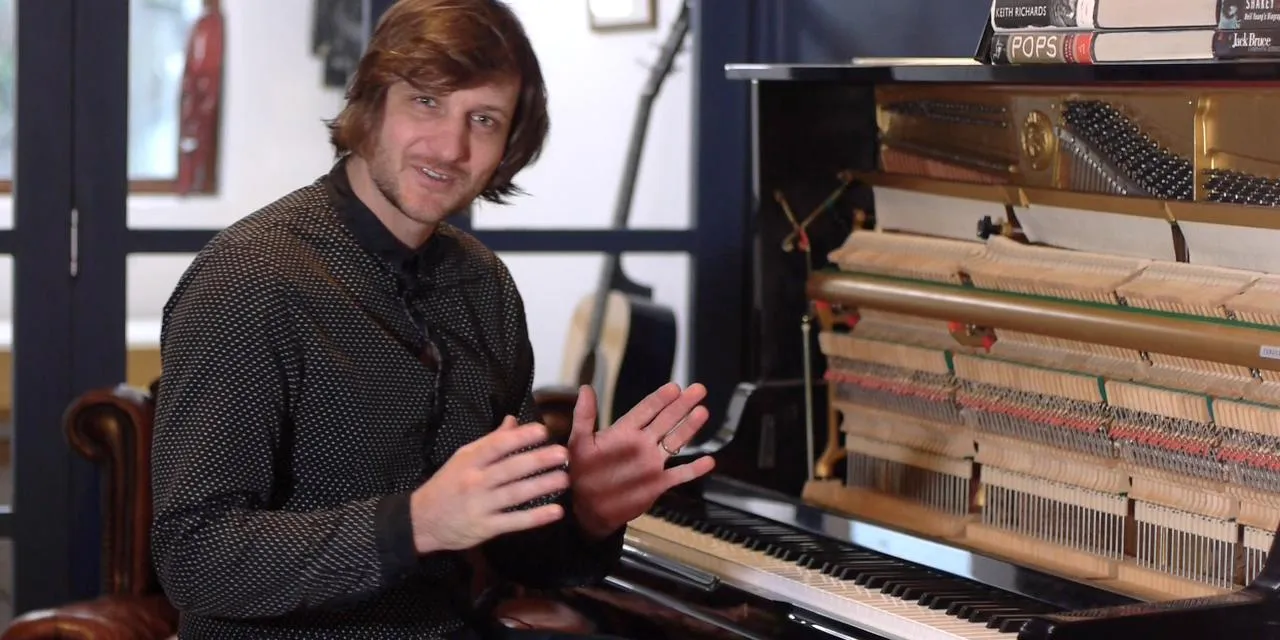
Paddy Milner gilt als einer der besten Blues-Pianisten der Welt – derzeit ist er der Stammkeyboarder von Sir Tom Jones, nach mehreren Jahren an der Seite des großartigen, verstorbenen Jack Bruce –, aber er ist auch ein hervorragender eigenständiger Songwriter und ein unverwechselbarer Sänger. Lies einfach das Lob von Größen wie Dave Brubeck weiter unten! Sein Spiel war auf dem Soundtrack des Kinohits 'Rocketman' von 2019 zu hören. Zweimal wurde er bei den British Blues Awards als bester Keyboarder ausgezeichnet, und als Gründungsmitglied der Ronnie Scott's Blues Explosion hat er eine langjährige Residency im weltberühmten Club Ronnie Scott's. Seine aktuelle Band LONDONOLA spielt selbst geschriebene britische Musik mit einer kräftigen Portion New-Orleans-Geist, und sein gemeinsames Projekt JAWBONE geht seit der Veröffentlichung des gleichnamigen Debütalbums von Stärke zu Stärke. „Ich liebe es... da ist einer, der wirklich Klavier spielen kann" - Dave Brubeck „Ich kann es nur wärmstens empfehlen. Irgendwie fängt alles an, sich viel besser anzufühlen!" - Jack Bruce „Der beste Blues-Pianist Europas..." - Blues Access, USA „Beeindruckend und originell" - The Times „Blendend" - The Independent In seinen Kursen zerlegt Paddy den authentischen Blues-Shuffle, Slow Blues, Boogie-Woogie, Rock 'n' Roll und das New-Orleans-Piano – bis hin zu drei klassischen Boogie-Woogie-Songs –, damit du diese Stile bei einem der Allerbesten des Fachs lernst. read more