



Schluss #1 & Variationen
In dieser Lektion lernst du einen einfachen Standard-Schluss für deine Blues-Improvisationen sowie einfache Variationen dieses Schlusses.
Das steckt im Kurs
10 Lektionen (1h 49m) · 1 gratis
01. Für den Anfang: der 12-Bar-Blues
12:20
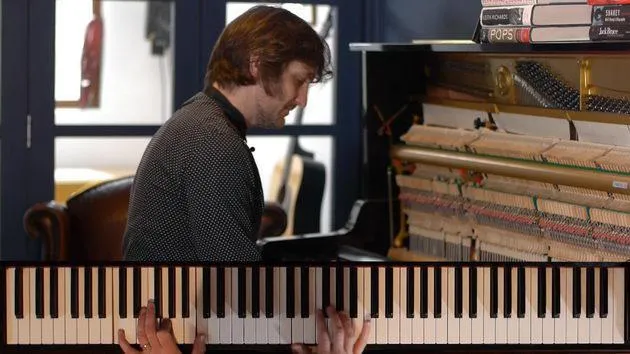
02. Der Maschinenraum: Bass mit der linken Hand
9:31
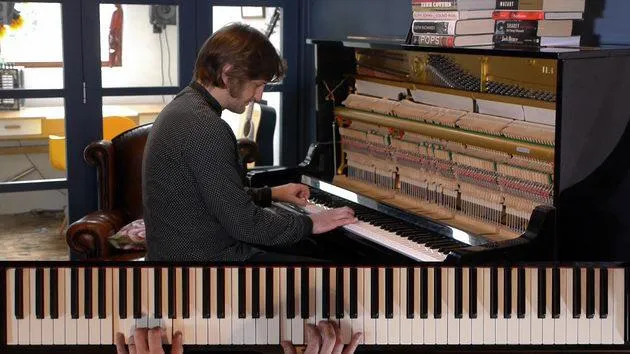
03. Die rechte Hand/das Comping hinzufügen
Gratis-Lektion11:47
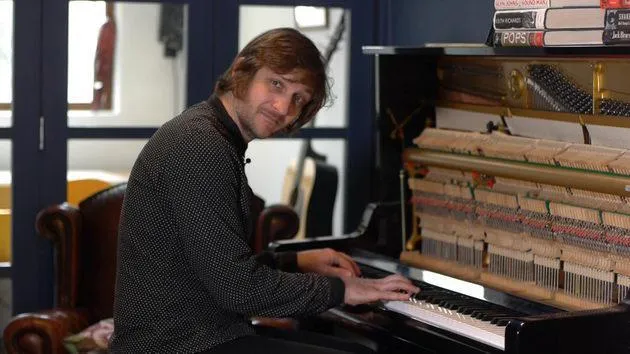
04. Harmonie entwickeln: Septakkorde & Umkehrungen
15:27
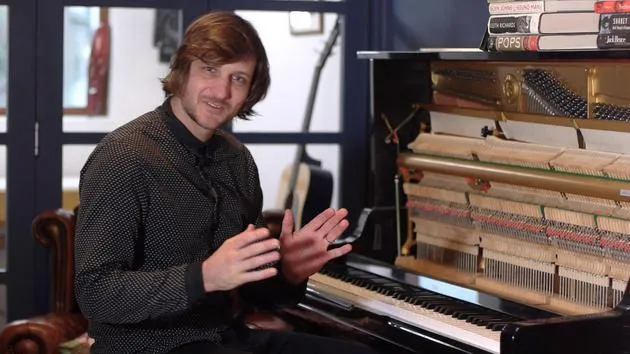
05. Rechte-Hand-Riff Nr. 1 und Variationen
13:20
06. Riff für die rechte Hand Nr. 1 – weitere Variationen
14:39
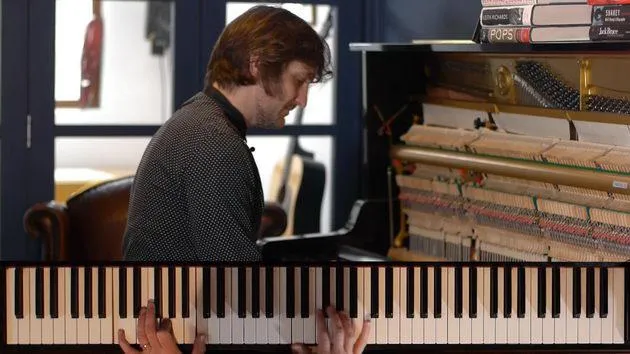
07. Die „Blues-Tonleiter“ & ihre Anwendungen
10:41
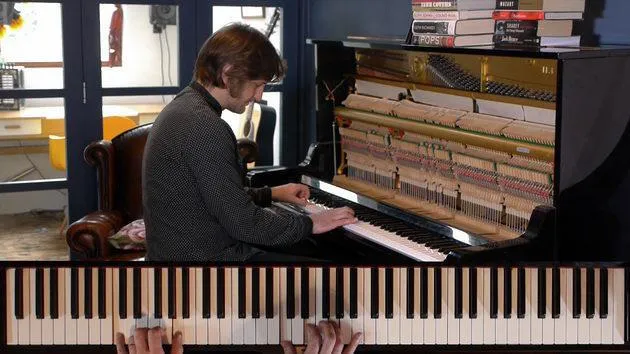
08. Schluss #1 & Variationen
Du bist hier9:26
09. Alles zusammenfügen
10:34
10. Das dreckige Dutzend - Die Twelve-Bar-Blues-Challenge
1:59
Transkript der Lektion
Ending Your 12 Bar Blues
Welcome back!
So, hopefully, we're at a point where you're playing some pretty cool stuff over at 12 Bar Blues.
The Importance of Ending a Song
What happens when you want to finish the song? You can't just stop and take your hands off the piano.
"Well, you could, as Miles Davis said to Coltrane, just take the horn out of your mouth."
Let's look at a basic ending, which has many variations and extensions to explore.
Common Ending
Here's a common ending that sounds like this: (sample sound here)
In context, if I play the end of a 12 bar, from bar 9 of the 12 bar blues, you'll be able to hear how it sounds in context.
Count: 1, 2, 3, 4.
Notes Breakdown
I will show you a few little variations on that.
Left Hand:
The left hand notes are:
- C
- B flat
- A
- A flat
- G
- G
- A low G (if you want)
- Back to C
- A low C
Right Hand:
The right hand starts on beat two:
- Count: 1, 2, 3, 4, 1.
- You could play the chord C at the end or a C7 even.
- We can be in that third inversion or just play the root position.
Putting Them Together:
Now, I have added a couple of notes there just out of pure habit. I've added that first note, which comes after the first left hand note and before the second left hand note.
Count: 1, 2, 3, 4, 1.
Fingering Options
In terms of fingering, you can either:
- Play in the right hand where the C stays the same as the other fingers go down.
- Or play in a way that feels comfortable for you.
When putting them together, you'll notice those notes are moving at the same time, outlining the basic harmony of this ending.
Expanding the Harmony
To expand further on that, it comes from this kind of 5-1 progression. I will look at all that kind of stuff in more advanced courses.
For now, in the left hand, I've added a seventh. You could also add a sharp five on the G7 chord.
Count: 1, 2, 3, 4, 5.
If we go up the scale and it is sharpened, with that A in the right-hand melody, this gives a distinctive sound, which you'll find a lot in New Orleans music, especially this kind of thing.
Characteristics: Sharp five and the ninth.
Back to the Key of C
Back in the key of C, the ending can be played as some form of C7, whichever C7 you want, really, at the end.
I did a little slide up there, which you can do as well. You can do anything you want, there are no rules in this game.
Practice Tips
I know I've gone off on a bit of a tangent, but here are some practice tips:
- Start at a tempo that's comfortable to you, however slow it might be, use that metronome, it's all good.
- Context: Putting it into context is more difficult, so make it run fluently out of the F chord.
Count: (transition smoothly to ending).
Again, practice it at a slow tempo and gradually increase the tempo.
Thinking Ahead
When changing chords, it's good to think ahead about the notes and the hand position of where you're going to be.
- Perhaps on bar nine, when you're on the G and moving down to the F, just as you're about to hit that ending, really think about where your hands will be.
- From the G, have a think so you're ready, your hands are there.
- Notice that my right hand was ready and waiting for that ending.
The left hand was still busy, so it couldn't move, but it knew where it was going, and that's really important.
Conclusion
That's an ending for you!
In the next video, I'm going to put everything we've learned in this course together. You'll see some of the things we've practiced being put into action, along with suggestions for creative things you can do with it.
I hope you've enjoyed everything so far, and enjoy the last video where I'll show you some of the creative possibilities!
10 Lektionen
1 Std. 49 Min. strukturierte Videolektionen
Erweiterte Videofunktionen
Verlangsamen, Passagen loopen, mitlesen
Handy, Tablet & Desktop
Üben, wo du willst
100 % Zufriedenheitsgarantie
30 Tage Geld-zurück-Garantie
Lern deinen Guru kennen

Lern deinen Guru kennen
Paddy Milner gilt als einer der besten Blues-Pianisten der Welt – derzeit ist er der Stammkeyboarder von Sir Tom Jones, nach mehreren Jahren an der Seite des großartigen, verstorbenen Jack Bruce –, aber er ist auch ein hervorragender eigenständiger Songwriter und ein unverwechselbarer Sänger. Lies einfach das Lob von Größen wie Dave Brubeck weiter unten! Sein Spiel war auf dem Soundtrack des Kinohits 'Rocketman' von 2019 zu hören.
Zweimal wurde er bei den British Blues Awards als bester Keyboarder ausgezeichnet, und als Gründungsmitglied der Ronnie Scott's Blues Explosion hat er eine langjährige Residency im weltberühmten Club Ronnie Scott's.
Seine aktuelle Band LONDONOLA spielt selbst geschriebene britische Musik mit einer kräftigen Portion New-Orleans-Geist, und sein gemeinsames Projekt JAWBONE geht seit der Veröffentlichung des gleichnamigen Debütalbums von Stärke zu Stärke.
- „Ich liebe es... da ist einer, der wirklich Klavier spielen kann" - Dave Brubeck
- „Ich kann es nur wärmstens empfehlen. Irgendwie fängt alles an, sich viel besser anzufühlen!" - Jack Bruce
- „Der beste Blues-Pianist Europas..." - Blues Access, USA
- „Beeindruckend und originell" - The Times
- „Blendend" - The Independent
In seinen Kursen zerlegt Paddy den authentischen Blues-Shuffle, Slow Blues, Boogie-Woogie, Rock 'n' Roll und das New-Orleans-Piano – bis hin zu drei klassischen Boogie-Woogie-Songs –, damit du diese Stile bei einem der Allerbesten des Fachs lernst.







